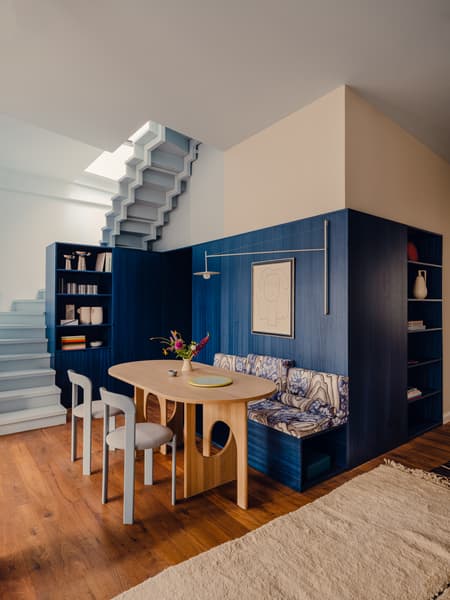
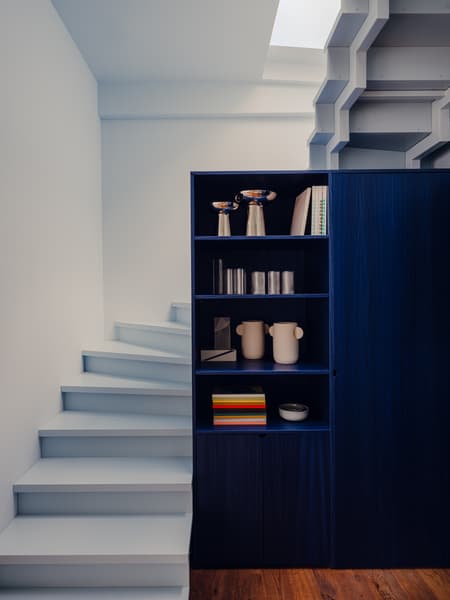
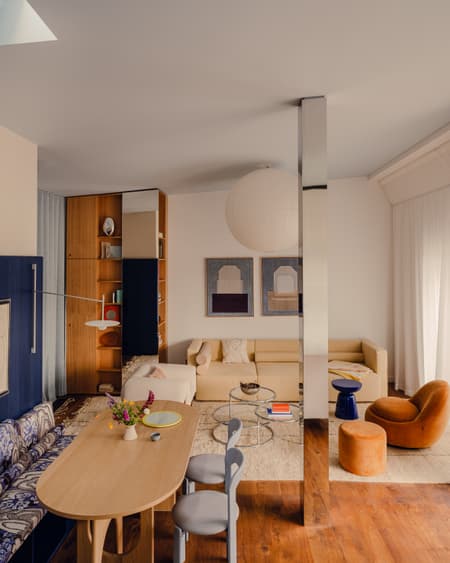
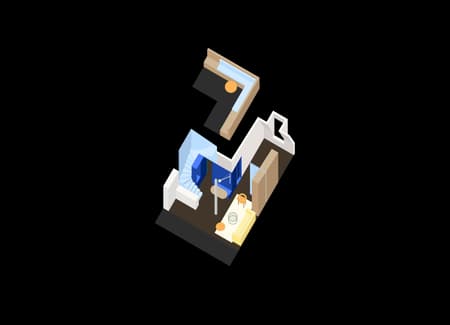
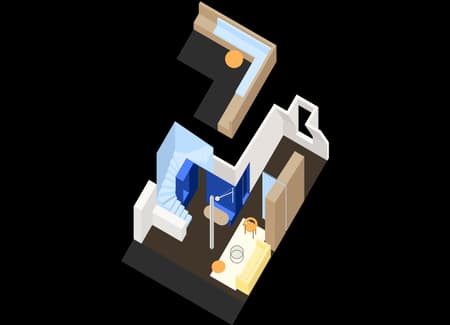
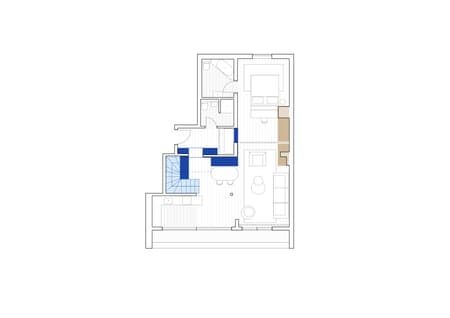
When the clients found the rooftop apartment in Prenzlauer Berg, the thing they liked the most about it was how the wind blew over the roofs from one side of the apartment to the other when all the doors to each of the rooms were open. There were a lot of walls making a lot of small spaces that were cut off from each other. The design solution was to remove all the walls from the main space but to reinforce the sense of an inner core, around which circulation would be structured. An unused fireplace was also in the way – it sat rhetorically at the center of what felt like a stair hall that led to the roof terrace - but there was nowhere to sit near the fireplace, since everything was circulation space, and no one ever made a fire. “We realized that by taking the fireplace away altogether, and screening the stairs with a shelving unit, we made the dining area become the new center of the apartment” explains partner Peter Greenberg.
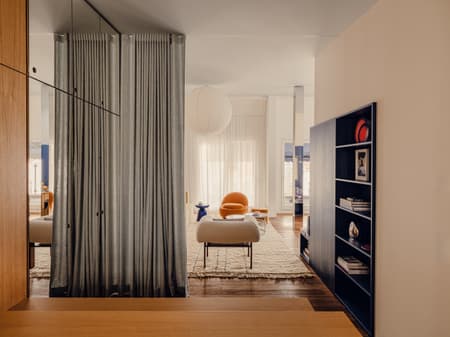
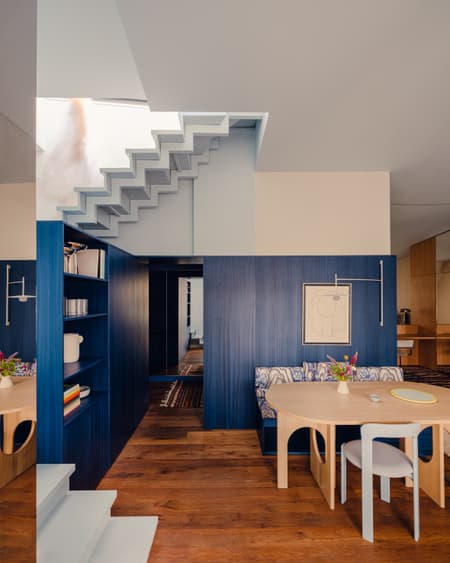
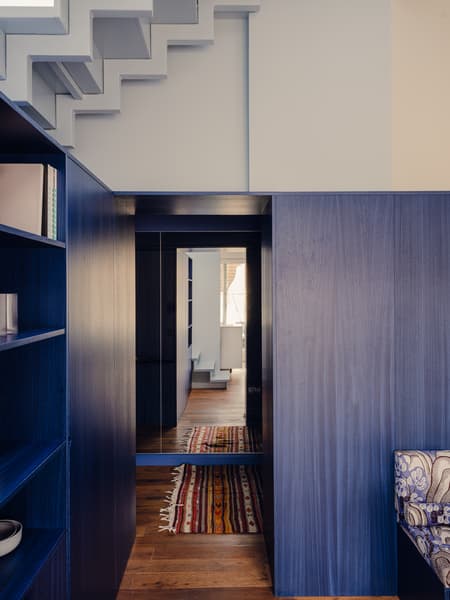
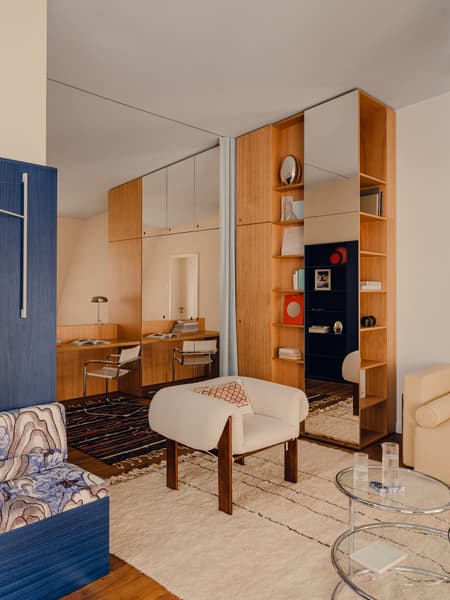
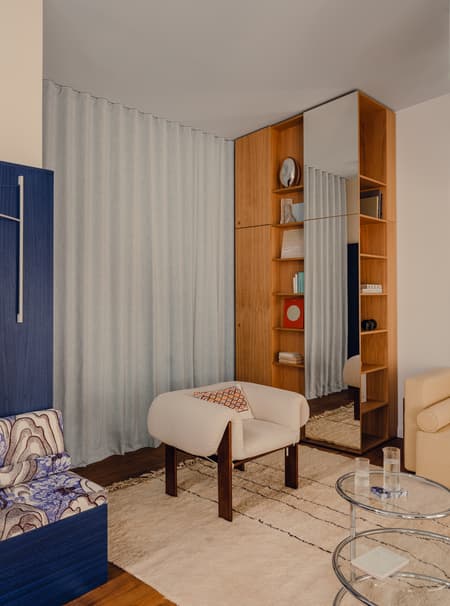
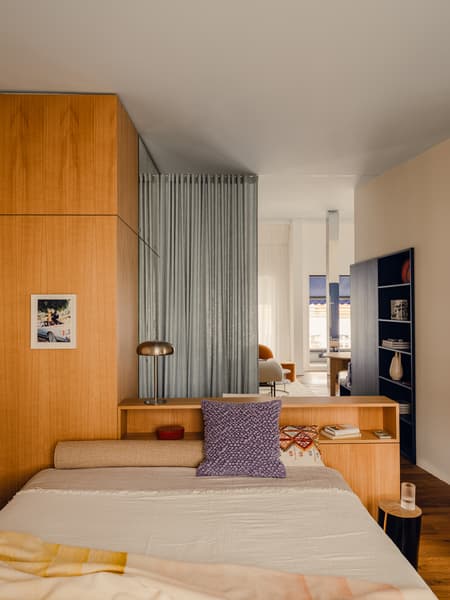
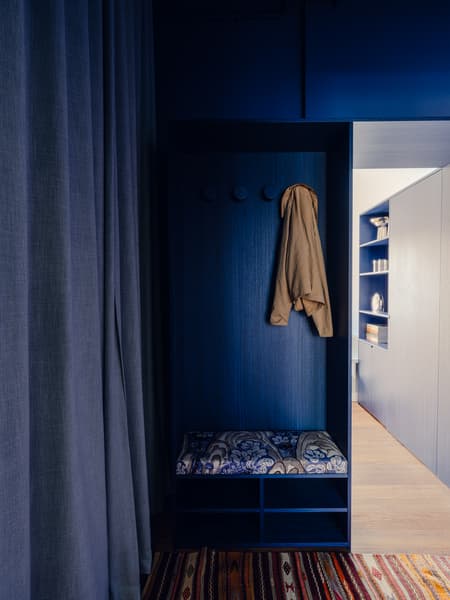
The blue millwork box at the center of the apartment reinforces a new core, allowing light, air and space to flow around it and unify the space. This “blue box” combines wall paneling, shelving, and a built-in banquette to define the dining area and is stained - and not painted - so that the grain of the natural wood shines through. A further part of the spatial composition is another built-in box, a full-height closet/shelving unit made from a transparent finish on wood with mirrored panels that visually double the space. A light blue curtain can be hidden out of the way to open all the spaces – or can be closed to scale off the bedroom and separate it from social spaces.
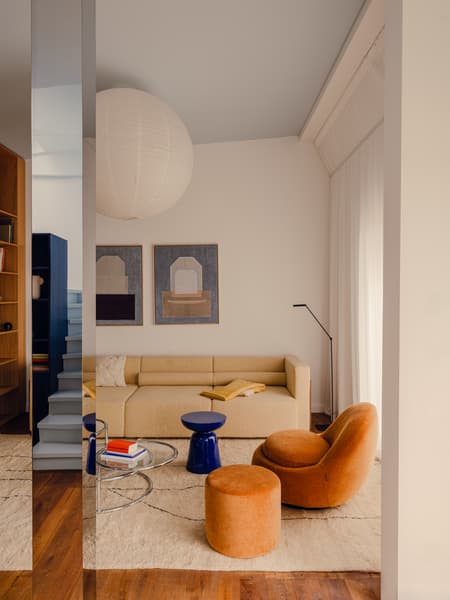
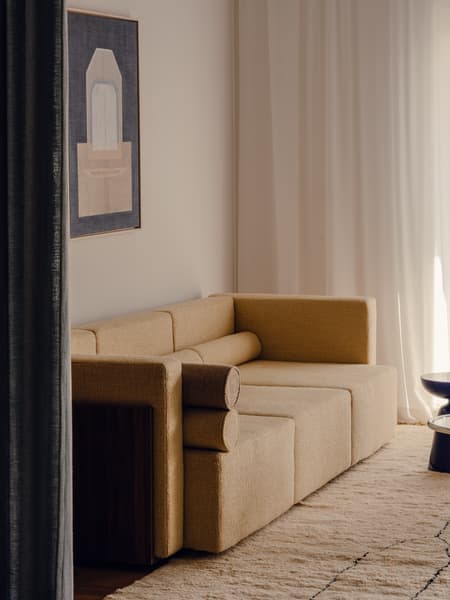
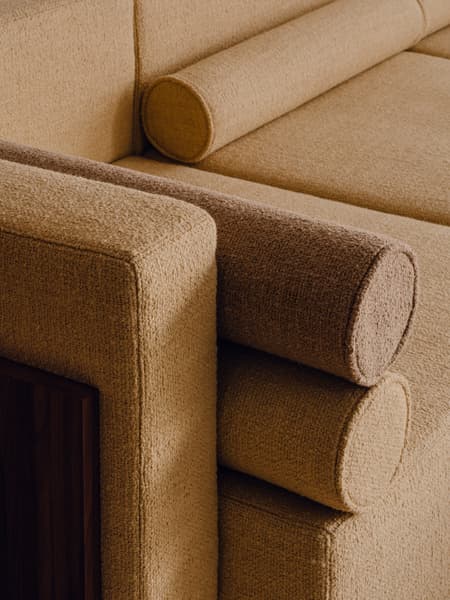
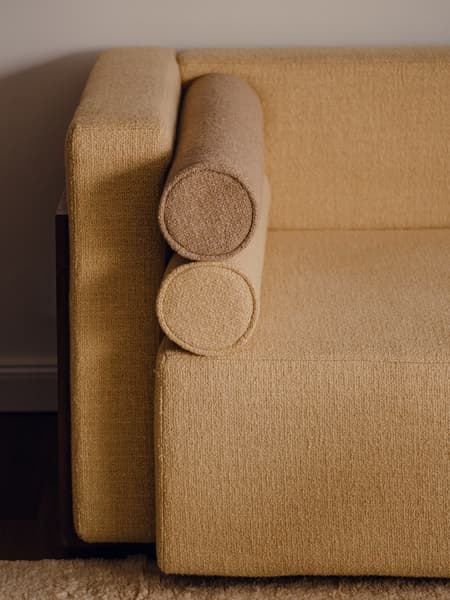
A bespoke butter-yellow sofa, designed specifically for the room and named “Sophia 3000,” anchors the living area. The design flows from a conversation between the architecture, the built-in cabinetry, and the loose furnishings.
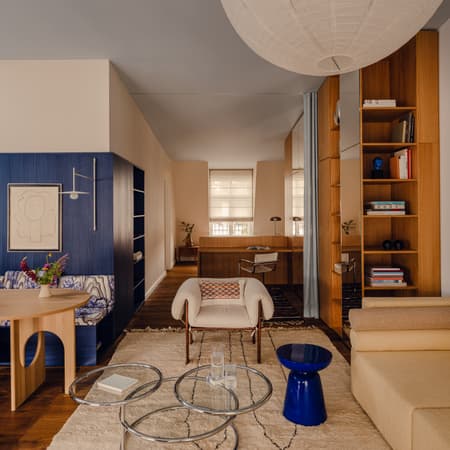
A continuously sloping blue ceiling unites the parts and allows the space of the living room to blur with the space of the home office and bedroom.
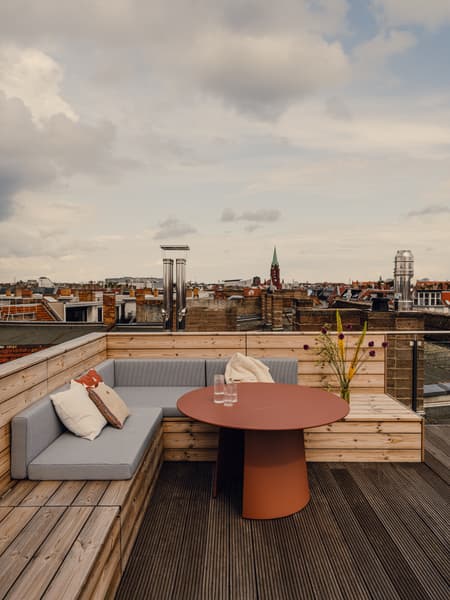
One enters from the apartment building stairway directly into the blue box, dark and relatively low, and then one emerges through the blue box into a taller, brighter room with a skylight all the way at the height of the ceiling. Sky blue stairs take you to the roof terrace, where a built-in seating area creates a cozy corner with sweeping views over Berlin.
“A sense of lightness comes not only because there are no dividing walls, but because there is a contrasting dark core.”
“The light blue brings the eye vertical; the dark blue connects the spaces horizontally.”
“The new sofa is soft AND rigid.”
“We love rooms within rooms, unconventional color combinations, and contrasts of hard and soft.”
“The dark and low entry makes the open space of the main room feel so much larger.”
“Roof decks should be designed like another important room of the apartment.”
“A well organized house should be planed like a town - with streets and paths leading to places free of traffic, where relaxation is possible.”
Ester Bruzkus founded the Berlin-based practice in 2002 and since 2016 has been working in partnership with Peter Greenberg. In 2025 the studio was renamed Bruzkus Greenberg to reflect their expanding international development. With their team, they have completed a number of award-winning projects that integrate surprising color combinations, logical planning, contrasts of opulence and minimalism, and careful material detailing. Their portfolio focuses on the design of the interior and includes work at different scales – furniture design, restaurants, hotels, private residences, workplaces, and exhibit design.
Ester Bruzkus was raised in Berlin and studied architecture at the TU Berlin and the Ècole Nationale Supérieure d’Architecture de Paris-Belleville; Peter Greenberg was raised in New York City and studied architecture at Yale University and Harvard Graduate School of Design. The two met while they were both teaching the Berlin studio of the Wentworth Institute of Technology (Boston).
We like working with straight lines, precise planning, material differences, and plenty of surprises.
We like contrasts of thick and thin, sharp and soft, curved and straight, rough and smooth, common and opulent, colorful and restrained, playful and well-resolved.
We like projects that create a dialogue of space and light, materiality and color, existing constraints and new opportunities - and especially a synergy between the needs of the space, the client, and the aspirations of great design.
We like projects that create a dialogue of space and light, materiality and color, existing constraints and new opportunities - and especially a synergy between the needs of the space, the client, and the aspirations of great design.
We like collecting - we collect images and colors that speak to our heart and combine them in our own way.
We find inspiration in lots of places... old films, new films, music, books, paintings, photographs, poems, dreams, random conversations, architecture, bridges, street signs, trees, clouds, bodies of water, light and shadows...