There is a particular challenge in designing for architects by architects. The space must hold the process without getting in the way of it, present enough to set a tone, restrained enough to disappear when the work takes over. When Billboards, a Chennai-based architecture and design practice, set out to build their R&D Lab, that was the starting point. Here, this space would be used primarily for research and building products, materials and systems related to design, and also incubate design-led start-ups in this space.
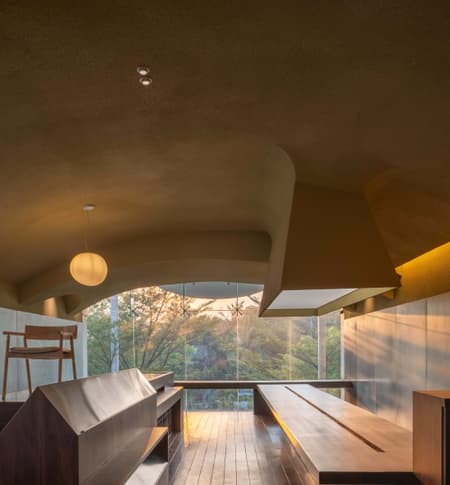
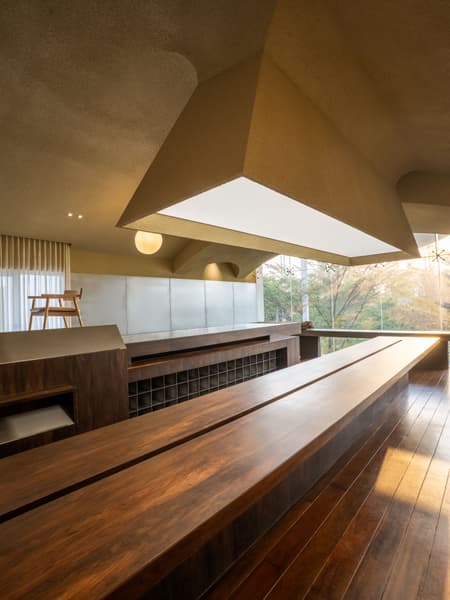
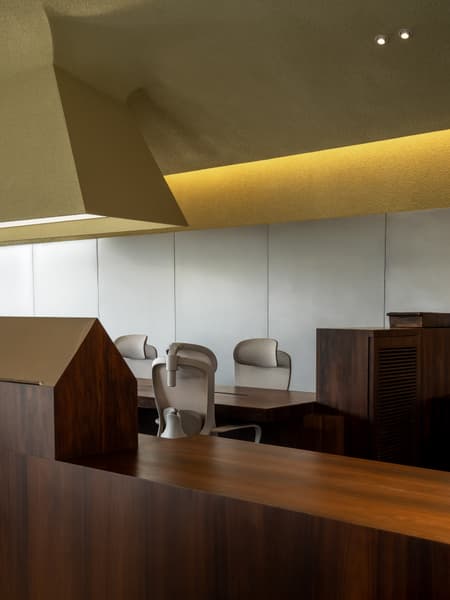
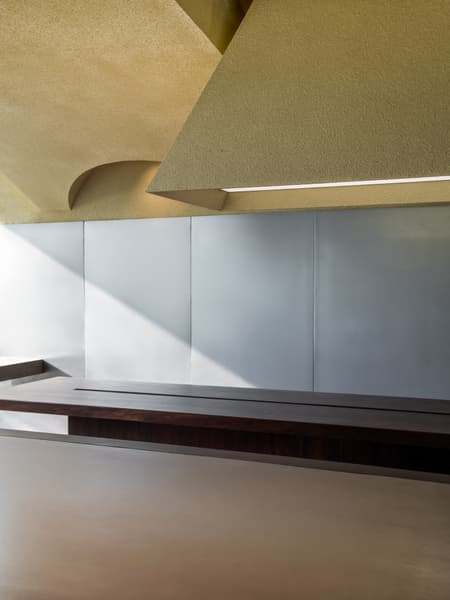
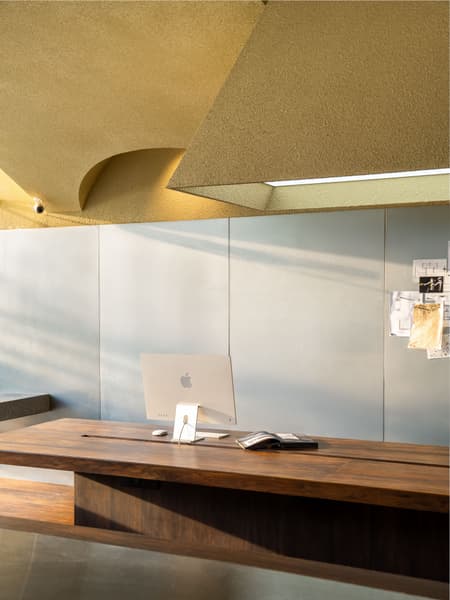
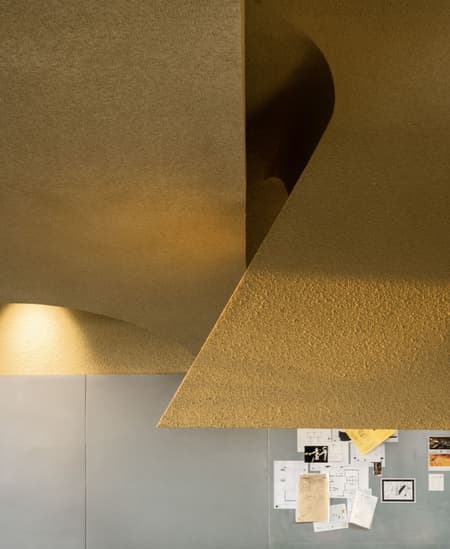
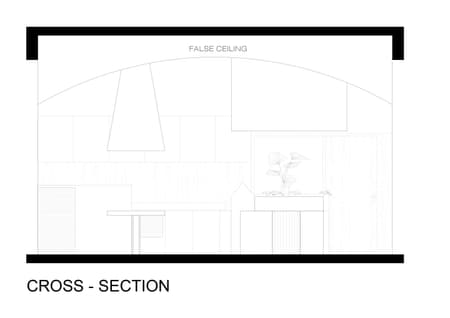
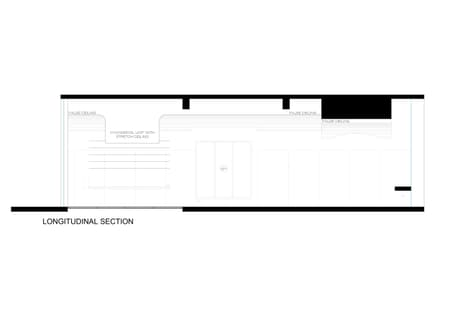
The site offered something to work with. The building's curved exterior profile, an existing structural condition rather than a design choice, became the primary reference point for everything that followed. Rather than neutralising it, the team read it inward, the ceiling was inverted along the logic of the outer shell, pulling the geometry down into the interior as a volumetric form. The result is a space that doesn't feel designed so much as uncovered, like the roof of a cave.
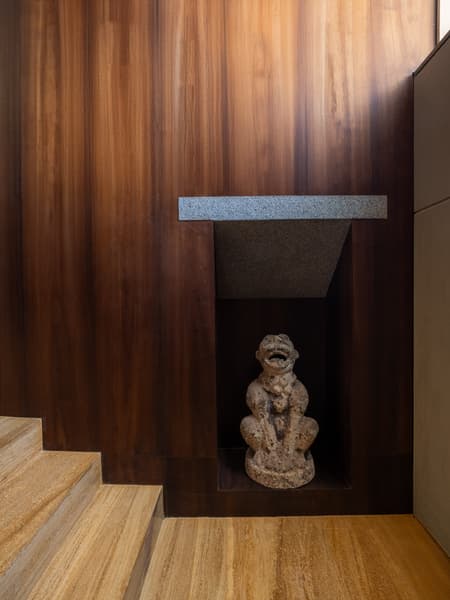
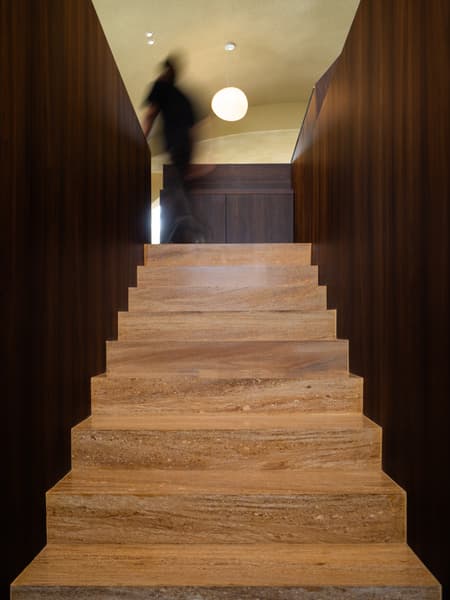
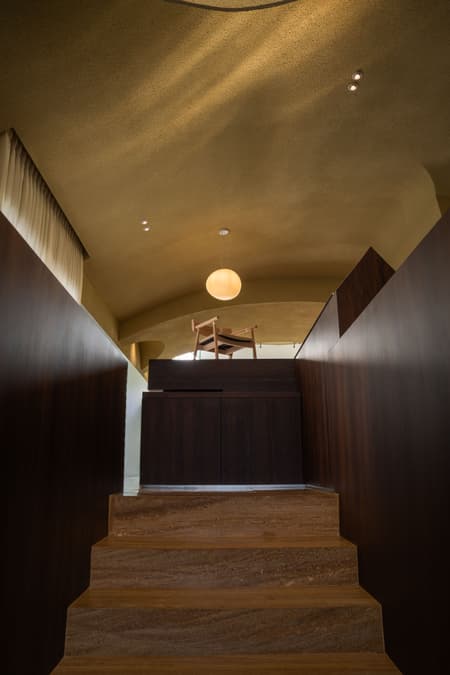
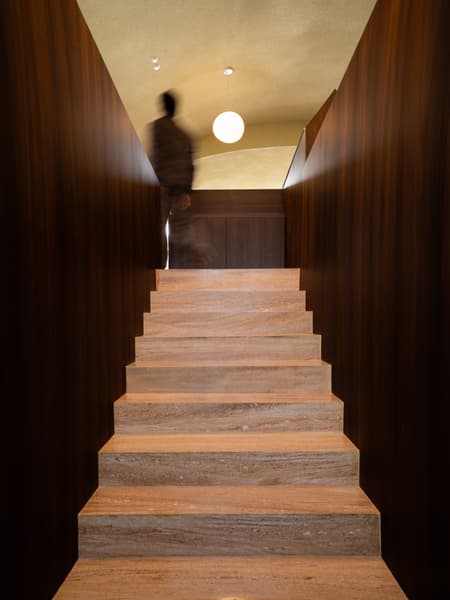
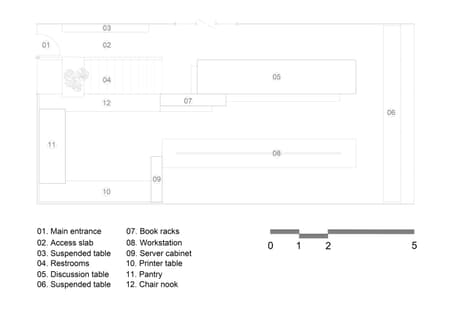
Before any of that, there is the staircase. A monolithic flight in yellow marble, carved directly into the floor plan, it pulls you up from the ground level and deposits you at the threshold of the lab. It is at once a circulation element, a foyer, and a buffer between the city outside and the work within. The material weight and warmth of the marble set the tone before you have fully entered it.
The reference to a cave is not incidental. Early human expression, drawing, ideation, and the recording of daily life began on cave walls, and there is something of that quality here, a contained, overhead enclosure that makes the space feel held rather than totally open. The centre area becomes the site of work; the edges, over time, accumulate the evidence of it.
“A cave once held the earliest ideas of man; this space attempts to hold the next”.
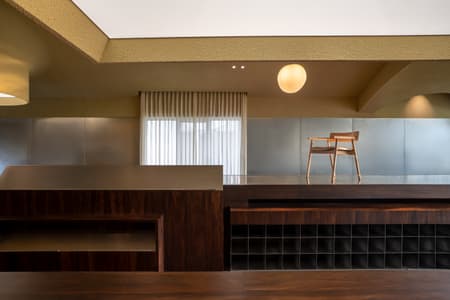
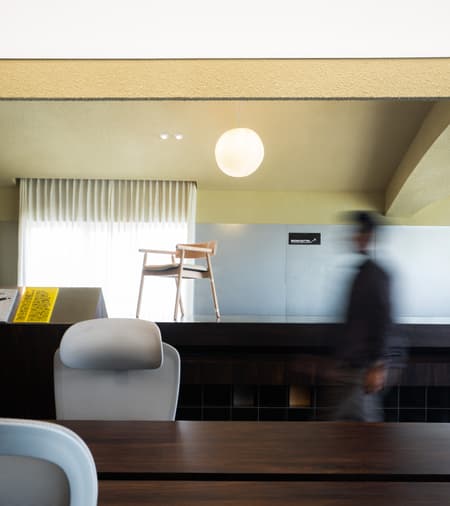
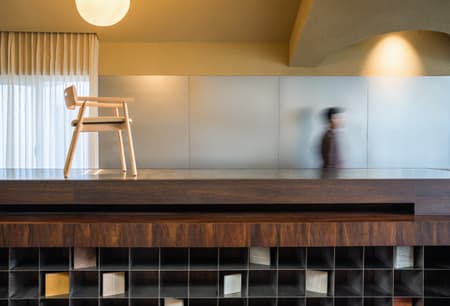
The lab is conceived as a single uninterrupted vessel with no internal partitions. The floor plate reads as one continuous field, and it is the overhead volume, the platforms, and the accumulated surfaces that define where people gather, work, and think, rather than any fixed wall or boundary. The tank-like spatial logic , enclosed enough to feel contained, open enough that ideas, conversation, and material move freely across the interior without being assigned a room.
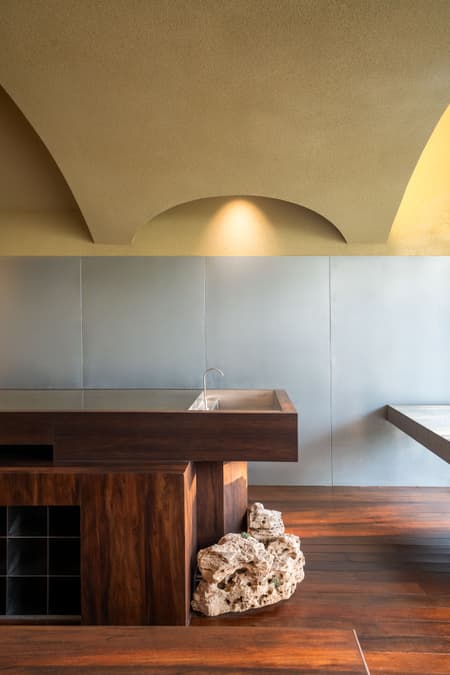
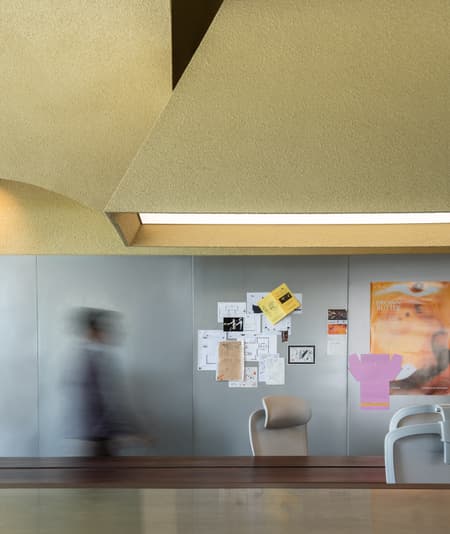
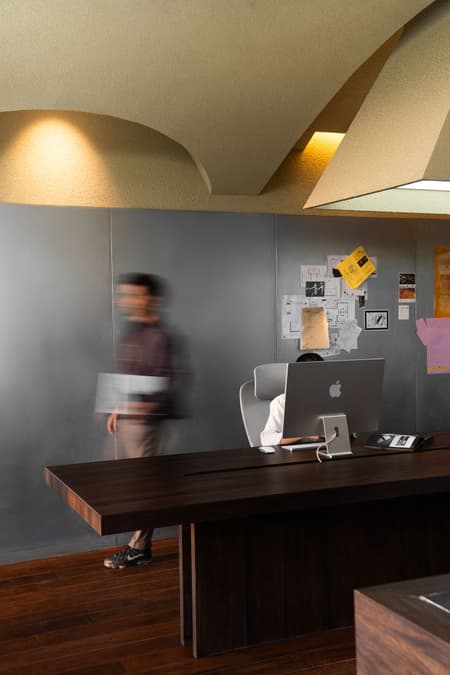
The walls are wrapped in magnetic cladding, and drawings, material samples, models, and project references can be pinned, pulled, and reorganised at any point. Stainless steel sheet inserts run through the space, cool and reflective against the textured warmth of the ceiling above, serving both as display substrate and as surfaces that shift in quality as the light changes through the day. Nothing here is meant to stay fixed for long, as is the vision of the Lab.
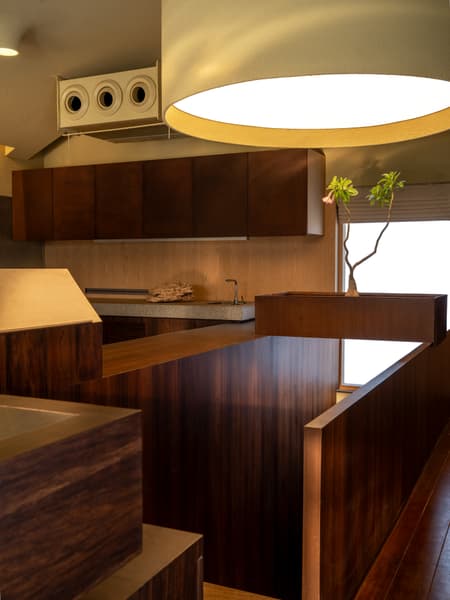
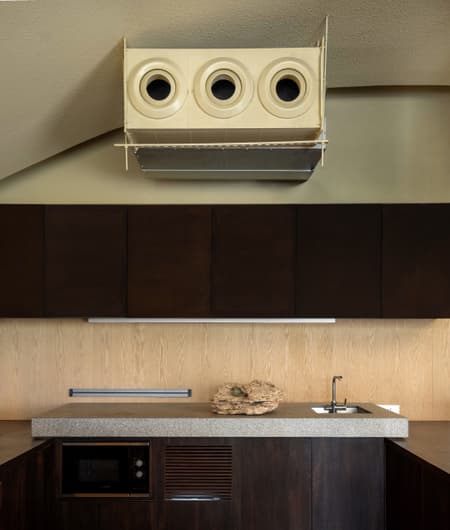
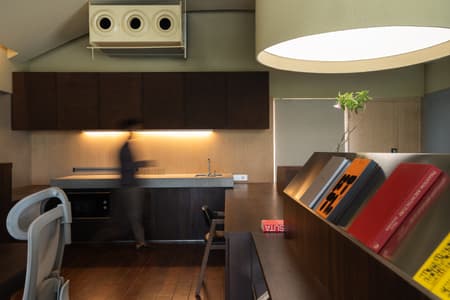
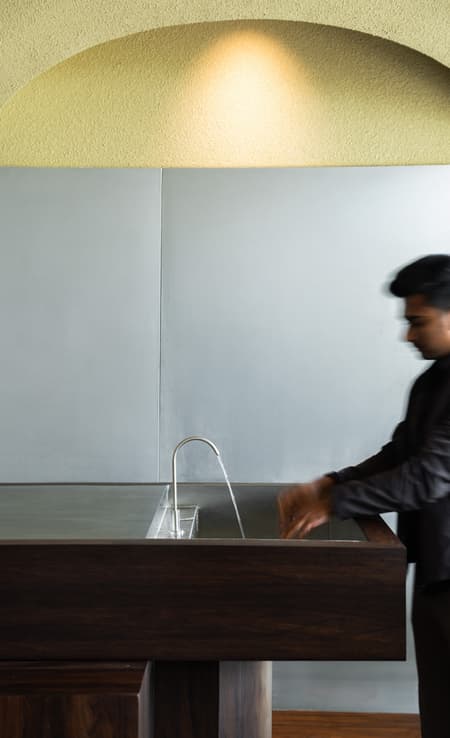
At the core of the lab sits a dedicated research table, a conglomerate workstation with an integrated sink, used for the development of new materials and surface techniques. It is, in a sense, the most honest piece of the space: a working surface for a working studio, where the ideas that eventually appear in Billboards' projects are tested at a material level before they leave the room.
"The idea was to build a workspace that could change without losing its identity," says Arun Prabhu
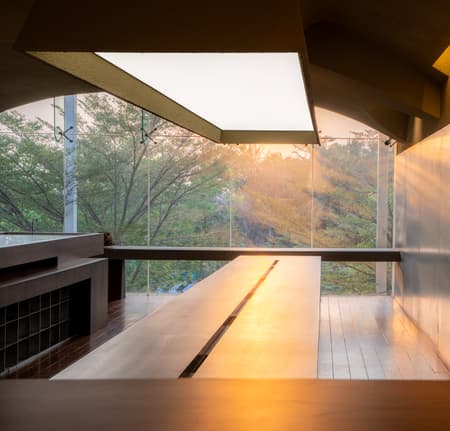
Light was the other significant design decision. The west-facing facade was kept open rather than screened, a point source that brings the evening sun into the interior as a long, directional wash. The colour palette was calibrated around this: deeper, grounded tones at the lower volumes, lighter shades as the eye moves upward, the whole interior reading almost as a gradient produced by light and surface working together. Colour palette being inspired by the transition of light yellow butter to it’s caramelized brown butter format. The exterior palette was carried inward deliberately, so the lab would feel absorbed into its context rather than set apart from it.
Ceiling fixtures follow stretched geometric profiles that trace the curve of the overhead surface, keeping the reading of the volume intact. Light here is not used to punctuate or highlight; it is distributed evenly, suited to the long hours that a working studio demands.
An open-access library sits within the lab, available to students, collaborators, and visitors. The decision reflects something about how Billboards sees the space functioning, less as a private production environment, more as a site that remains porous to exchange, to conversation, to people passing through with ideas in different stages of formation.
Billboards' R&D Lab is, in the end, a space designed to be used rather than finished. The architecture holds a framework for material research, for collaborative work, for the kind of thinking that happens best when the room around you is built to accommodate change.