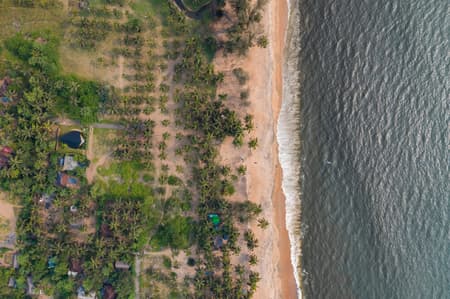
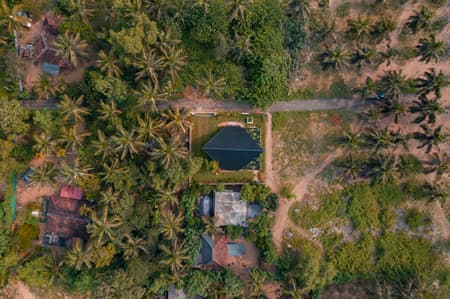
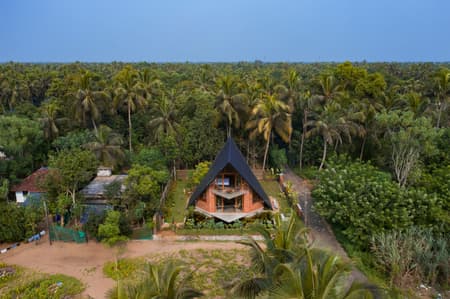
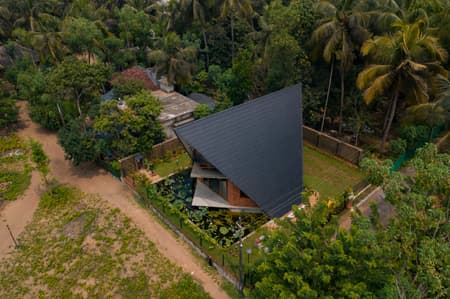
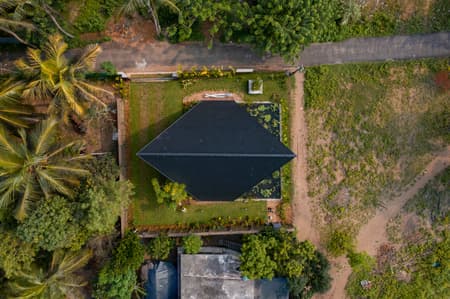
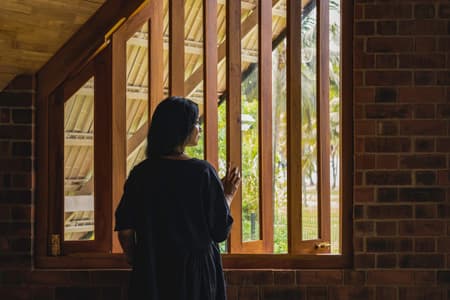
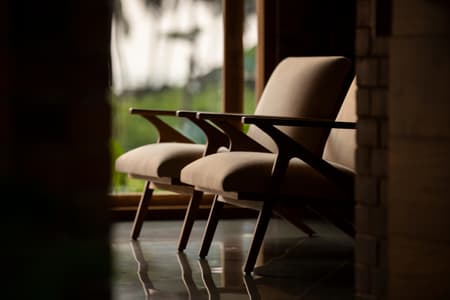
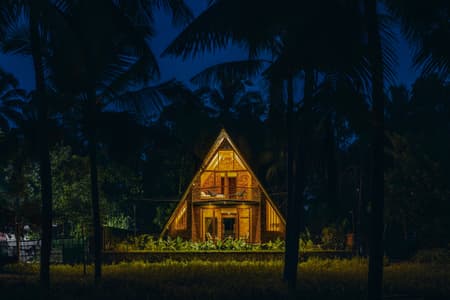
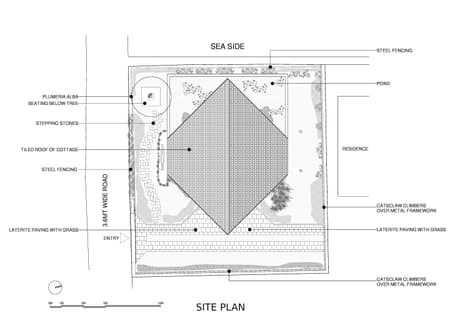
La Casa De Papel is a compact coastal retreat located at the edge of a fisherman’s settlement near Pappali Beach in Kerala, India. Positioned between a neighbouring fisherman’s house and a public road, the cottage opens entirely toward the Arabian Sea, drawing its character directly from the constraints and opportunities of the site.
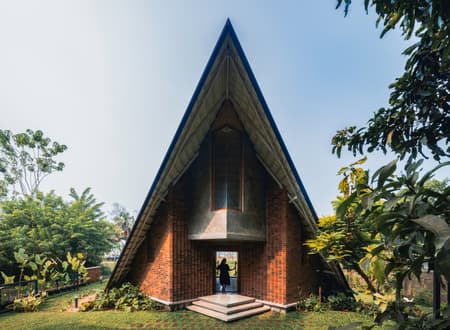
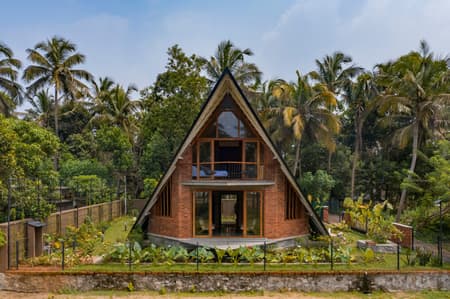
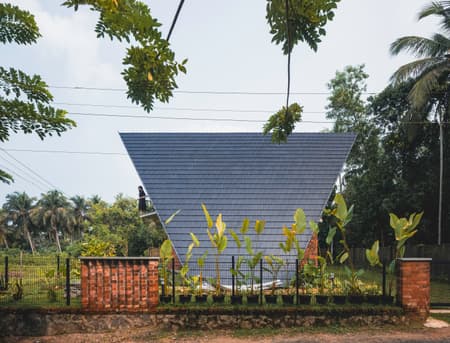
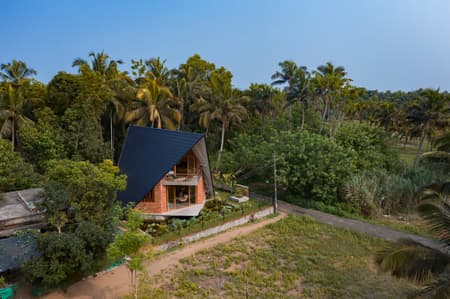
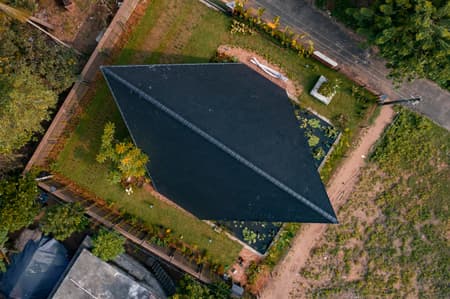
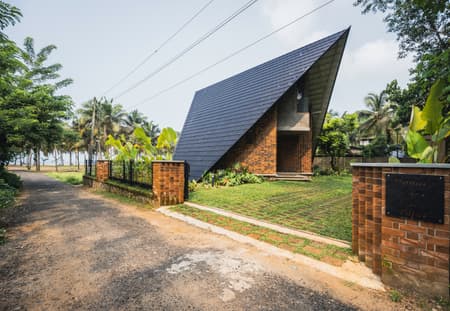
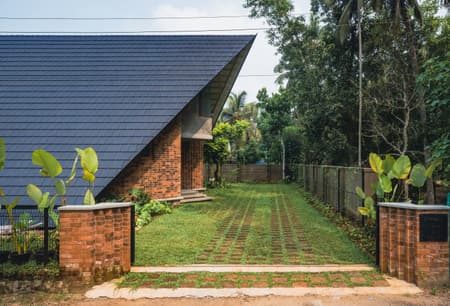
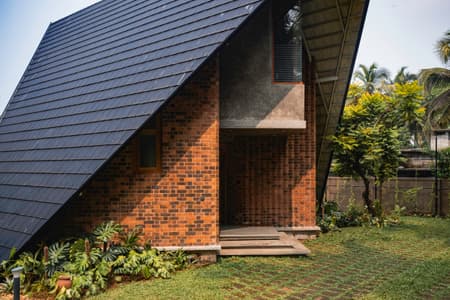
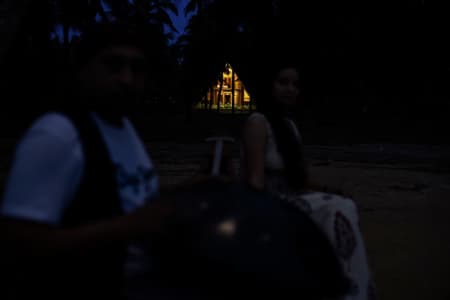
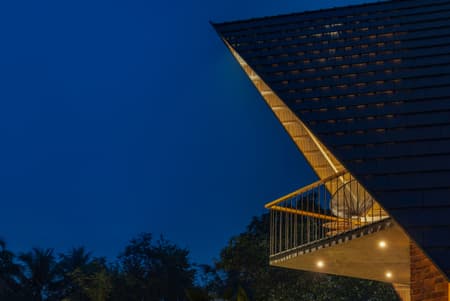
The architectural concept emerged from the imagery of a folded sheet of paper. This idea was translated into a continuous roof form that descends from the upper level and folds down to meet the ground on either side, creating a protective outer envelope around the dwelling. The folded form acts as a visual and acoustic buffer against the adjacent road and neighbouring structures while simultaneously directing attention toward the sea.
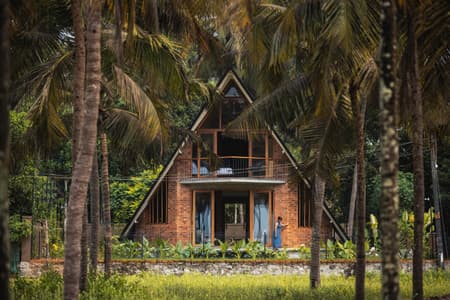
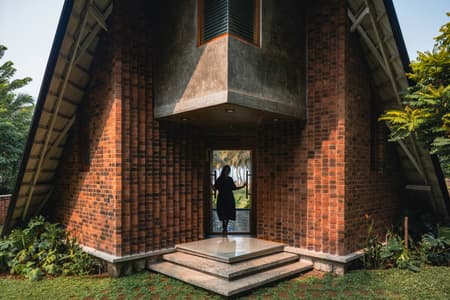
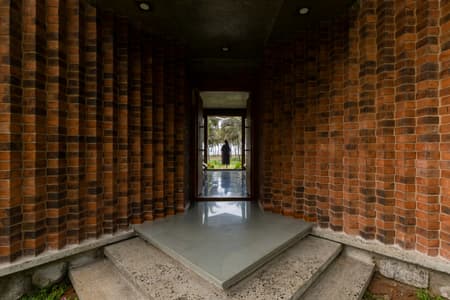
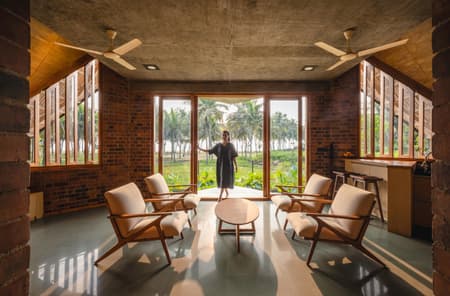
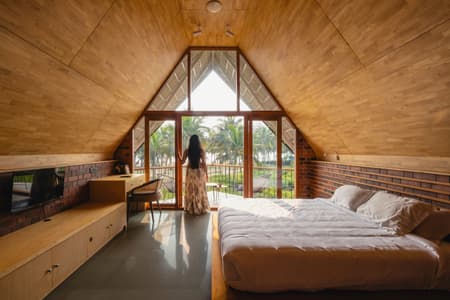
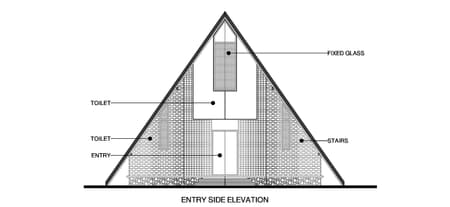
The geometry of the sloping roof edges was carefully shaped to frame the horizon immediately upon entry. As one moves into the cottage, the interior opens toward a panoramic ocean view, establishing a strong visual relationship with the coastline from the very first moment. The project derives its name, La Casa De Papel, from this folded architectural expression.
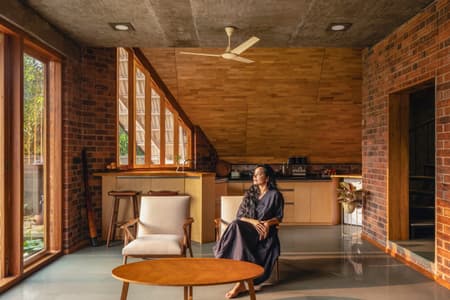
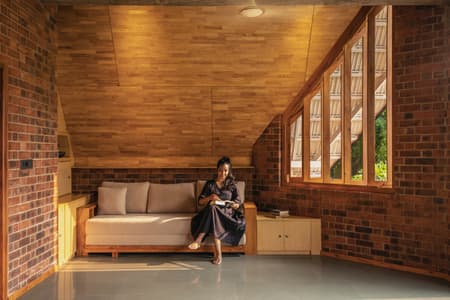
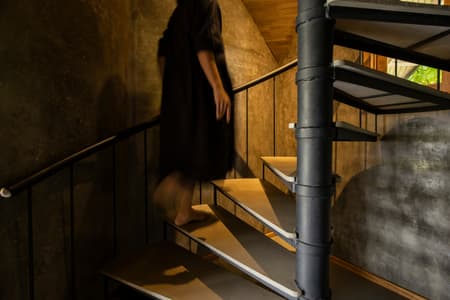
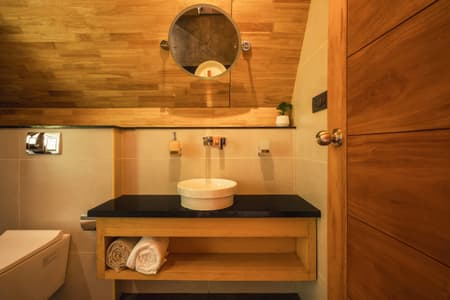
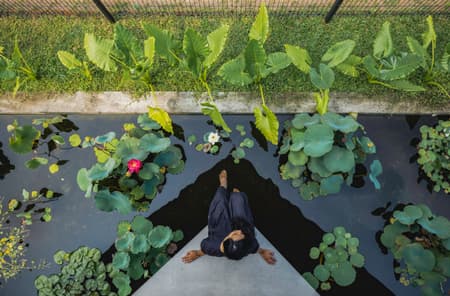
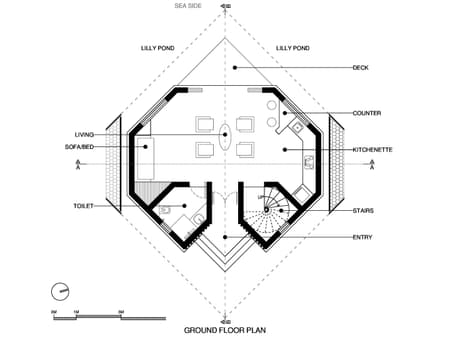
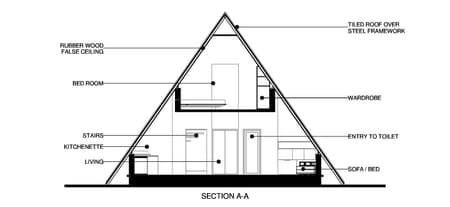
The ground floor contains an open living space with a compact kitchenette, a toilet near the entrance, and a steel spiral staircase connecting to the upper level. A built-in sofa facing the kitchenette also functions as an additional sleeping space when required. Extending outward from the living area, a deck projects over a shallow reflecting water body facing the sea, reinforcing the connection between the built space and the coastal landscape.
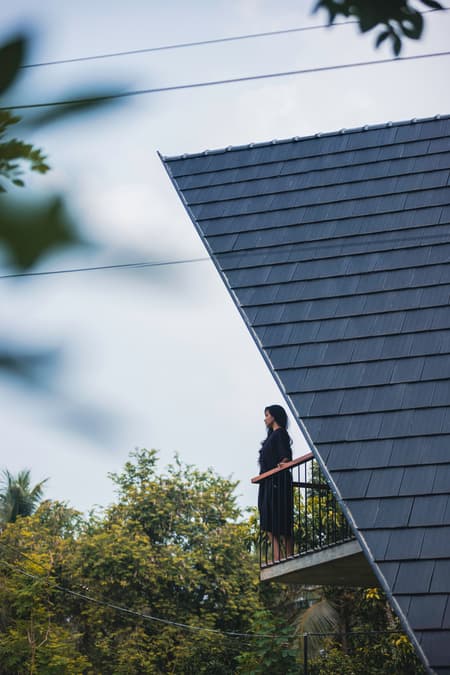
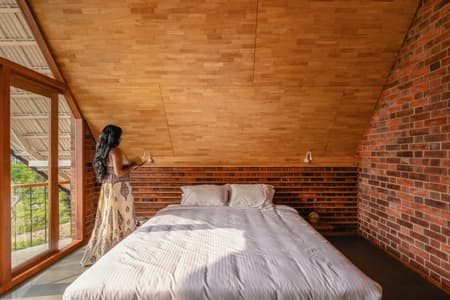
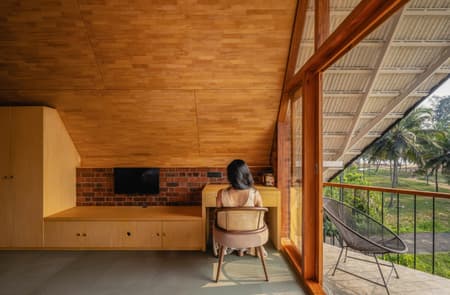
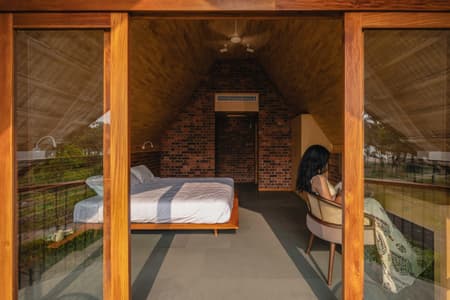
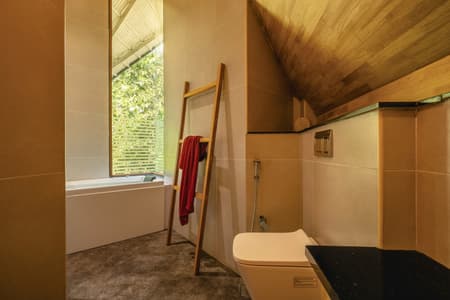
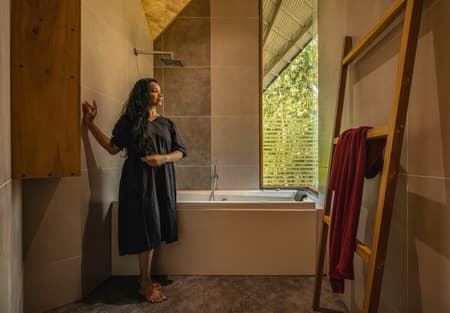
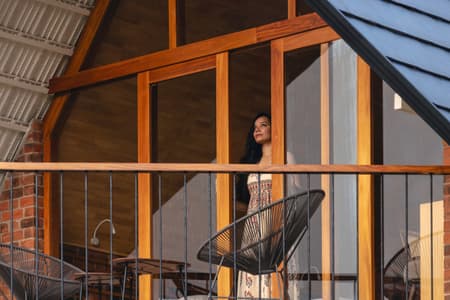
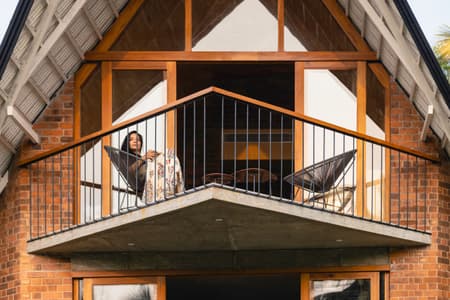
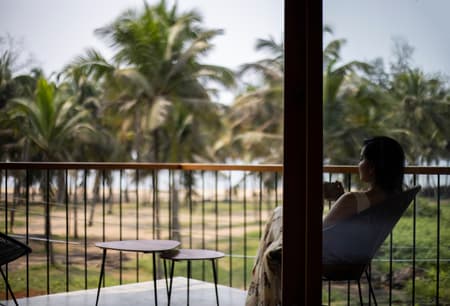
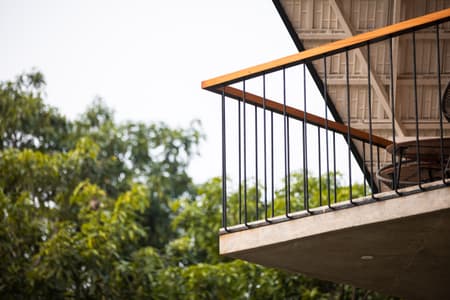
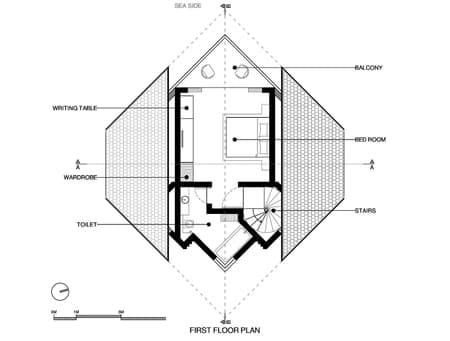
The upper floor accommodates a bedroom opening onto a balcony overlooking the Arabian Sea, while a second toilet is positioned above the entrance zone on the opposite side. Despite the compact footprint, the arrangement of spaces creates a layered sequence of enclosure and openness throughout the cottage.
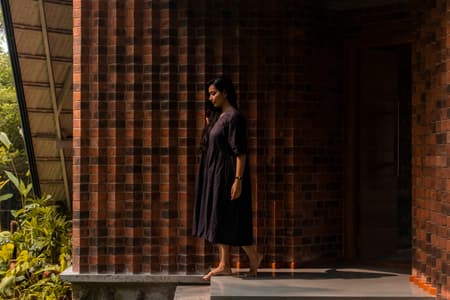
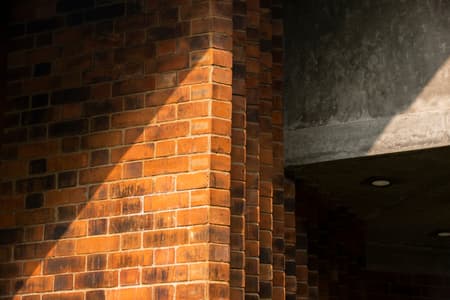
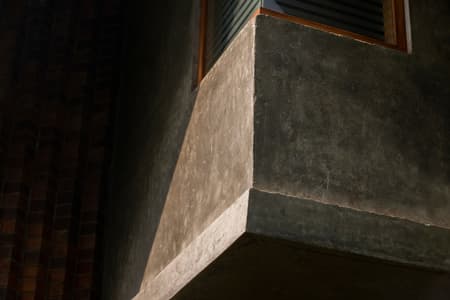
One of the key construction challenges involved integrating plumbing services within the narrow cavity created by the folded roof profile. Although the building is frequently perceived as an A-frame steel structure, the primary construction system consists of exposed load-bearing brick walls supporting a concrete intermediate slab. The sloping roof itself is formed using a steel framework clad in ceramic tiles that continue from the upper floor down to the ground plane. Materials throughout the project were largely left in their natural state, avoiding unnecessary finishes or surface treatments.
Shaped by climate, context, and the expansive sea beyond, La Casa De Papel explores how a small architectural intervention can establish privacy, openness, and a strong sense of place within a constrained coastal setting.