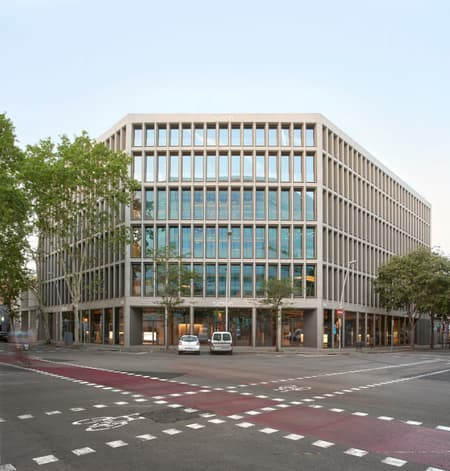
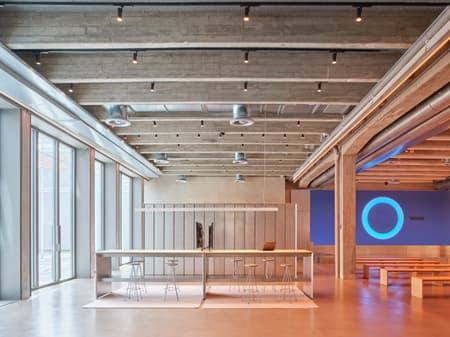
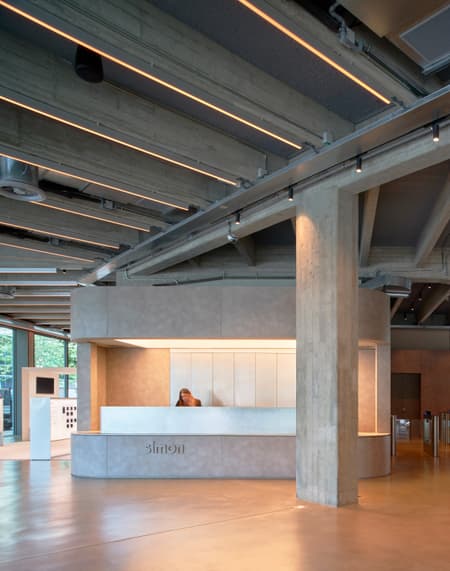
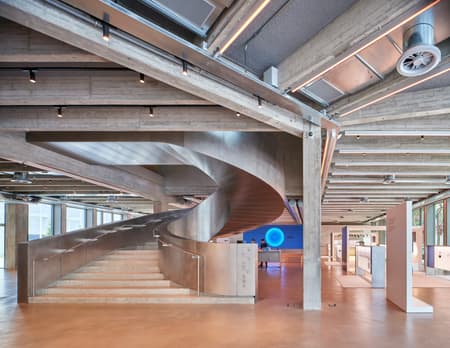
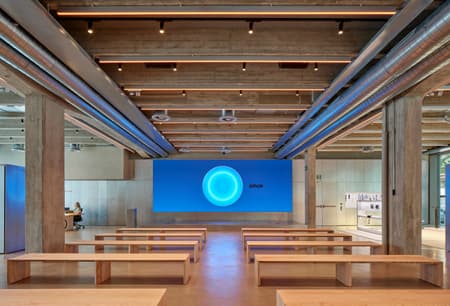
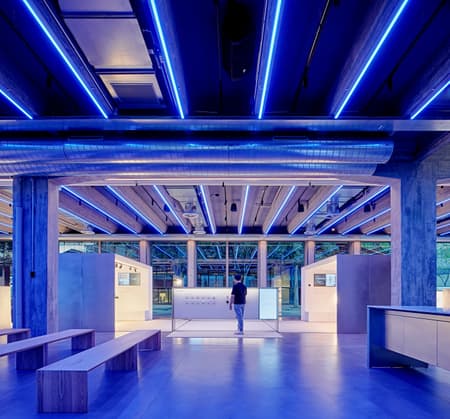
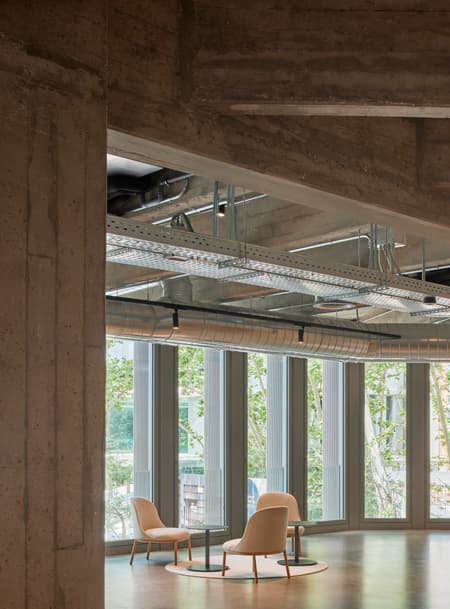
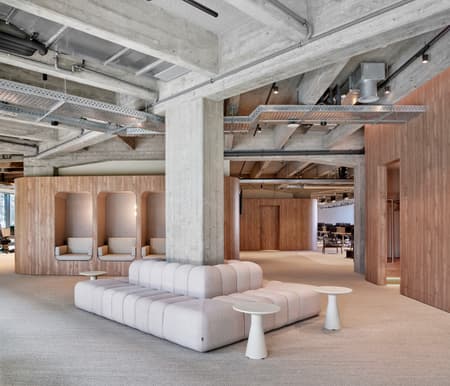
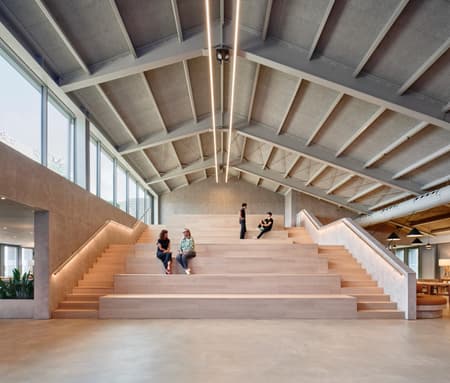
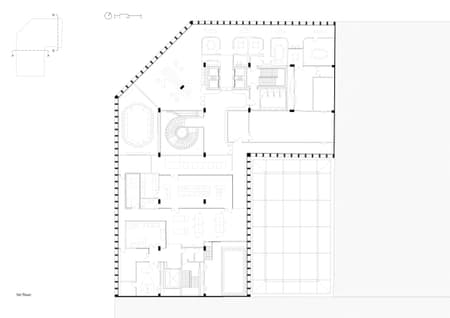
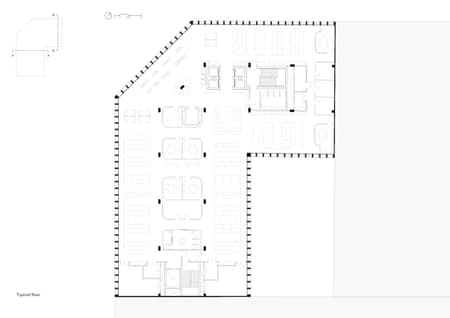
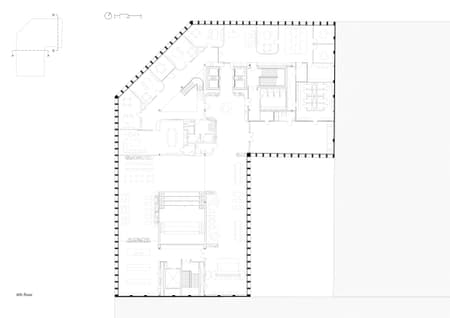
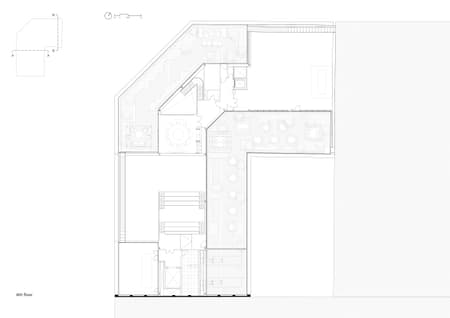
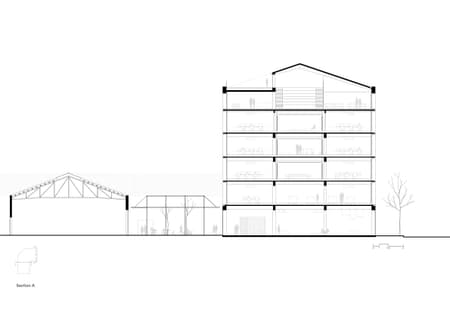
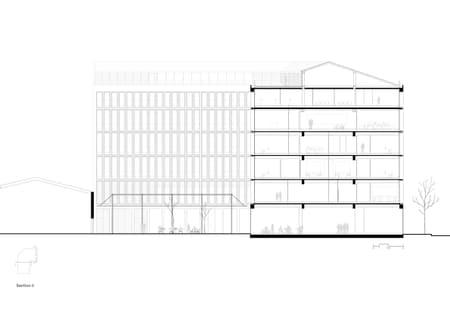
The rehabilitation of the old Simon factory to house the new Simon Corporate Headquarters arose from the need to unify the more than 350 employees of the two previous office locations in Barcelona under the same roof. The project is based on the idea of preserving the essence of the existing construction, a concrete industrial building from the second half of the 20th century, but introducing elements that allow to identification of the new use, and to place the new Simon Corporate Headquarters in the center of the technological development of the city. The Headquarters is symbolically named SWITCH, the abbreviation for “Simon Worldwide Innovation Talent Community Hub”, and also a nod to the electrical switch, one of the trademark products of the company.
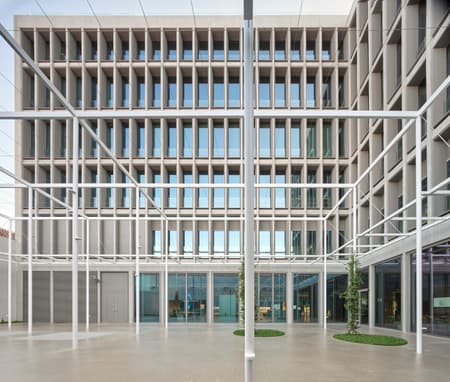
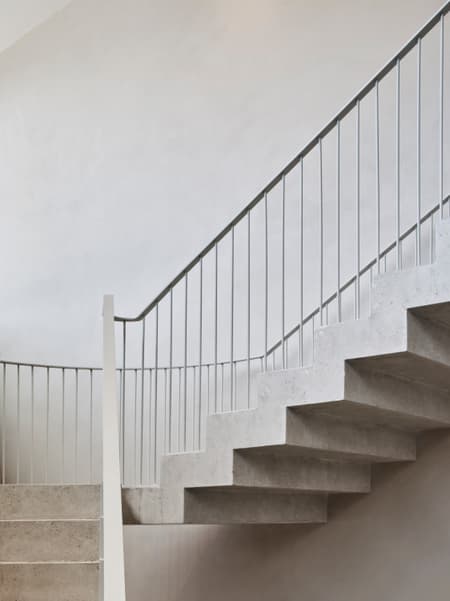
The exiting building is essentially a concrete structure; a regular grid of porticoes, ribs and slabs in the interior and a neutral, repetitive lattice on the façade which is at once a support, a window and a sunshade. Rehabilitating the building means, to a large extent, bringing this admirable structure up to date, but with certain deficiencies typical of its age. The necessary starting point is a thorough diagnosis of the state of conservation. Based on this, the interventions are approached in a surgical manner, including the careful repair of the lesions in the concrete, the selective demolition of areas to generate new communication nuclei and work areas and the demolition and reconstruction of the parts in the worst condition, always following the original logic. The traces of this intervention are not hidden, but can be seen as nuances in the materiality of the concrete, like scars that become part of the building's history.
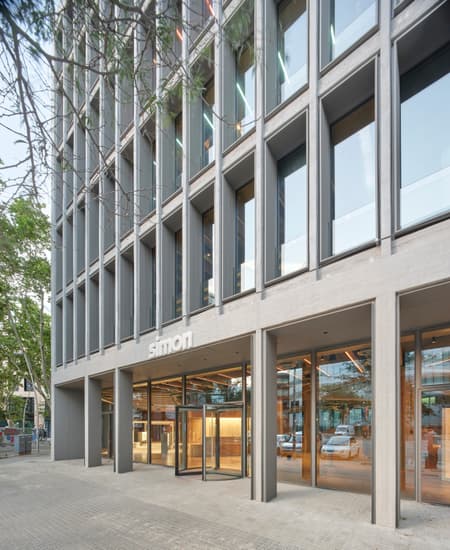
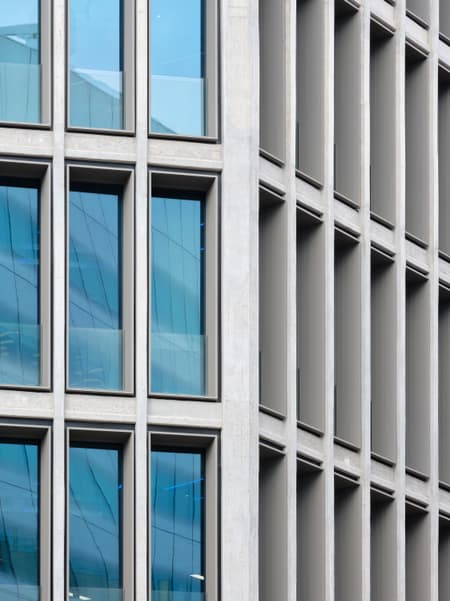
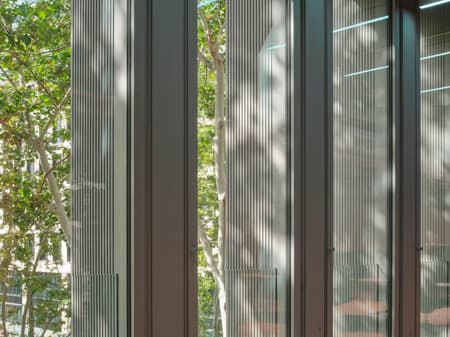
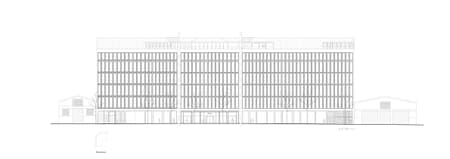
The project takes advantage of and highlights the potential of the existing concrete grid, freeing it from its old masonry sills and obsolete practicable closures. As a counterpoint to this clean and resounding framework, the new skin is configured by means of added modules, in the manner of ‘technological cassettes’, which are inserted between the ribs of the grid to provide it with contemporary comfort features. Thus, a deep aluminium frame protects and regulates the perimeter of the opening, integrating a glass balustrade, while the new glazed enclosure provides high insulation and solar control performance, with the frames hidden behind the perimeter mouths, thus drawing a clean void in which the light and reflections contrast and enhance the patina and materiality of the concrete.
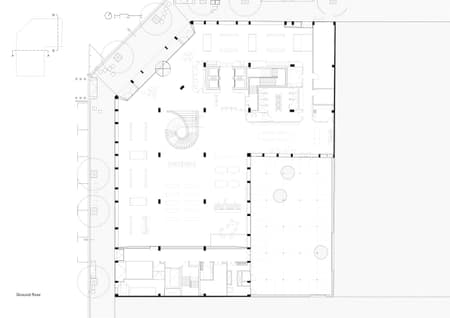
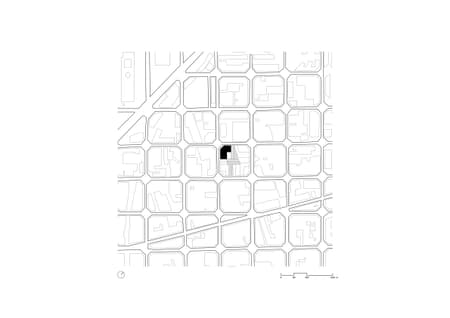
The reconversion of the building contributes to the regeneration of the urban environment of this part of Poble Nou, now transformed into the new 22@ technological district. The recovery of the old building thus becomes a valuable link between the preservation of the neighborhood's industrial memory and its willingness to be transformed: What was once a building relatively closed off from the city becomes a hub of activity that opens to its immediate surroundings. Thus, the first floors are open to public use, while the upper floors house the workspaces, which are open to the city through large glazed openings that are more than just windows; their abstract presence, depth, and play of reflections is complemented by the desire to serve as urban infrastructure, equipped for the installation of ephemeral assemblies, thus enhancing participation in city events such as the festival of illuminating arts "Llum BCN".
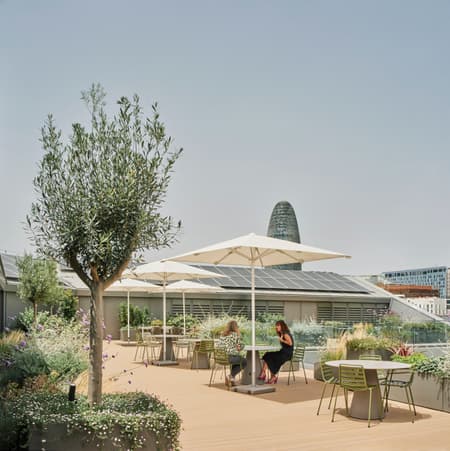
SWITCH aims to be a benchmark for quality workspaces in Barcelona, as well as for the refurbishment of existing buildings and their adaptation to the highest quality standards, serving as an example for the future reconversion of many other industrial buildings. It takes advantage of the opportunities of the original construction, an open and bright space, complemented with a new configuration of routes and vertical cores, high-performance facilities, and equipment, and the use of the roof as a playful space for gardens and renewable energy collection. Intelligent management of the building optimizes its efficiency, incorporating digital tools for the shared use of workstations, meeting rooms, common spaces, or access to mobility.
The rehabilitation of the old building revalues and prolongs the useful life of the peculiar reinforced concrete grid that constitutes its structure and façade. The old obsolete building thus becomes a building with maximum efficiency, a fact that is expressed in the façade, where the treatment of the openings combines the concrete framework, repaired in a careful but visible way, without hiding the signs of the passage of time, with complementary elements in the form of a technological "cassette" inserted within the grid. The contrast between these elements highlights the configuration and materiality of the structural system, while providing an optimal level of natural light, solar protection, and thermal insulation.
The result is a building with a low environmental impact due to the reduction in the carbon footprint of existing materials with a long-life cycle, the new energy efficiency, and its contribution to urban regeneration and improvement of the territory. The building has obtained the LEED and WELL Platinum certifications.
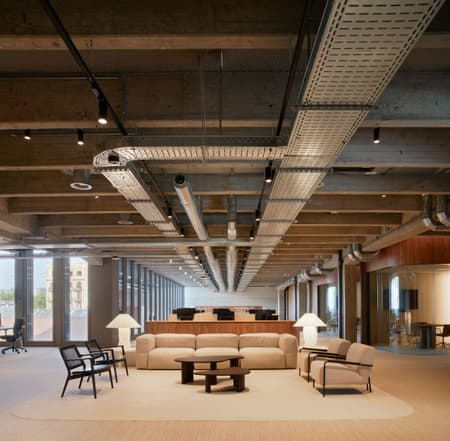
Transforming a former industrial building into contemporary, open-plan workspaces while keeping the concrete structure exposed is no easy task.
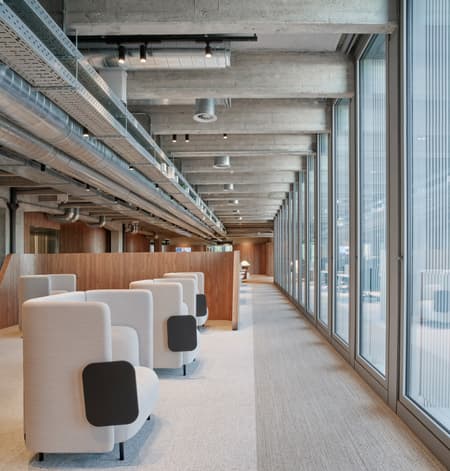
Thermal comfort is achieved through the installation of new cassette units and the careful treatment of the glazing, together with a spatial layout designed to provide optimal conditions: the main work areas, which require greater access to natural light, are located in the two zones closest to the façade, while meeting rooms and ancillary spaces are arranged in the central area, where lighting can be more closely controlled.
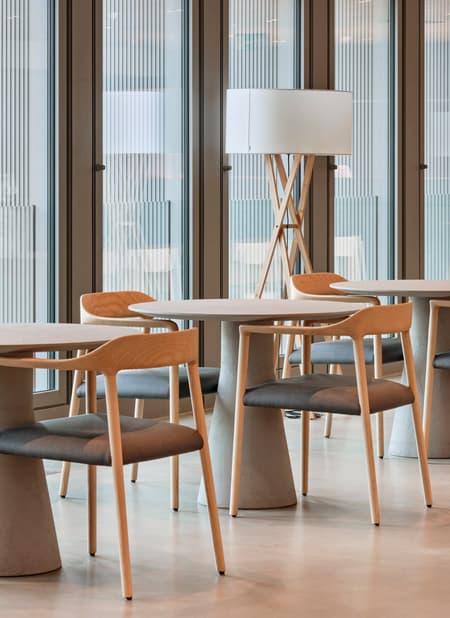
Acoustic comfort is ensured by treating the concrete slabs with a sprayed insulating finish applied directly to their surface. In addition, the materials selected for the interior design—carpet, wood and soft fabrics—further enhance sound absorption.
Fire safety has also been carefully addressed: the vertical circulation cores are enclosed, evacuation routes are kept clear and properly signposted, and all required fire-protection equipment is provided in accordance with regulations.
Finally, it is worth noting that the laboratory spaces, located on the first floor, fully comply with all safety and industrial-use regulations, while functionally maintaining a strong reference to the building’s former use.
The rehabilitation, due to the characteristics of the original structure—which required specific and targeted interventions—left little scope for prefabrication. However, the façade’s “technological cassettes” are prefabricated elements. Because of the irregularities in the concrete grid, these components do not share identical dimensions and therefore were not produced as a single standard module; instead, they were manufactured off-site and brought to the building for installation.
Although BIM methodologies were not applied in this project, it is worth highlighting the close and singular collaboration established between the client (Simon), the contractor (UTE Nova Seu Simon: Calaf Constructora / Agefred), and the core design team: Katty Schiebeck Studio (interior design), Estudi Antoni Arola and Estudi Jordi Tamayo (showroom interior design), MMAS Lighting (lighting), BIS Structures (structures), JG Ingenieros (building services), Local 4 (landscape design), Coderch Acústica (acoustics), and Dalmau + Morros (cost consultancy).
A total of 9,165 tonnes of construction materials have been identified (902 kg/m²). In terms of material traceability, 98% of these were classified as homogeneous materials and 2% as multi-materials.
Regarding material health, 22.7% of the materials could not be identified, 75.1% are Cradle to Cradle compatible, and 2.2% are Cradle to Cradle® Certified.
The building’s carbon footprint accounts for the greenhouse gas emissions generated during raw material extraction, transport to the factory, and product manufacturing phases (A1–A3). Emissions during the use phase of the building are not included in this analysis. The embodied carbon of the main materials used—representing 74% of the materials considered and excluding building services—amounts to 2,537 tonnes of CO₂ equivalent, or 249 kg CO₂ eq/m². The embodied freshwater used in the manufacturing of these products, across the same phases, totals 645,050 m³.
As this is a comprehensive refurbishment project in which the existing structure has been retained, it is estimated that the project has avoided 1,500 tonnes of embodied CO₂ by reusing these materials. This figure was calculated using the Carbon Designer 3D simulator on the One Click LCA platform.
The building has achieved the highest energy performance rating, Class A, with an energy consumption of 58 kWh/m² per year and emissions of 12 kg CO₂/m² per year.
Photovoltaic panels have been installed on the roof of the building, to cover part of its energy consumption and heating and cooling is achieved through Districlima, Spain’s pioneering and largest urban district heating and cooling network. It supplies heating, cooling and domestic hot water (DHW) to both public and private buildings through an underground infrastructure, offering a sustainable solution that drastically reduces energy consumption, fossil fuel use and CO₂ emissions by centralising production and harnessing local energy sources, such as waste heat.
A total of 18.2% (1,663 tonnes) of the materials are of circular origin, meaning they include recycled content, renewable materials with a certified chain of custody, rapidly renewable materials, or similar characteristics.
Looking ahead, 93.5% (8,573 tonnes) of the materials can be recovered at the end of their life cycle, of which 82% are recyclable and 17% can be reused.
Carry out and regularly update a full life cycle assessment (LCA) covering the entire supply chain as well as the building in use.
Define the Lean2Cradle True Value® through its key performance indicators (KPIs), including carbon management, material health, ecotoxicity of hazardous materials, circularity, productivity, lighting, temperature control, noise, indoor air quality, and the integration of plants and vegetation.
Integrate a holistic vision of sustainability into Simon’s ESG (Environmental, Social and Governance) strategy, grounded in its social, environmental and good-governance commitments. These factors should be embedded in the company’s economic activity while also supporting long-term economic prosperity.
Implement the European Level(s) framework for sustainable and circular buildings (Level III – L3: As built and In use), and verify alignment with the European Green Deal, the EU Taxonomy, the new Circular Economy Action Plan, and other EU policies related to the construction sector.