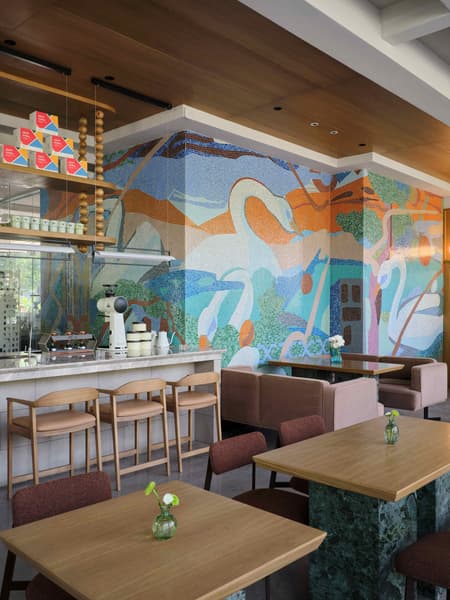
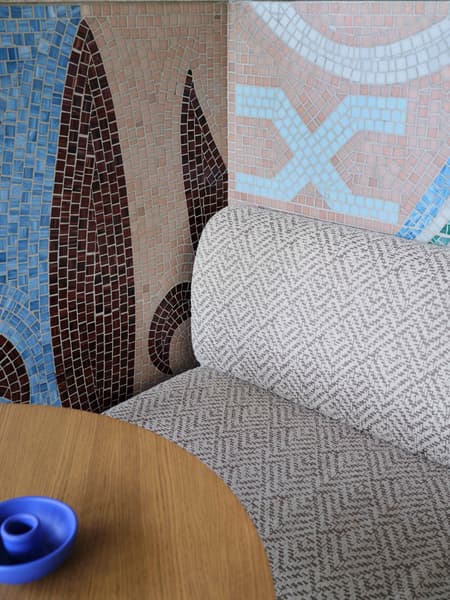
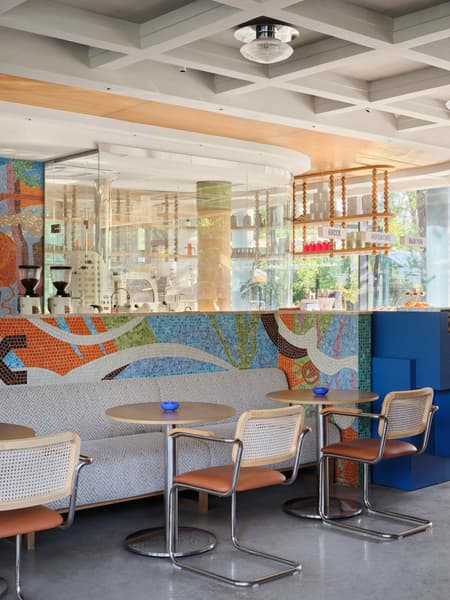
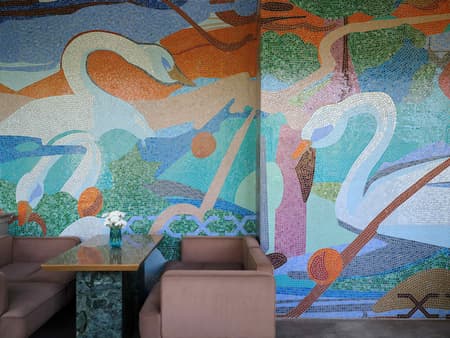
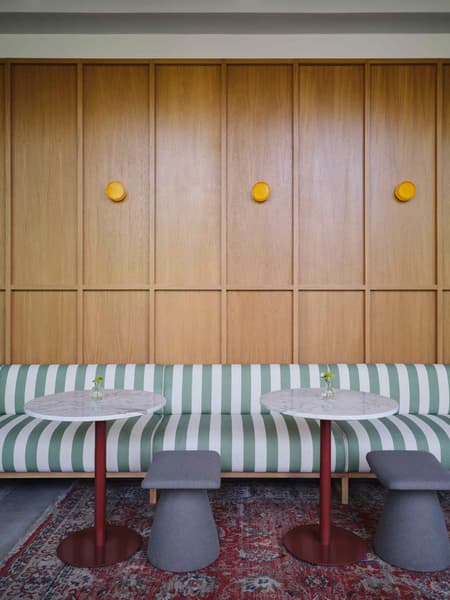
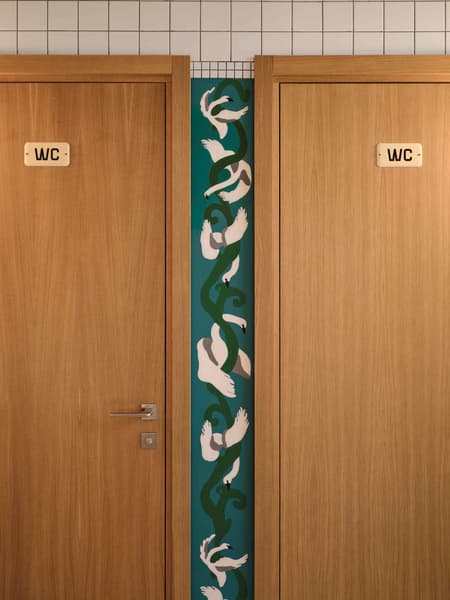
Aqqu Central Café is an architectural regeneration project that restores a legendary landmark of Almaty from the 1960s. The name Aqqu translates from Kazakh as White Swan, which historically refers to the pair of live swans that lived in the adjacent ponds, making this site a cultural icon for the city. The design is entirely dedicated to restoring the city's visual memory through a modern interpretation of 1960s modernism. The conceptual starting point for the project was a vibrant swan mosaic created by local artist Anastasia Zharko. Its bright palette of blue, yellow, red, and burgundy served as the foundation for every color selection throughout the interior.
The project is located in the historic center of Almaty within Manshuk Mametova Park, where a void had remained for decades following the destruction of the original building. The primary challenge was the delicate task of recreating the pavilion within a protected park ecosystem while managing high public expectations and a responsibility to generational memory. To restore the atmosphere as accurately as possible, the architects studied city archives and collected vintage photographs to piece together the lost aesthetic. To achieve absolute authenticity, the design team sourced genuine decor and details from local flea markets, which helped recreate the soul of the original Aqqu and made the space feel familiar to older generations.
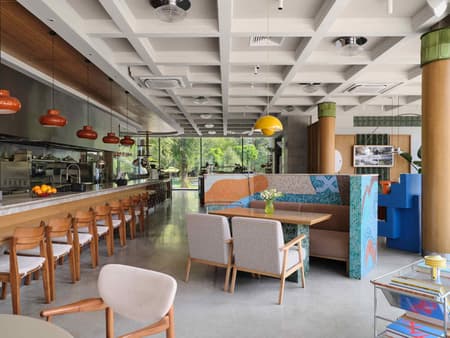
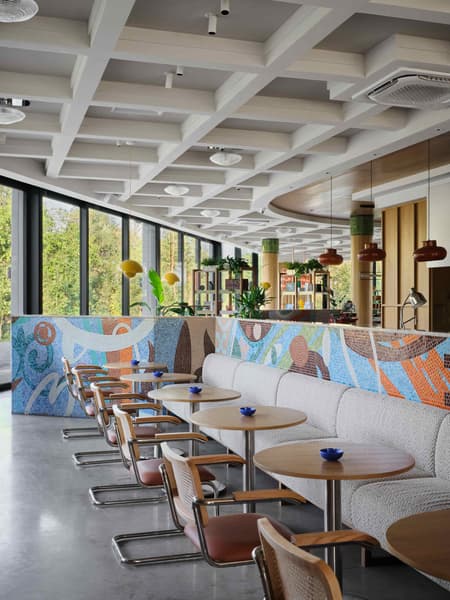
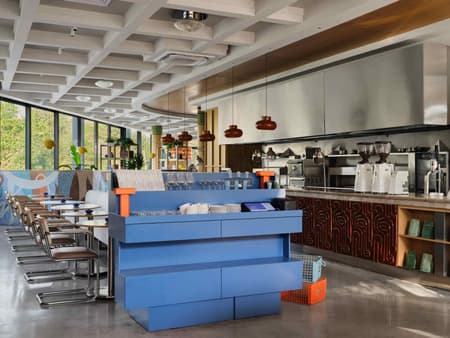
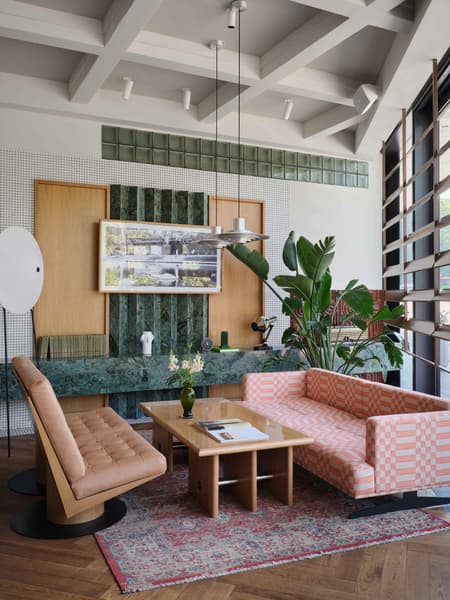
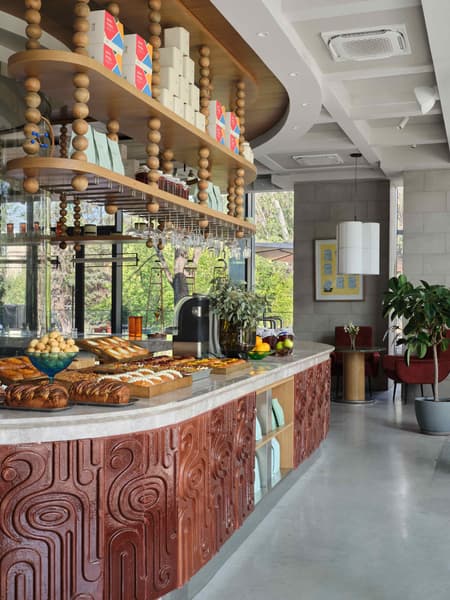
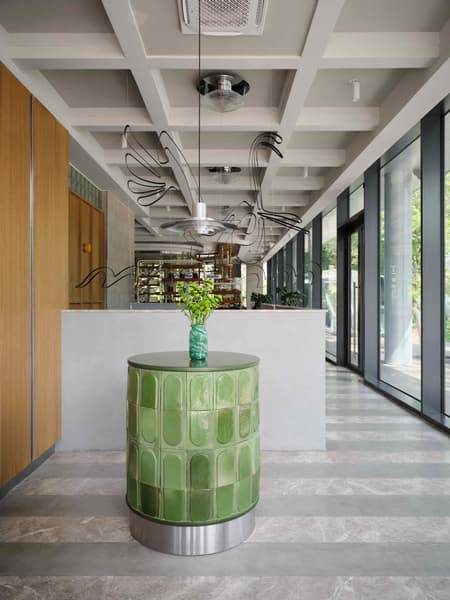
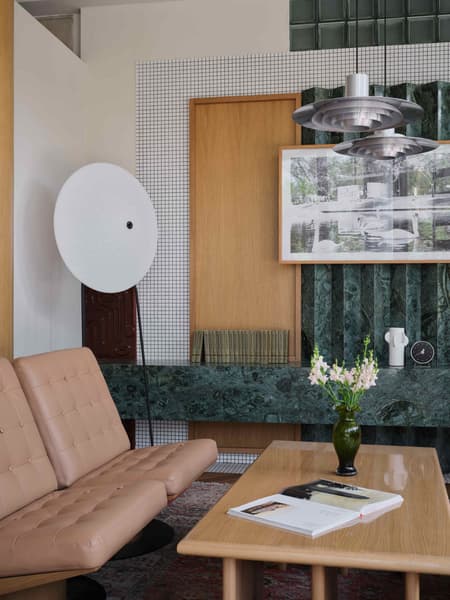
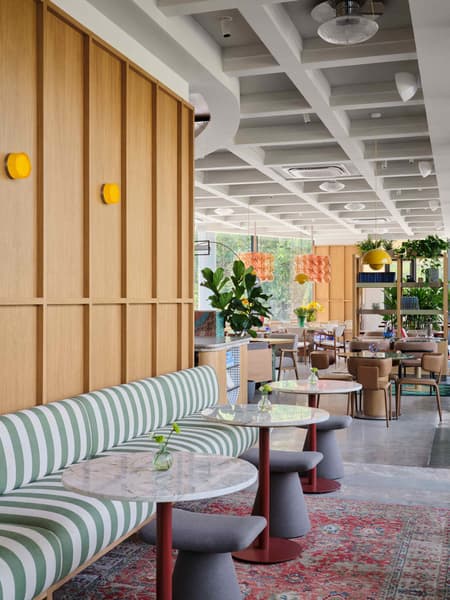
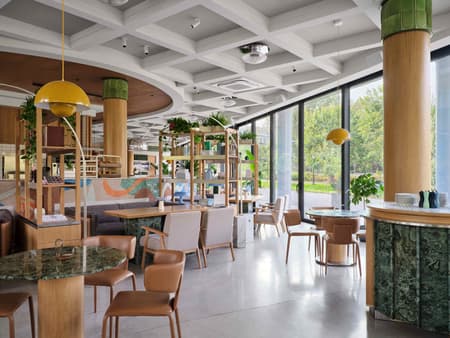
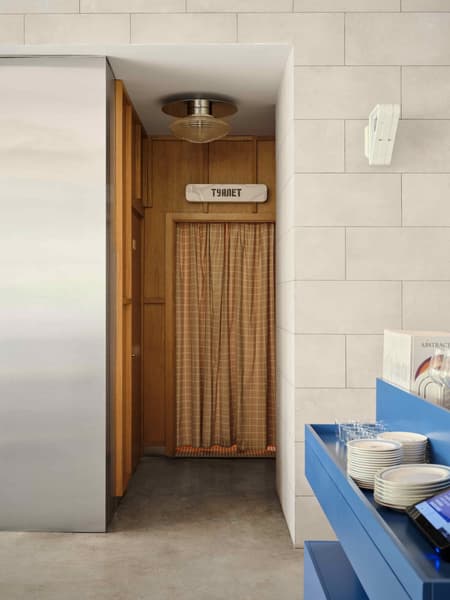
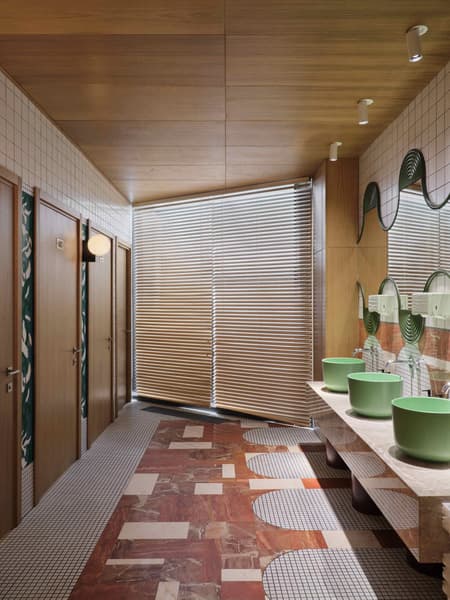
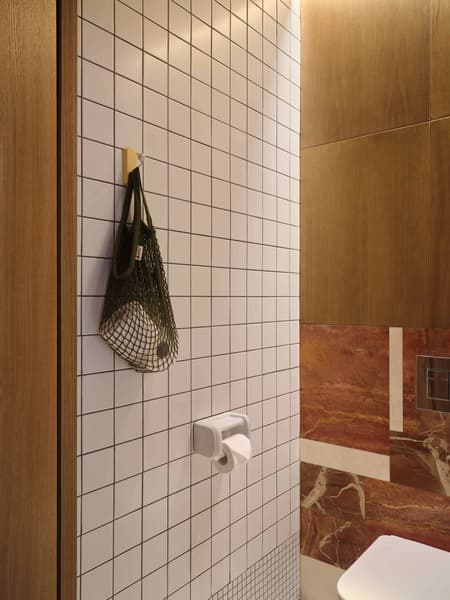
The 1,150 ㎡ building is divided into two levels to maintain a sense of visual lightness within the park environment. The materials reflect Almaty's unique architectural code, including natural oak veneer and exclusive ceramic panels by Faski studio. The geometric patterns of these ceramics were inspired by the concrete balcony lattices common in Soviet-era Almaty. The interior merges global design icons with local craftsmanship.
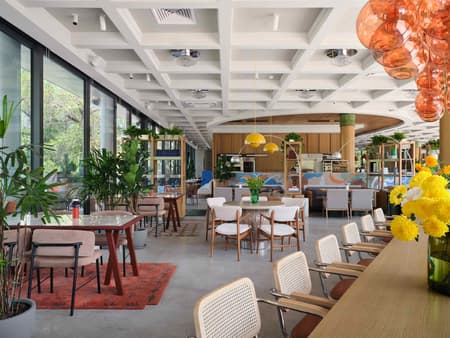
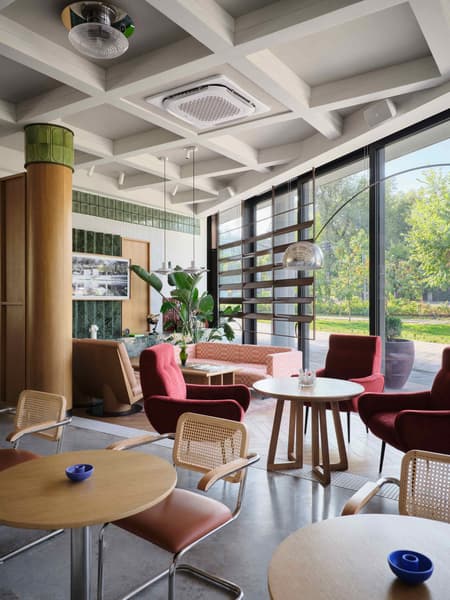
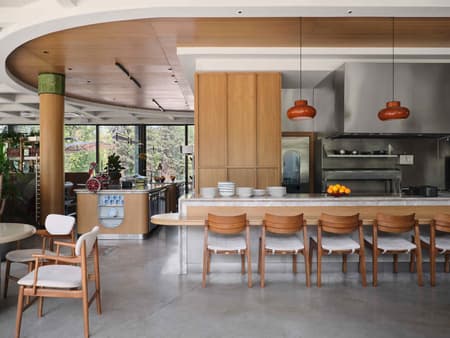
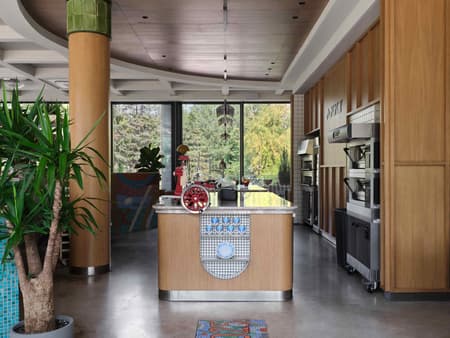
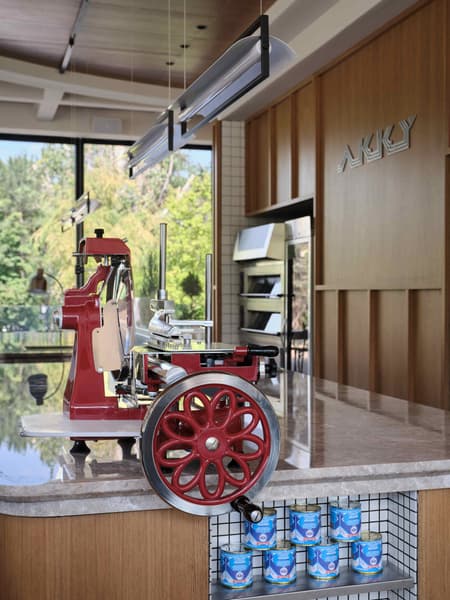
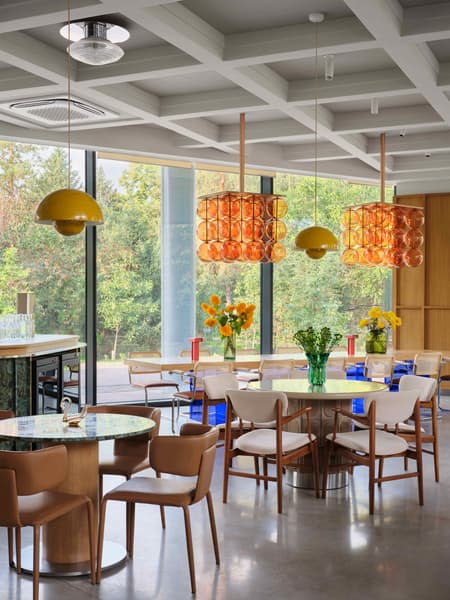
Lighting features the Flowerpot lamps by &Tradition designed by Verner Panton in 1968, along with P376 pendants and the Arco floor lamp by Flos, beside pieces from Audo Copenhagen and Miniforms. Furniture includes Burkit and Arai chairs by Jana Cara and Turanga chairs by Qaragash Furniture, as well as custom armchairs and tables designed by Vladislav Churikov. The Aqqu swan logo was reconstructed from archival photos by Art Guild using metal ribbon techniques to serve as the project's primary symbol of identity.
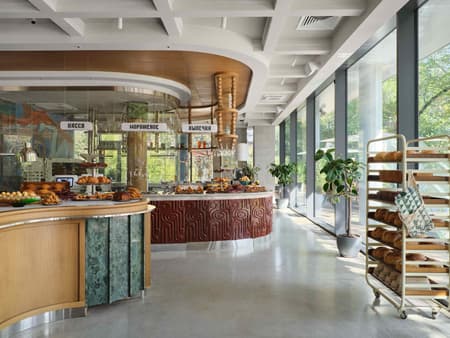
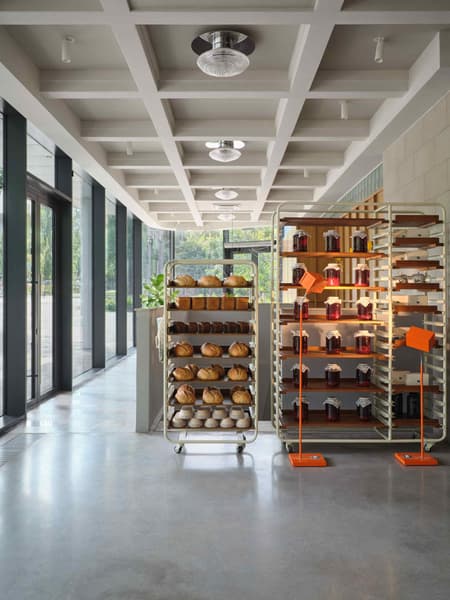
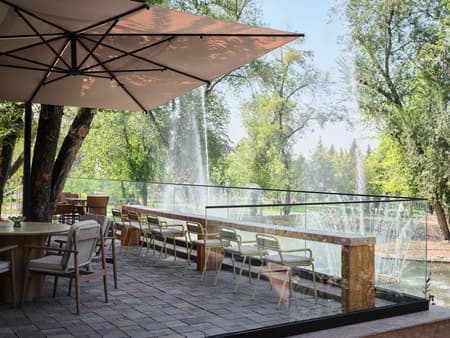
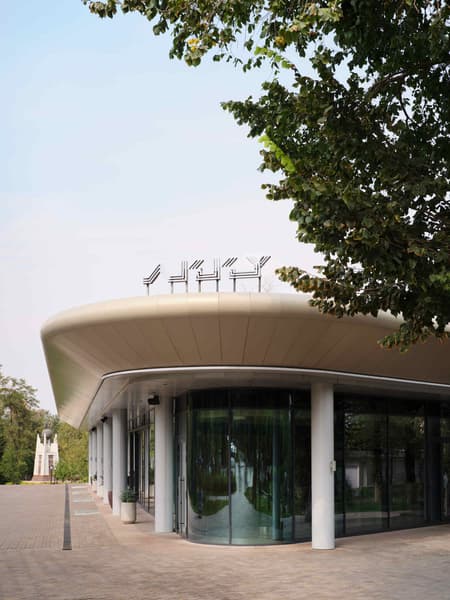
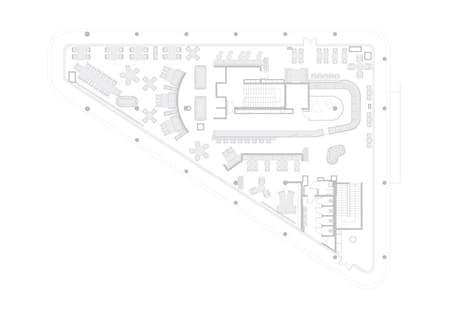
The space is organized so that the 650 ㎡ ground floor remains as open as possible. Continuous panoramic glazing along the entire perimeter dissolves the boundaries between the interior and the park. To achieve this concept of a transparent "floating" volume without solid walls, all technical zones and a professional kitchen spanning 500 ㎡ were moved to the basement level. Today, Aqqu Central Café confirms the success of architecture rooted in respect for history. The project demonstrates how lost heritage can be recovered through a painstaking search of archival data by uniting global design trends with the unique cultural code of old Almaty.