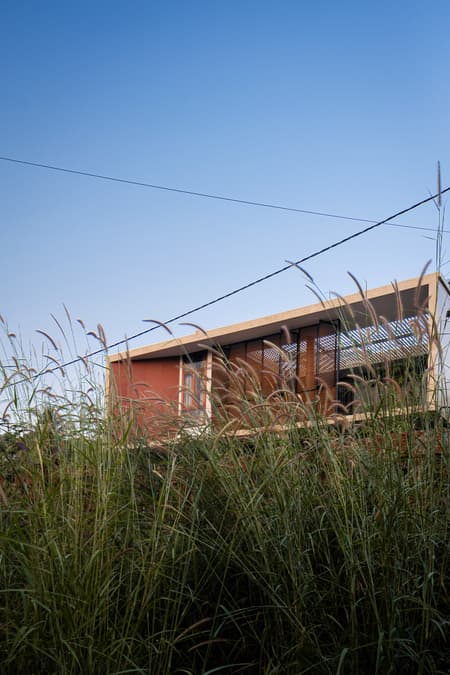
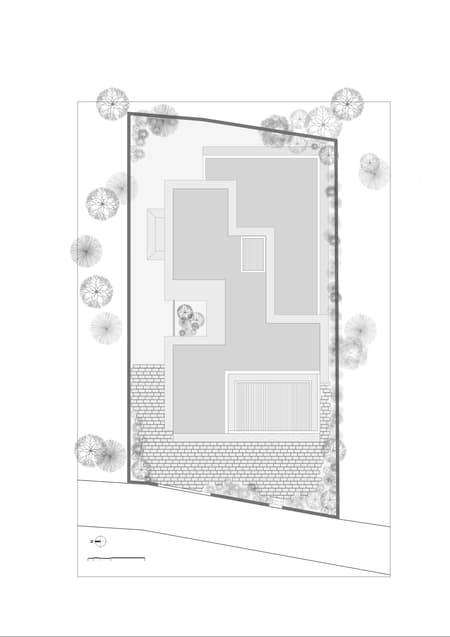
The house began not with a formal brief, but with a conversation about the kind of life the clients hoped to build within it. Set along the transitional edge between the denser urban fabric of Kannur and the quieter residential landscapes of North Kerala, the project emerged from a desire for a home that felt open and connected, yet deeply private. This tension between openness and retreat became the foundation of the architecture — shaping a home that turns inward while remaining constantly connected through light, landscape, and layered transitions.
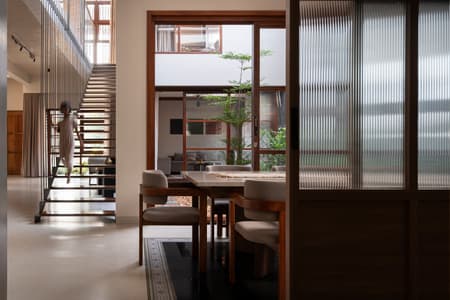
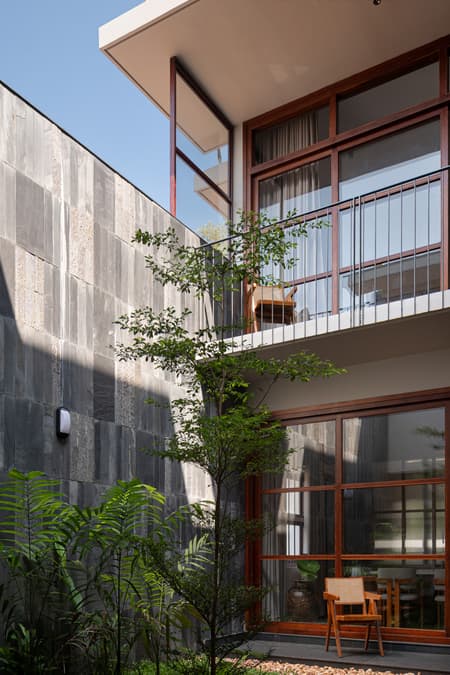
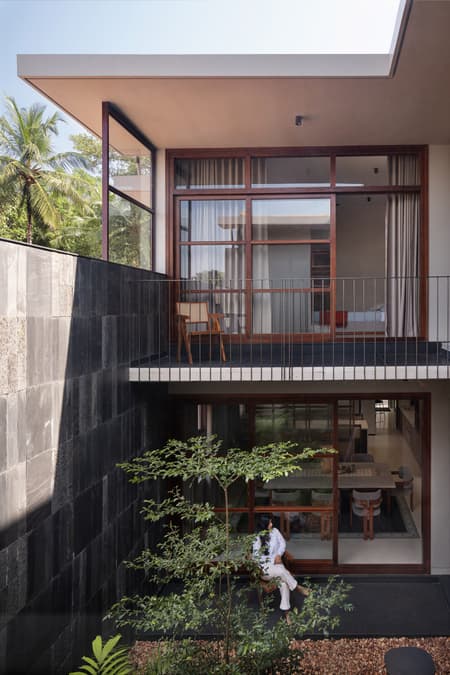
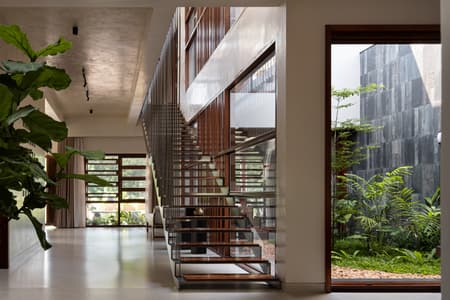
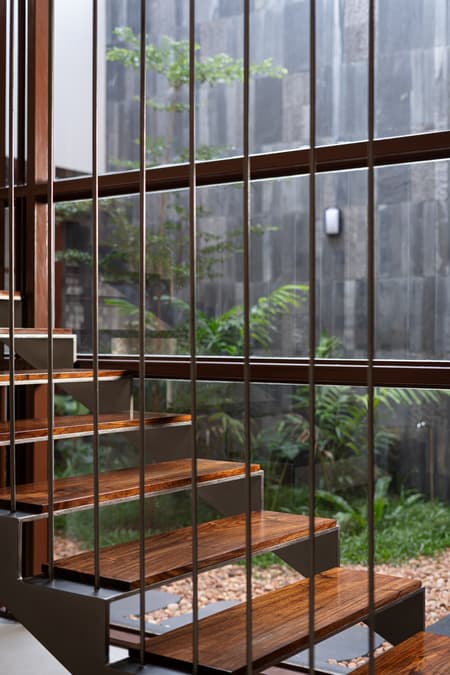
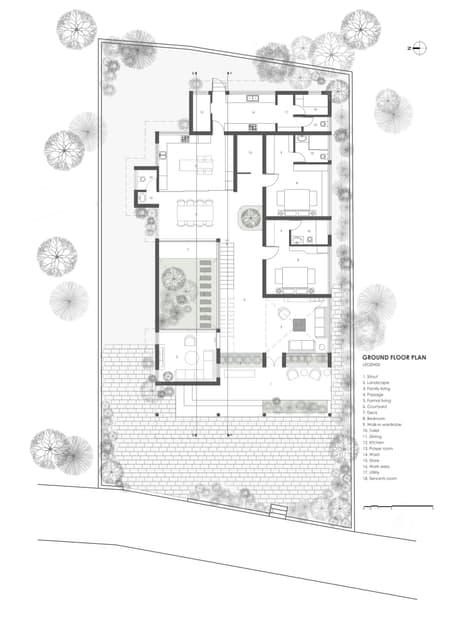
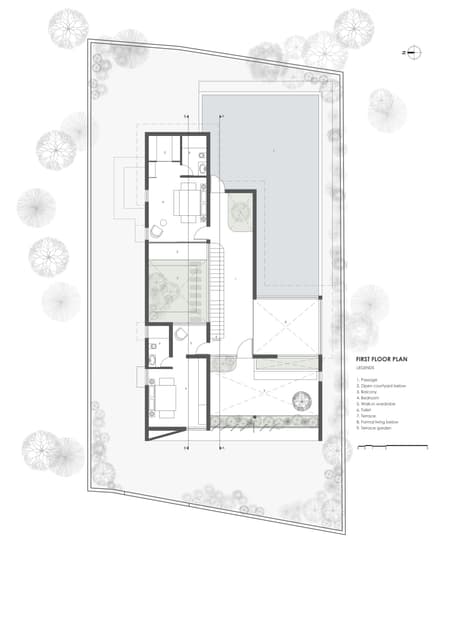
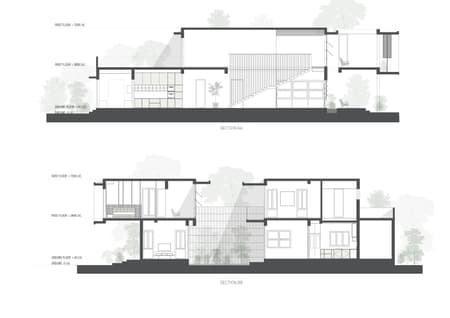
At the heart of the home lies a courtyard that became more than an architectural gesture. It evolved into the emotional center of everyday life — a quiet breathing space around which movement, gathering, and moments of pause unfold naturally. Throughout the day, changing light enters through the courtyard, drawing sky, greenery, and ventilation deep into the interiors while creating a constant awareness of nature within the home.
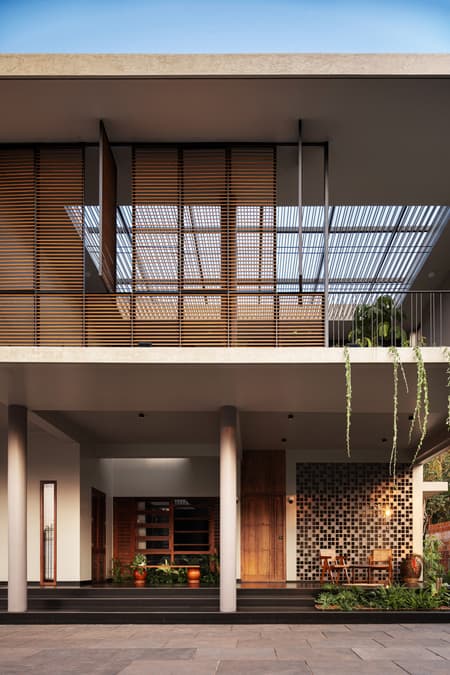
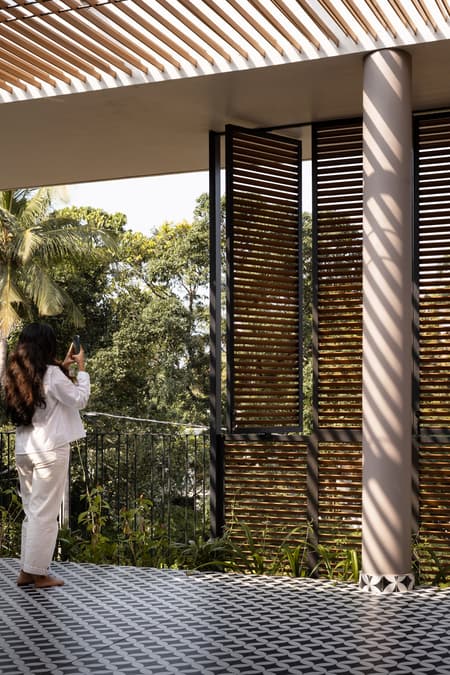
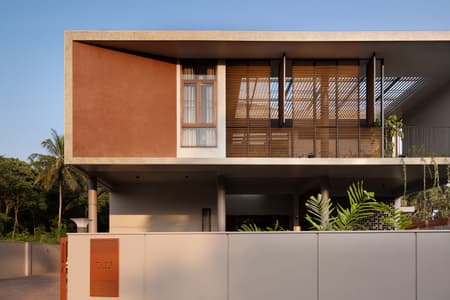
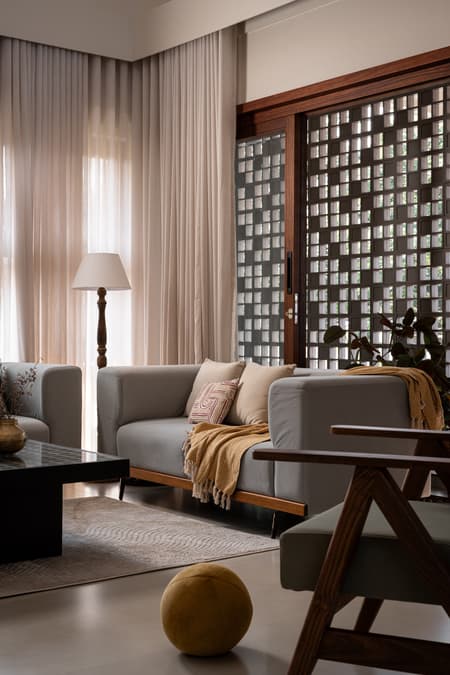
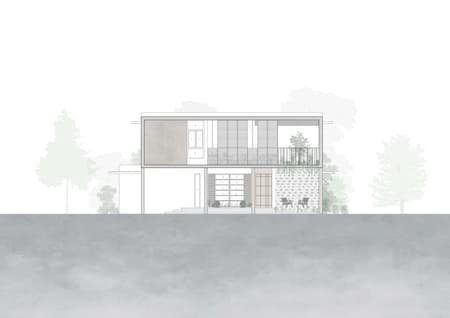
Responding to the harsh western sun, the façade is reimagined with a series of layered screens, louvers and jali walls that form a protective envelope balancing privacy while filtering heat and glare. As daylight shifts through the day, light slips through these layers, casting soft bands of shadows across the interiors.
Screens, deep openings, and shaded verandahs respond to the tropical climate and heavy monsoon while allowing filtered light and natural ventilation to move freely through the house. More than a façade element, the screen becomes the defining identity of the home, shaping how it is seen and experienced.
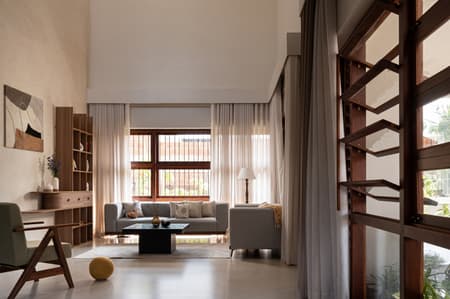
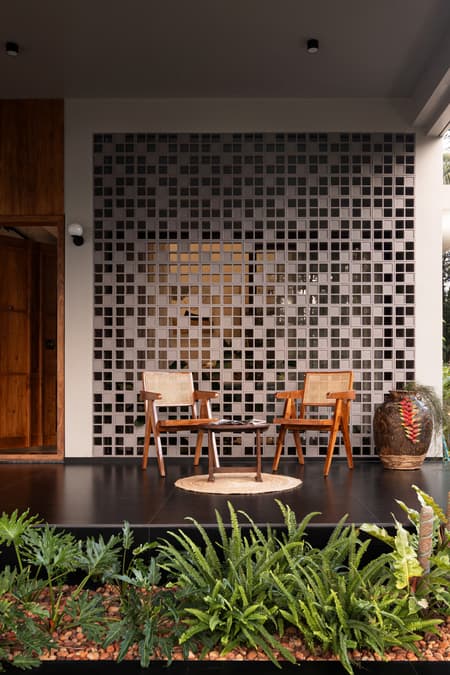
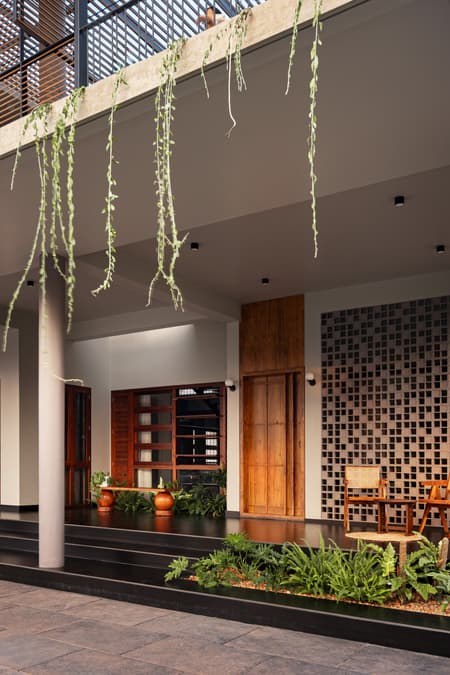
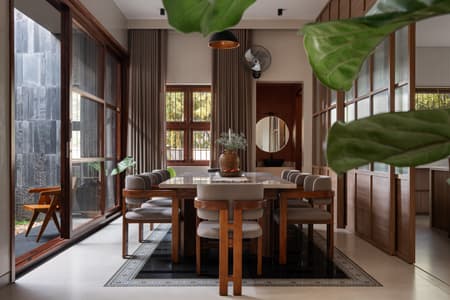
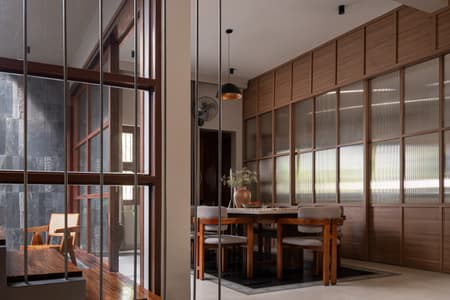
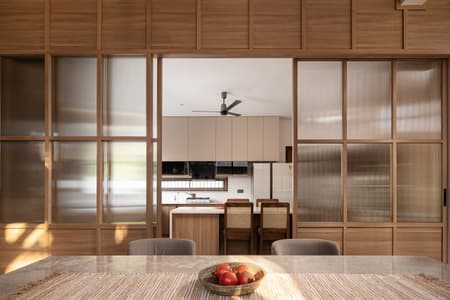
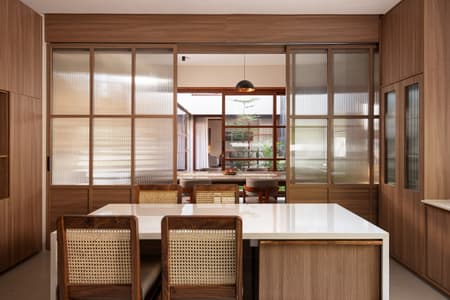
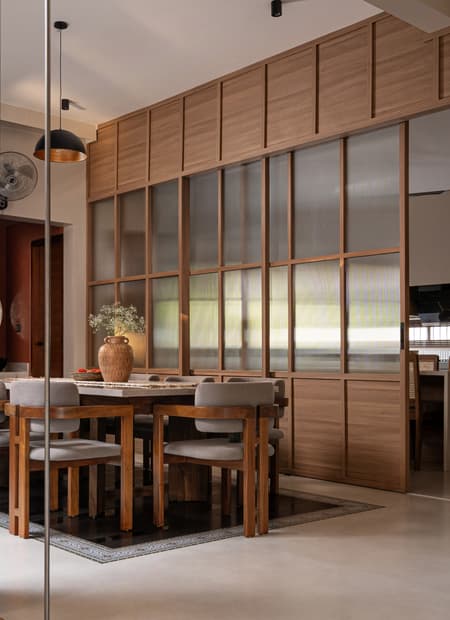
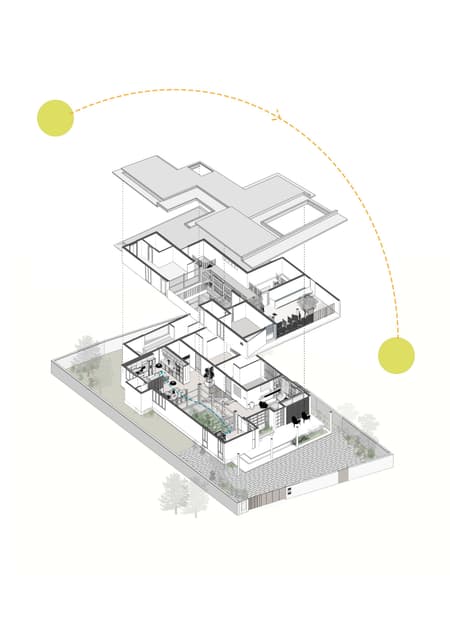
Arrival into the home is intentionally gentle and understated. A linear sit-out lined with tropical planting, a perforated jali wall, and a simple wooden bench creates a gradual transition between outside and inside. From here, the house unfolds through a series of connected yet adaptable spaces. The living, dining, and kitchen areas flow together along an open linear plan, remaining visually anchored to the courtyard at all times. Instead of relying on rigid boundaries, the architecture introduces varying degrees of openness through layered thresholds and movable partitions.
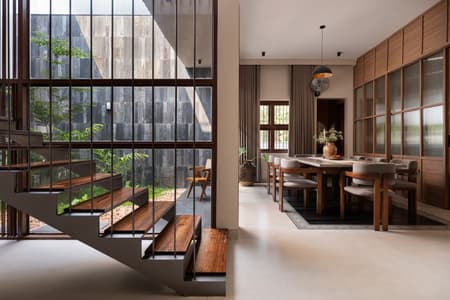
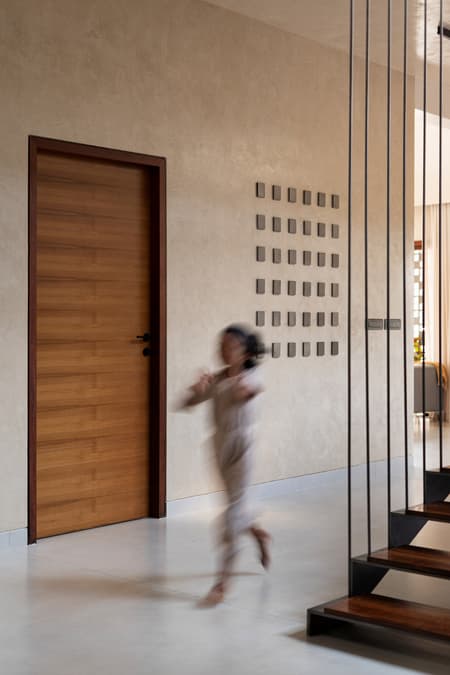
Full-height wooden sliding panels allow spaces to expand or retreat depending on the rhythms of family life, while large sliding glass openings dissolve the boundary between the house and the surrounding garden. Walls are intentionally kept minimal, allowing visual continuity across spaces and strengthening the relationship between the interiors and landscape. Rising through the double-height volume, a lightweight steel staircase becomes almost sculptural in its restraint, connecting the upper level without interrupting the openness below. Above, private balconies overlook the courtyard, maintaining visual connection within the family while preserving intimacy for the bedrooms.
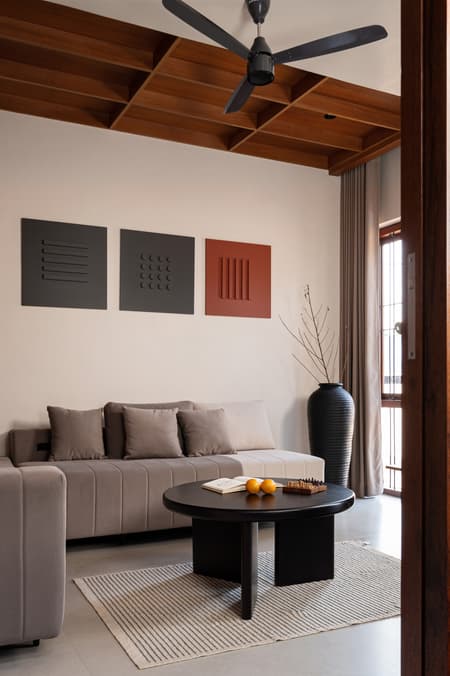
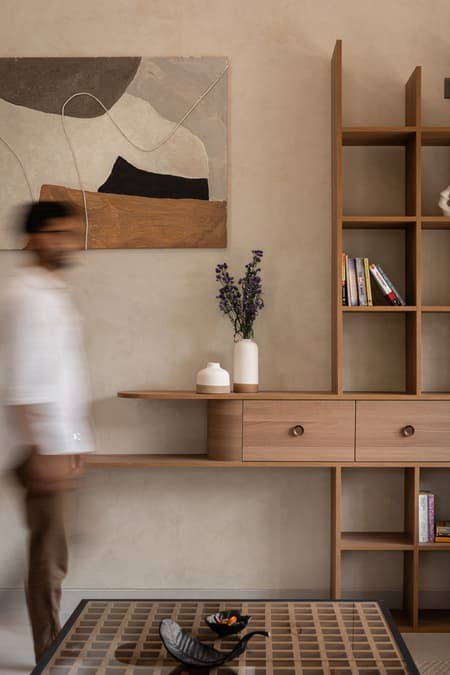
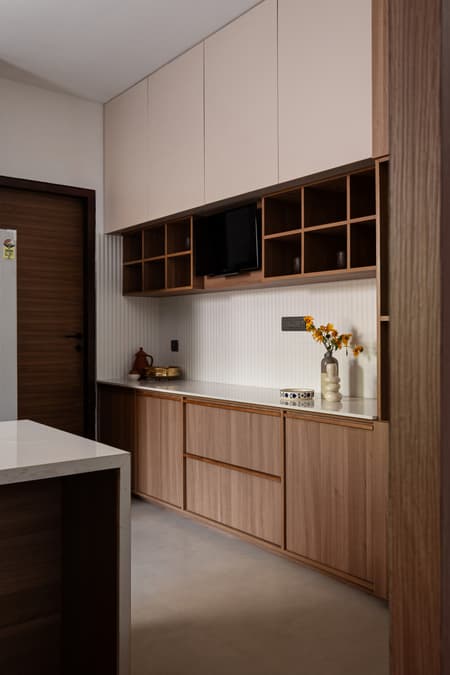
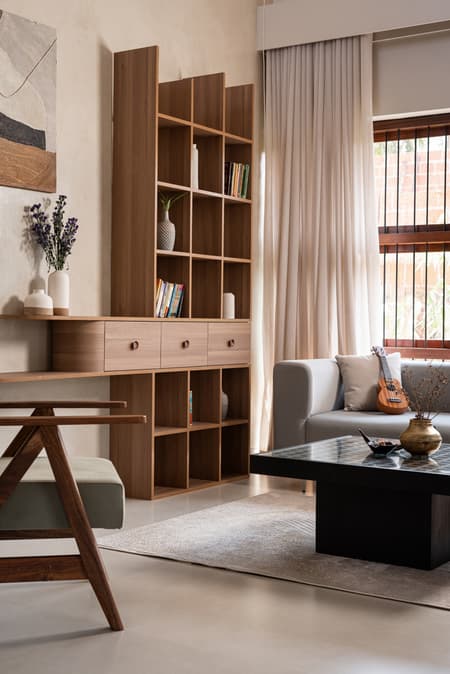
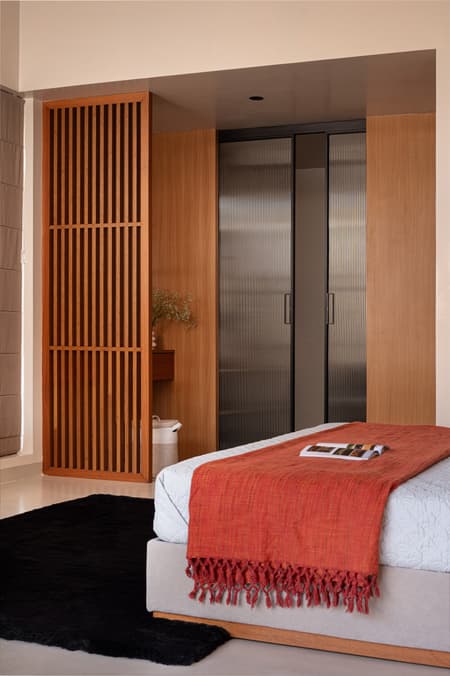
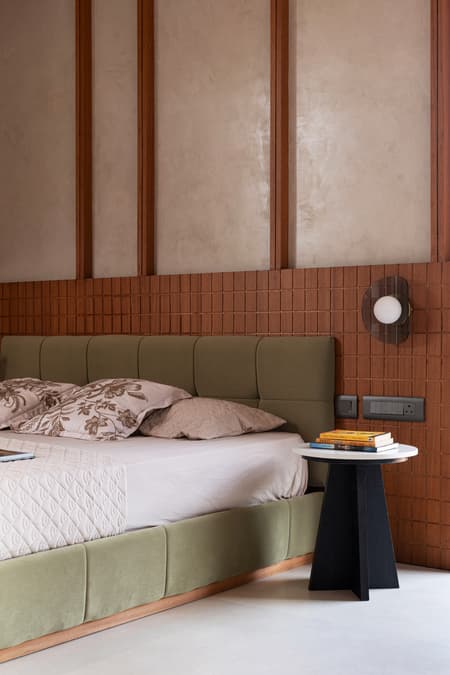
The material palette follows the same philosophy of restraint. Grey monotone tiles, textured walls, natural wood, slate stone, and subtle granite flooring create a calm, muted atmosphere that feels grounded and tactile. Rather than relying on decorative gestures or strong contrasts, the home finds richness through texture, light, and material honesty. Every element is intentionally quiet, allowing the experience of space, shadow, and nature to define the character of the house.
More than a singular architectural statement, the project becomes an exploration of how privacy, climate, light, and everyday living can coexist through layered spatial experiences — creating a home that feels both sheltered and deeply connected to its surroundings.