Designing a building that establishes a profound dialogue with both the urban and natural landscapes requires more than technical expertise—it demands sensitivity, vision, and an architecture that transcends the built form. In Curitiba, the AGE360 residential tower emerges from this duality between pragmatism and poetics. The project integrates art, engineering, and purpose, balancing structural innovation with a deep connection to its surroundings.
In this interview, architect Greg Bousquet shares the challenges and creative solutions that shaped the project, which was a finalist at MIPIM 2025 and the recipient of prestigious accolades, including the Rethinking The Future Award, iF Design Award 2021, GBC Condomínio certification, and Fitwel certification—recognizing buildings that prioritize human health as a fundamental design principle.
From its exposed concrete exoskeleton, which liberates the interiors, to its planters that weave mineral and vegetal elements together, and the elevated common areas that redefine vertical living, AGE360 exemplifies how architecture can be both rational and awe-inspiring. This conversation invites reflection on the construction of urban legacies and architecture’s role as a tool for envisioning more sustainable and integrated futures.
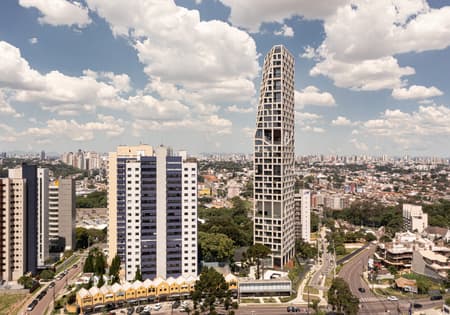
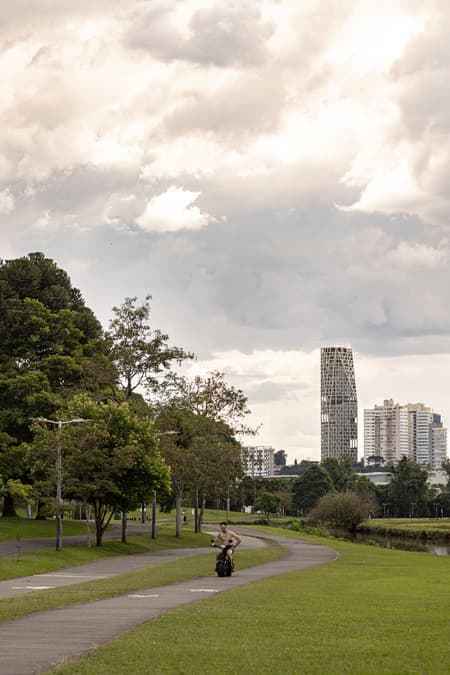
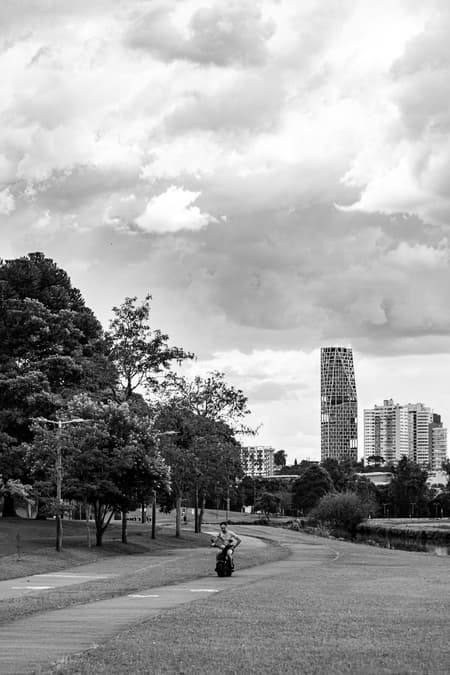
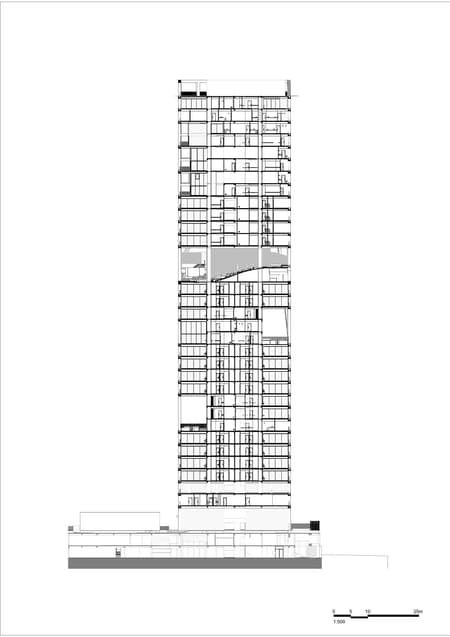
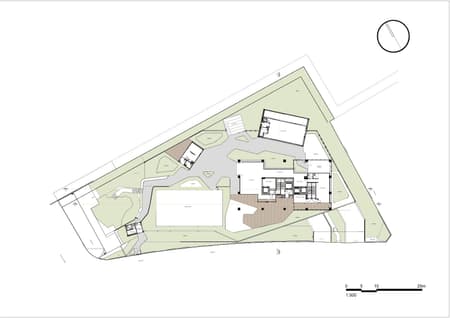
Greg Bousquet – The client’s briefing was clear: create a landmark for the city’s skyline. Located in the Ecoville neighborhood—an expanding, low-density area—the site called for a building that would stand out both in height and in its relationship with the surroundings. The client envisioned a 124-meter tower, visible from multiple points across the city. This directive led us to push verticalization to its limits while carefully balancing aesthetics, functionality, and urban impact. Naturally, reconciling the interests of the developer, engineers, and the architectural concept was an intense process. We held workshops and implemented a design-thinking methodology to ensure that every decision was both feasible and aligned with the core concept. The result is a building that embodies these exchanges and commitments while staying true to the original vision.
AO’s architecture moves between art and technique. How did you translate objective elements—such as topography and zoning regulations—into an artistic approach that strengthens the building’s connection with Curitiba’s urban and cultural fabric?AO’s architecture moves between art and technique. How did you translate objective elements—such as topography and zoning regulations—into an artistic approach that strengthens the building’s connection with Curitiba’s urban and cultural fabric?
GB – For us, art and technique are inseparable pillars of architecture. We always start with tangible data—topography, sun exposure, and zoning laws—but we also incorporate intangible aspects such as history, culture, and local sociology. This intersection of the objective and the subjective is what sculpts our projects, giving them a unique identity that is deeply connected to their context.
High-rise towers present structural and functional challenges. What were the main innovations of AGE360 in terms of its concrete exoskeleton, and how did this redefine the residents’ experience?
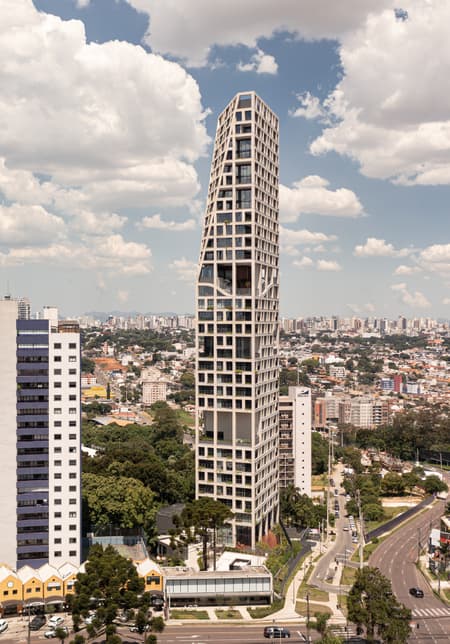
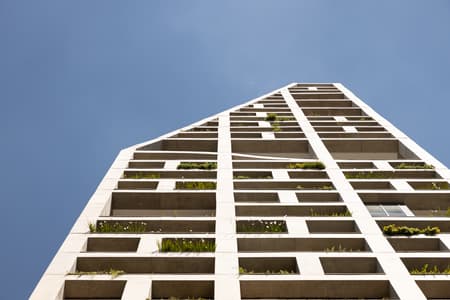
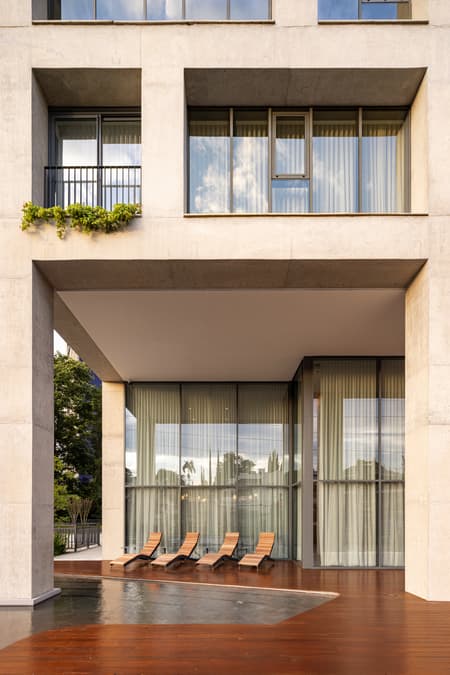
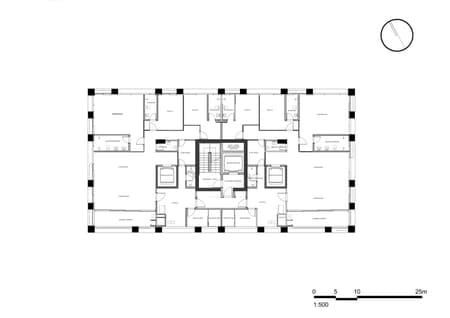
GB – Two major challenges were the circulation core and the structural system. In high-rises, these elements can take up a significant amount of space or obstruct views. To address this, we opted for a concrete exoskeleton—a solution that frees the apartment interiors from columns, allowing for flexible layouts and uninterrupted views. We conducted extensive on-site testing with the construction team to ensure consistency in the texture, pigmentation, and finish of the concrete. The structural exoskeleton’s uniformity was crucial in maintaining the tower’s visual identity. In the end, we found that the contrast between mineral and vegetal elements created a striking dialogue, reinforcing the concept of integrating the building with nature.
The design of AGE360 stands out for its distinctive volumetry and chamfered edges. How did local zoning restrictions influence these choices, and what kind of experimentation was necessary to achieve the final outcome?
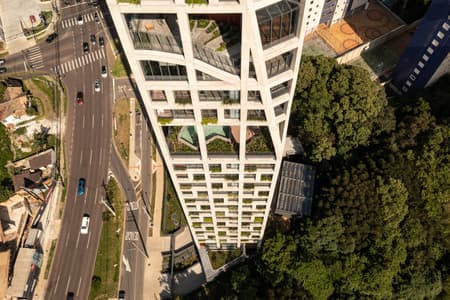
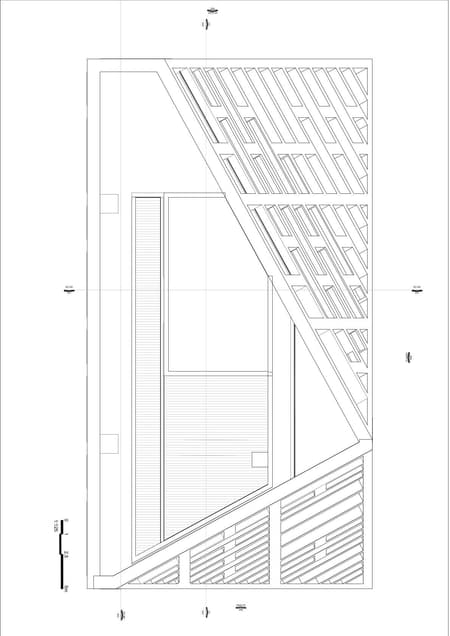
GB – Interestingly, the design stems directly from Curitiba’s zoning laws. We conducted 48 tests to determine the best positioning for the tower on the site, always complying with regulations while optimizing efficiency and views. The final volumetry, with its chamfered edges, is a direct response to these legal constraints and ultimately shaped the building’s unique identity.
The concept of high-ceilinged interiors and planted terraces brings a unique dynamic to the project. How did these choices impact both functionality and perception for residents and the real estate market?
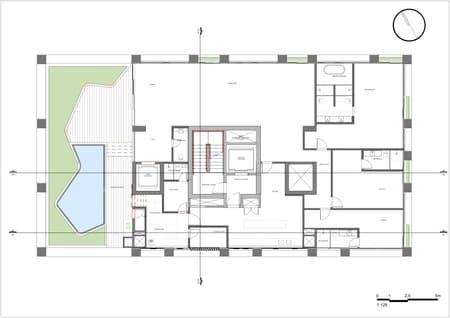
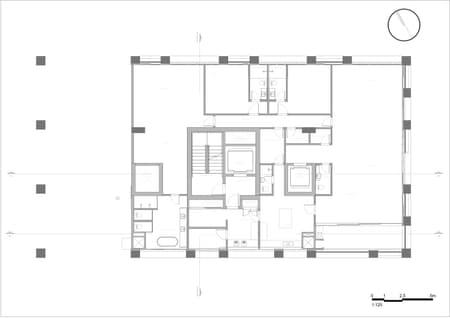
GB – This was made possible by Curitiba’s zoning code, which allowed us to work with "voids" in the volumetry. These spaces gave rise to duplexes, triplexes, and planted terraces. Vegetation is essential to us, as we always seek a balanced dialogue between the mineral and the organic. In this project, we designed planters embedded at the floor level of the terraces, creating the sensation of a continuous garden and ensuring that all residents have direct access to greenery. This integration is not merely decorative—it fosters a genuine connection with nature.
What criteria guided the selection of plant species, and how did you ensure their long-term maintenance?
GB – It was crucial to select species suited to the building’s height, resistant to wind, and requiring minimal pruning. Additionally, the planters are accessible directly from the terraces, simplifying maintenance and eliminating the need for expensive scaffolding. Every detail was designed for practical, efficient upkeep, leveraging our experience of over 20 years in similar projects.
The common areas are positioned at the tower’s midsection rather than at ground level. How does this decision impact the social experience and the symbolic meaning of elevating these spaces to the heart of the building?
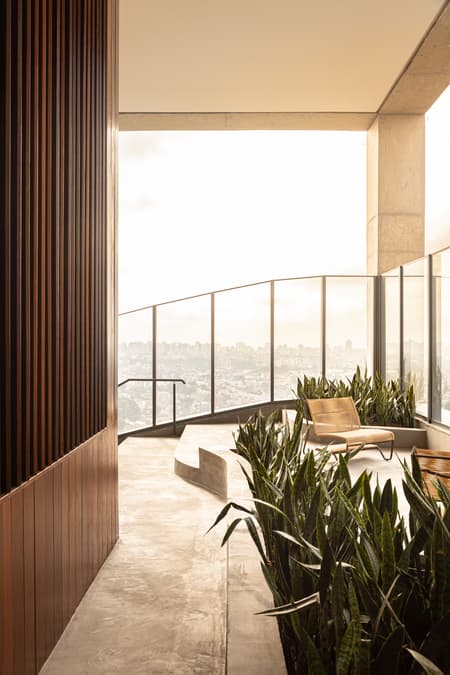
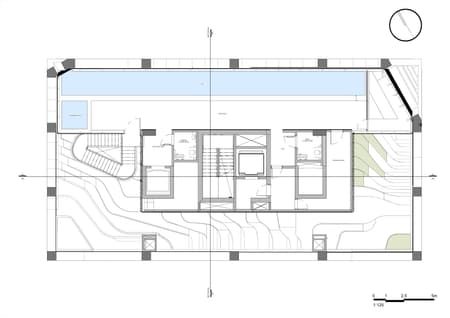
GB – We positioned amenities like the pool, spa, and gardens in the middle of the tower rather than on the ground floor. This creates a democratic gathering space with breathtaking views of both Barigui Park and the city. Beyond enhancing sociability, this decision reinforces residents’ well-being by placing them at the center of the experience. It also aligns with the project’s "wellness" concept. AG7, the project’s developer, envisioned an environment that fosters tranquility, well-being, and a reconnection with nature. The common areas feature natural wood finishes, harmonizing with the concrete and vegetation. The exposed core of the building, visible in certain areas, was also treated to emphasize biophilic design and a sense of warmth.
GB – The way it blends pragmatism and aesthetics. Every decision was driven by functionality yet resulted in something poetically integrated with the urban and natural context. The building exemplifies how architecture can be both procedural and rational while still delivering moments of surprise. Our goal is always to leave a positive legacy—both for the residents and for the city. This project reflects our philosophy of creating contextual architecture, one that respects its surroundings and local experiences while proposing innovative solutions. The tower is not just a visual landmark; it is also a proposition for a richer and more sustainable urban experience.