

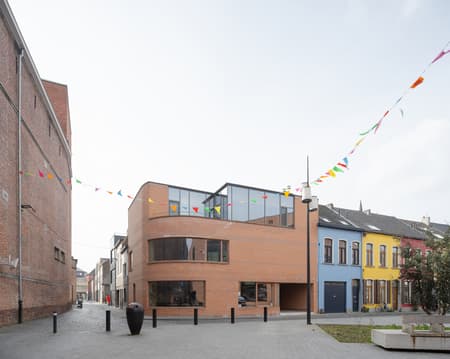
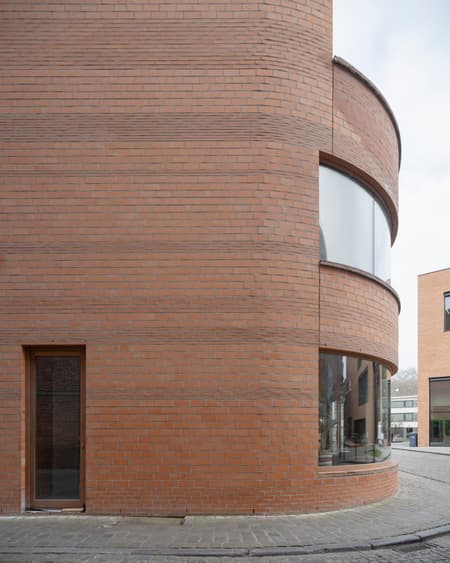
The project gives a new face to a small-scale corner plot in the middle of the city centre of Aalst. The typology of the urban corner also plays a central role. Even more than in public squares, corners flow from intersections, intersecting lines, the elementary feature of travelling between places. That is why this small corner plot harbours so much potential within the small-town context of Aalst. The corner is put to maximum use in this design.
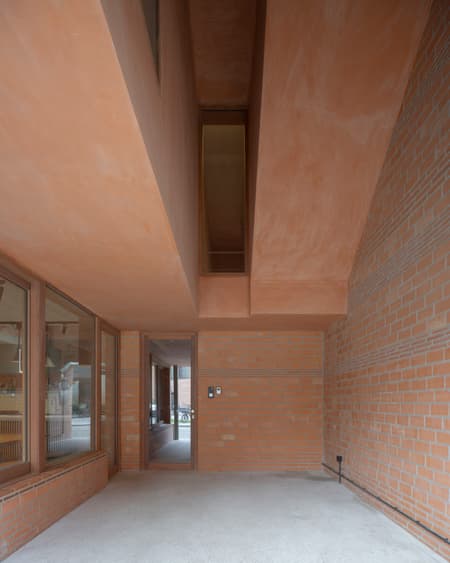
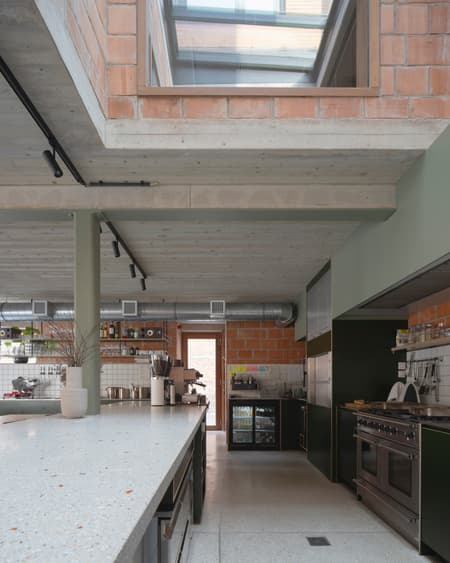
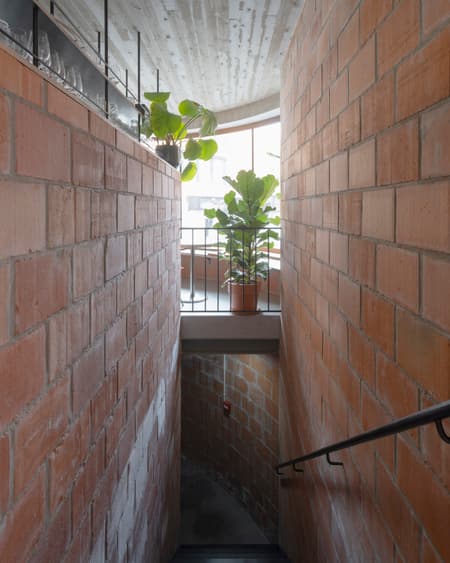
The project is formed by a pared-down stack of three entities and functions interwoven with each other. The limited area combined with an extensive programme and various (urban) building constraints necessitate compact and hyper-functional design and construction. Not a single square metre goes to waste. Within the small surface area, a thorough, functional puzzle is put together that can still guarantee sufficient architectural qualities. A central patio/light street provides light to all levels and the common stairwell. Light, transparency and connection between all functions is a focal point.
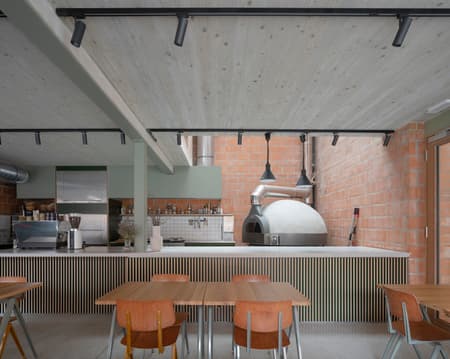
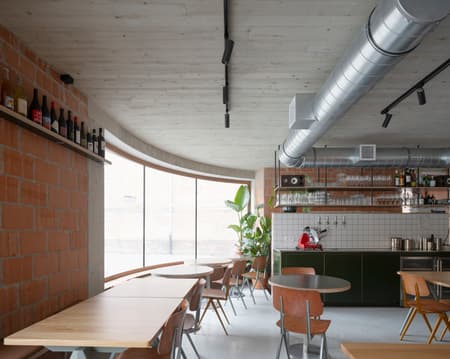
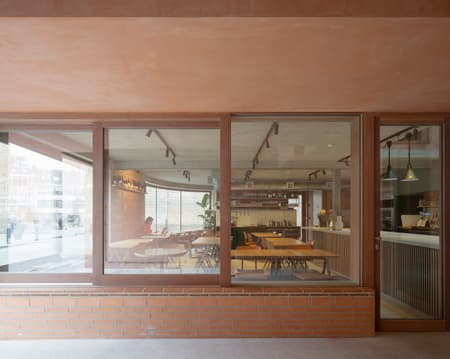
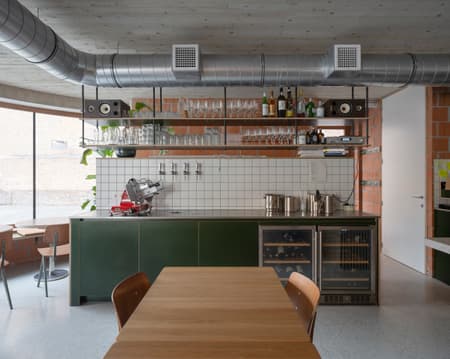
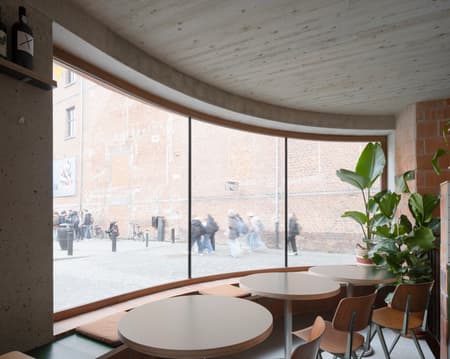
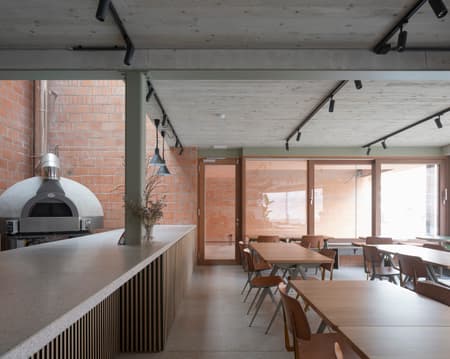
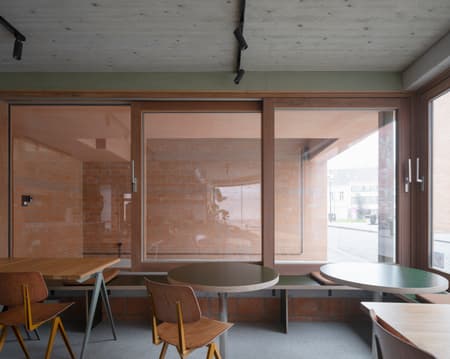
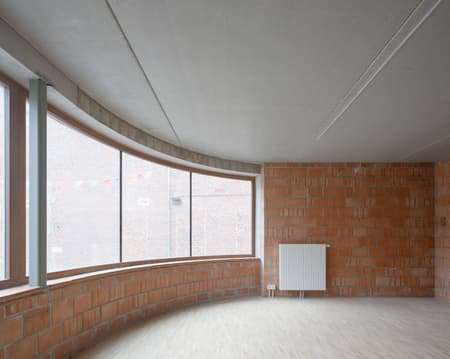
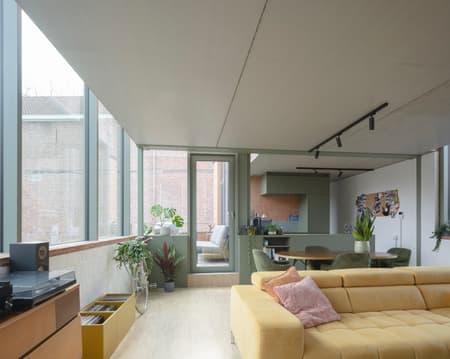
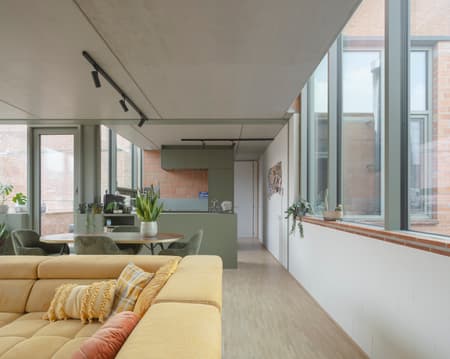
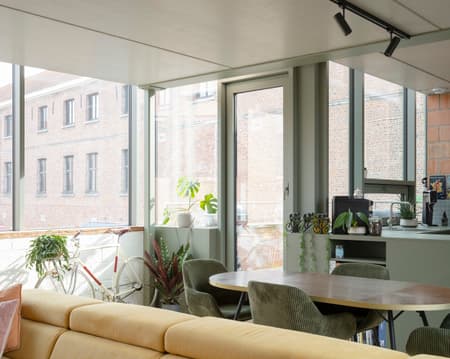
The ground floor and, most of the, underground building layer comprises the restaurant ‘Wally’. The restaurant is conceived as a compact, open seating and cooking space. The window openings are set at seating height so that the façade can be largely opened up without losing seats. The first floor houses a multifunctional co-working space. This office space, with separate toilet and kitchenette, on the first floor is also conceived as one open space with wide views over the neighbouring square and connection to the covered entrance area. At the very top is a two-bedroom flat.
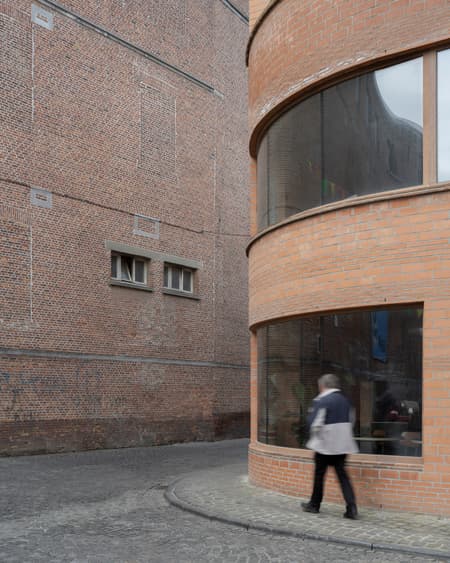
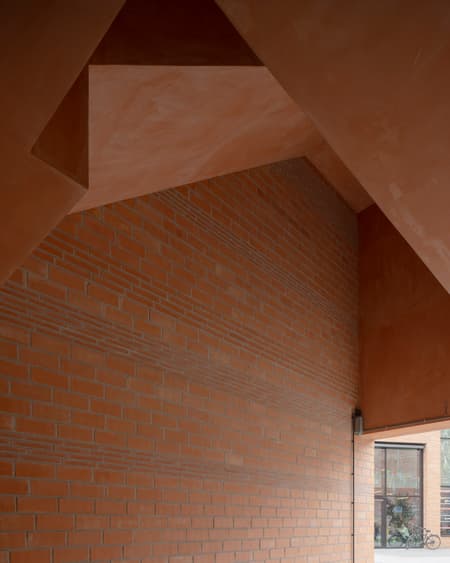
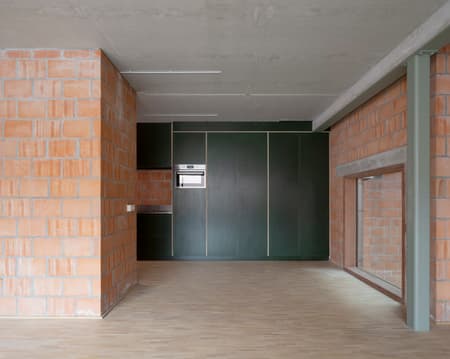
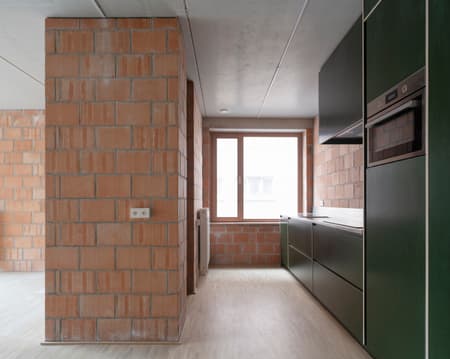
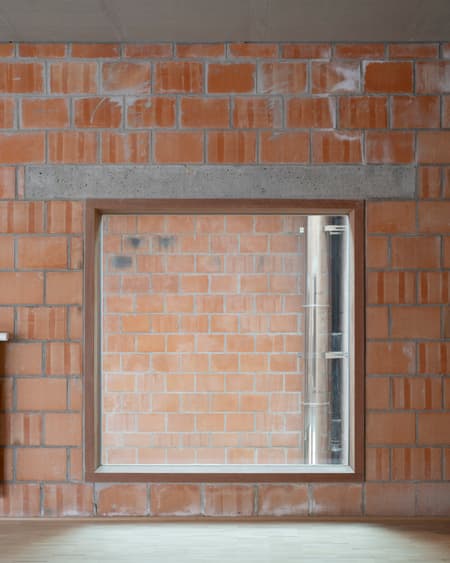
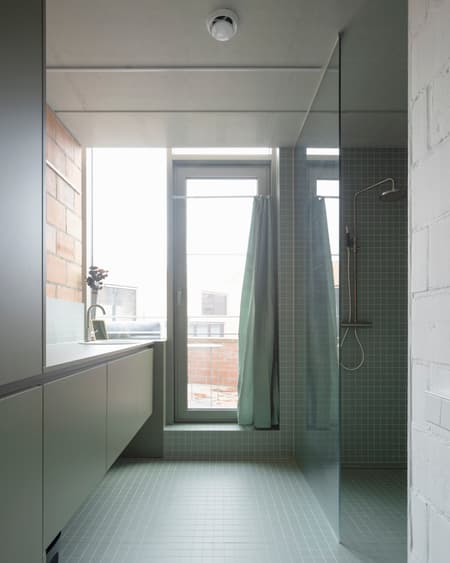
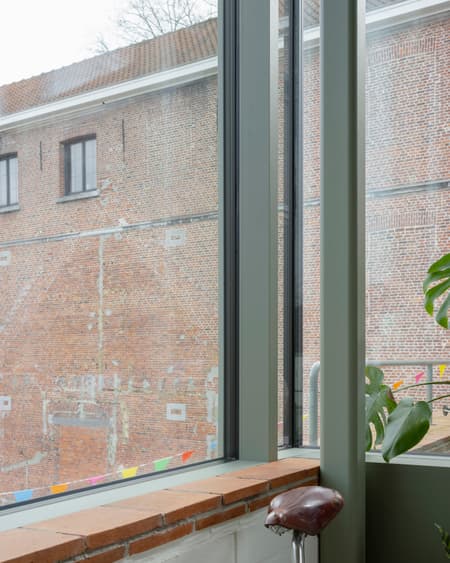
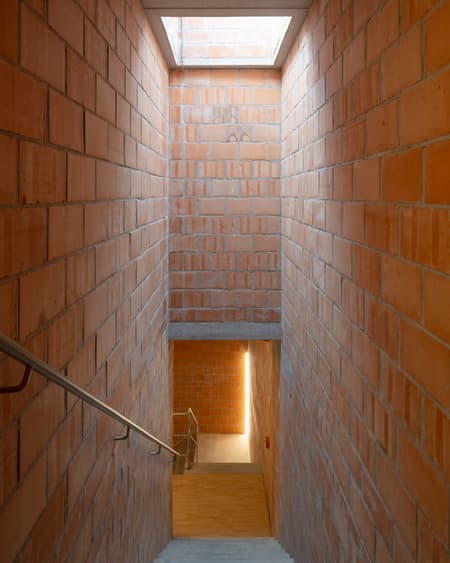
Within the design, honest and simple materialisation were central. Spanish brick was used for the exterior walls in different formats. The variation in colour tones in the bricks and the use of different masonry dressings adds playfulness to the design. The load-bearing masonry walls and concrete elements are permanently visible. Rough construction is finishing. In all its beauty and its flaws. Complementing the raw construction textures, the interior is finished with wooden accents, colourful terrazzo floor, green-grey steel accents. By focusing on simple, honest and budget-friendly materials, an attempt is made to create a less-is-more whole. Rough construction is finished without being too rough. Through these various concrete design choices, the building forms a perfect interpretation as a new corner. It inscribes itself within the architecture of the surrounding buildings without being showy but nevertheless stands out.
Even more than in public squares corners flow from intersections. That is why this small-scale corner plot harbours so much potential within its small-town context. The corner is therefor put to maximum use in this design. The project is formed by a stack of three entities and functions (restaurant – office – living) interwoven with each other. The limited area combined with an extensive programme and various (urban) building constraints necessitate compact and hyper-functional design and construction. A central patio/light street provides light to all levels and the common stairwell. Light, transparency and connection between all functions is a focal point.
The ground floor and, most of the, underground building layer comprises the restaurant ‘Wally’. The restaurant is conceived as a compact, open seating and cooking space. The window openings are set at seating height so that the façade can be largely opened up without losing seats. The first floor houses a multifunctional co-working space. This office space, with separate toilet and kitchenette, on the first floor is also conceived as one open space with wide views over the neighbouring square and connection to the covered entrance area. At the very top is a two-bedroom flat.
Within the design, honest and simple materialisation were central. Spanish brick was used for the exterior walls in different formats. The variation in colour tones in the bricks and the use of different masonry dressings adds playfulness to the design. The load-bearing masonry walls and concrete elements are permanently visible. Rough construction is finishing. In all its beauty and its flaws. Complementing the raw construction textures, the interior is finished with wooden accents, colourful terrazzo floor, green-grey steel accents. By focusing on simple, honest and budget-friendly materials, an attempt is made to create a less-is-more whole. Rough construction is finished without being too rough. Through these various concrete design choices, the building forms a perfect interpretation as a new corner. It inscribes itself within the architecture of the surrounding buildings without being showy but nevertheless stands out.


.jpg?w=450&q=75&dpl=dpl_76Rq87wxQwFvSi96M2iBpo5TN6QL)
.jpg?w=450&q=75&dpl=dpl_76Rq87wxQwFvSi96M2iBpo5TN6QL)
.jpg?w=450&q=75&dpl=dpl_76Rq87wxQwFvSi96M2iBpo5TN6QL)