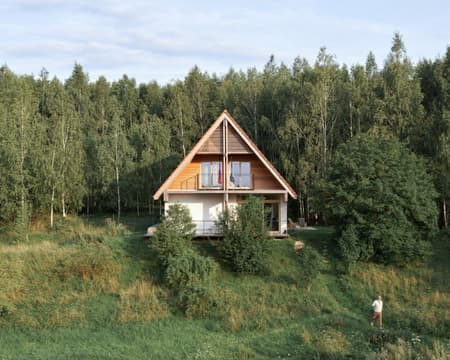
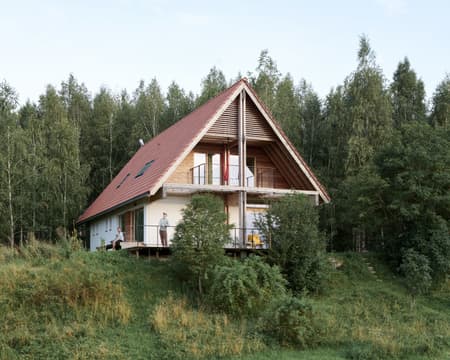
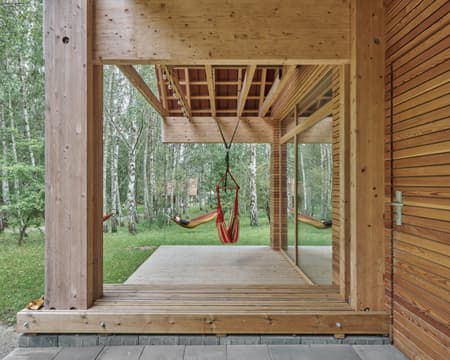
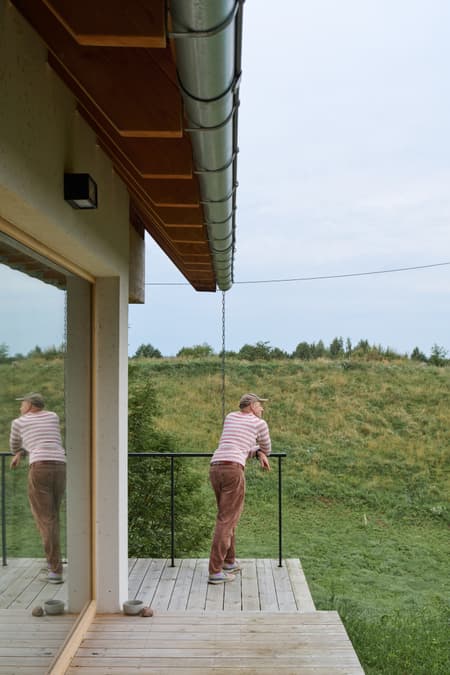
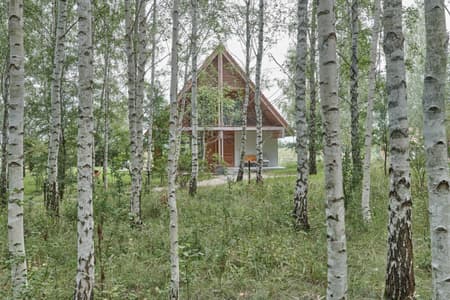
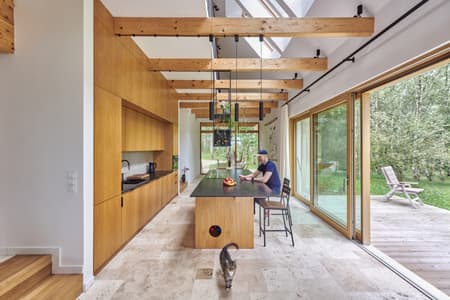
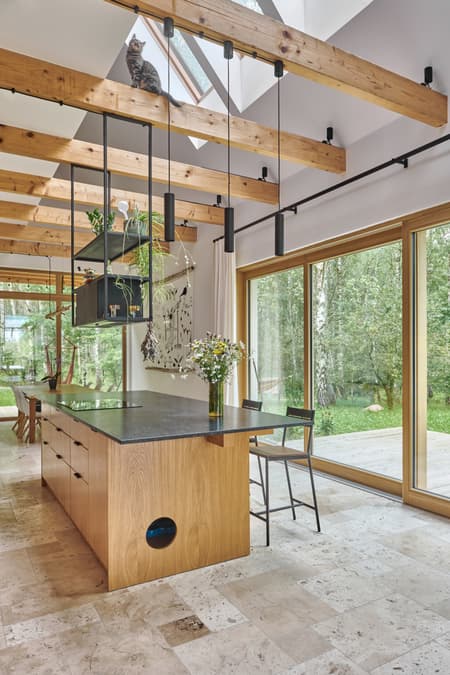
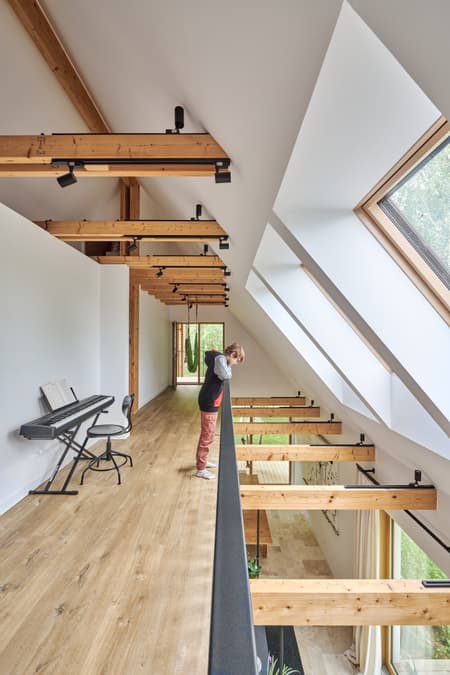
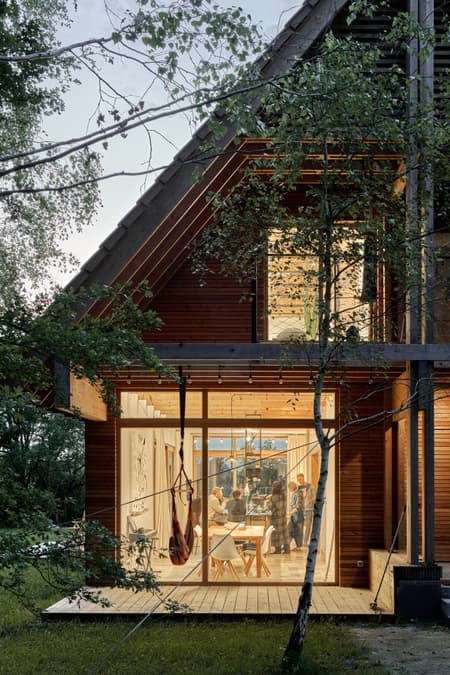
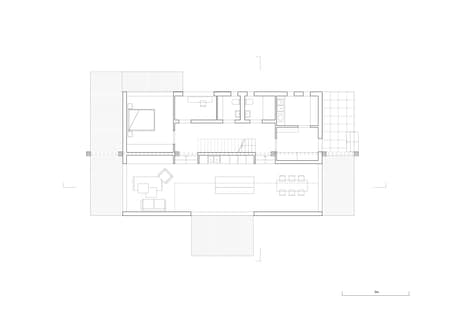
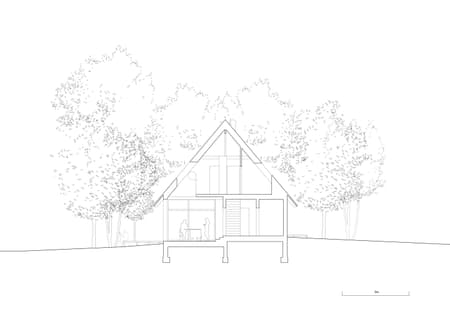
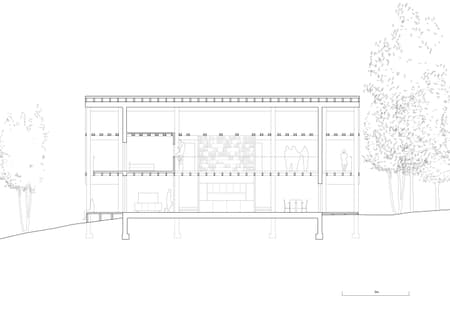
This single-family home in Masuria was designed to fully integrate with its natural surroundings, maximising views and connecting the interior with the garden. A southwest-facing balcony opens onto the open landscape, while terraces extend directly from the kitchen and living room, creating a central, vibrant heart of the home. Exposed beams on the mezzanine, terrace windows, and skylights let in light from multiple directions, creating a warm, welcoming atmosphere year round
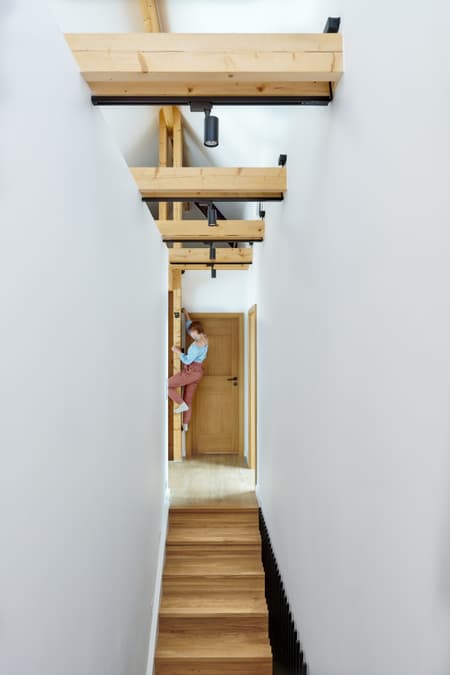
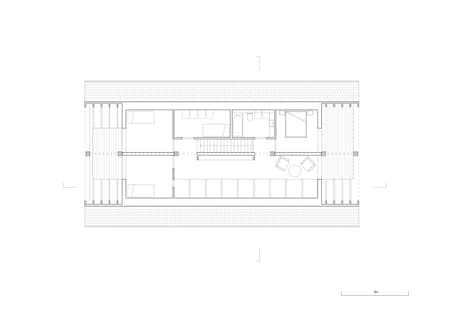
The interior space reflects the owners' open, welcoming character, who run it as a gathering place always full of guests. The design includes ample sleeping spaces—compact and ergonomic—and a flowing, open-plan living area. The children have their own secret hideaway in the attic, and the cats balance on the beams and railings. The property remains unfenced, blurring the line between domesticity and nature.
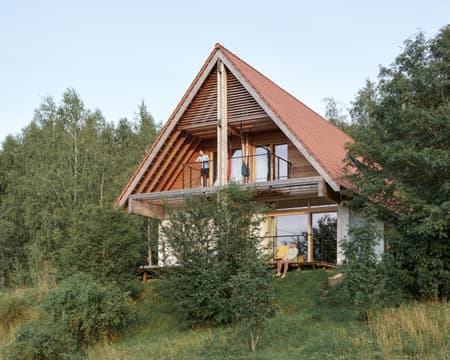
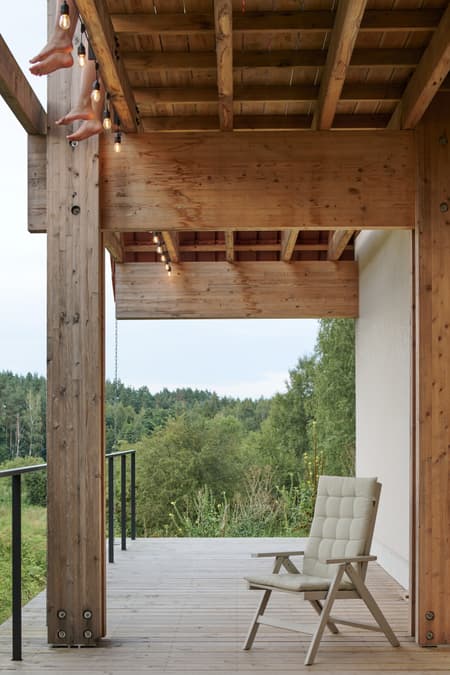
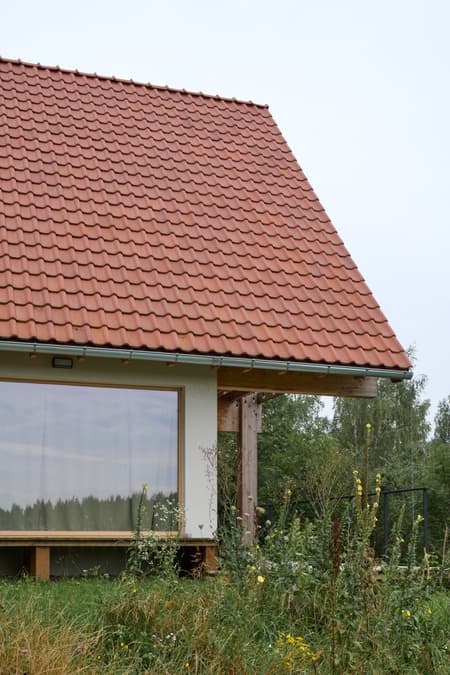
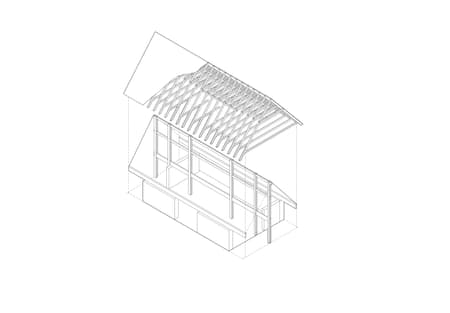
Masuria is a region with a strong vernacular architecture tradition, and the house draws liberally on this heritage—it features a wooden structure and a simple, gabled roof covered with typical Dutch pantiles. We wanted it to age well. From a distance, it appears rooted in the surrounding landscape. Up close, it reveals its unobtrusive modernity. The house's main supporting structure, exposed both inside and out, modernises the archaic forked-post roof structure. The ridge beam is supported by four tall composite posts made of glued-laminated timber— a distinctive structural frame. The roof’s eaves rest on massive wooden cantilever beams embedded in the exterior walls. It creates deep overhangs that shelter the spacious balconies and terraces below. These define the house's character: sheltered outdoor rooms that allow residents and guests to spend time outdoors while remaining indoors, regardless of the weather
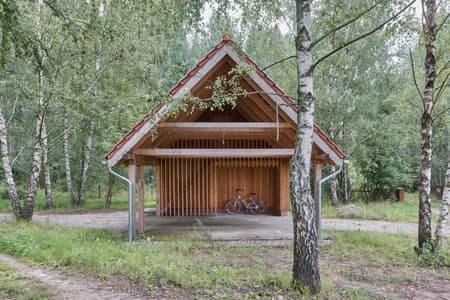
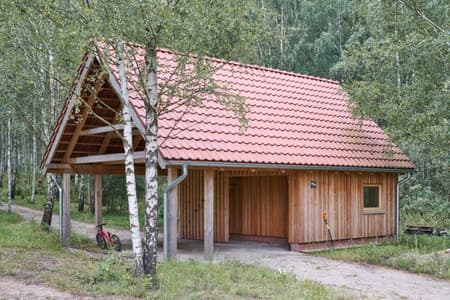
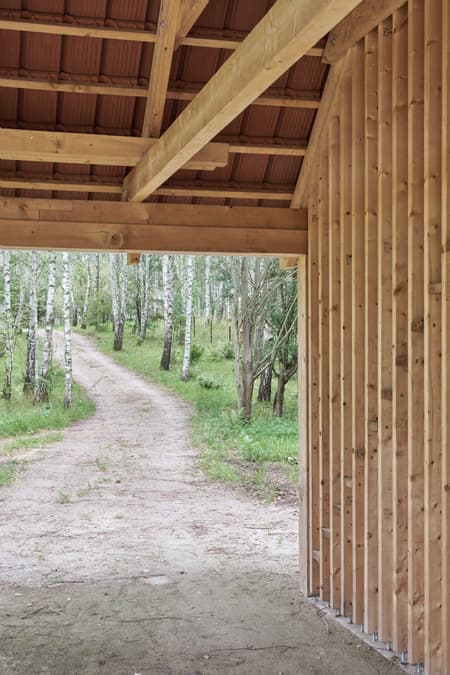
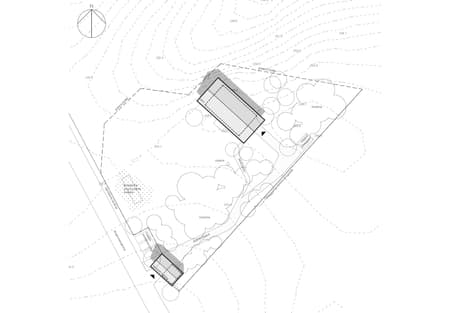
The property also includes a separate outbuilding with a workshop and carport. This separation of the programme allows to reduce the heated volume of the main house, which is significant in this coldest region of the country. Its form echoes the vernacular gatehouse that marked the entrance to the farmstead.
Wastewater is treated in a biological sewage system with a plant-filled filter bed. The infrastructure is indistinguishable from the garden.