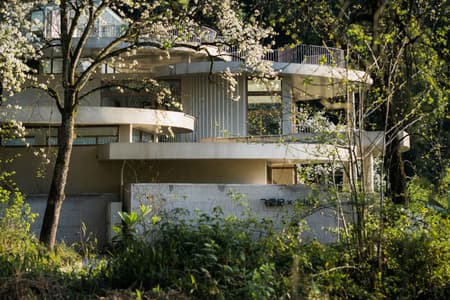
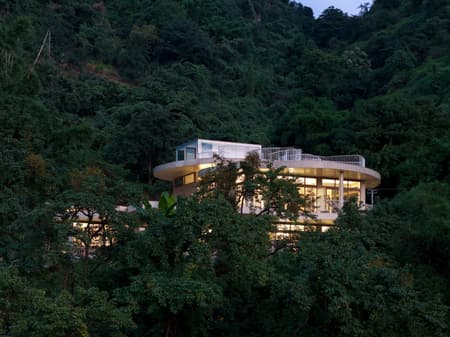
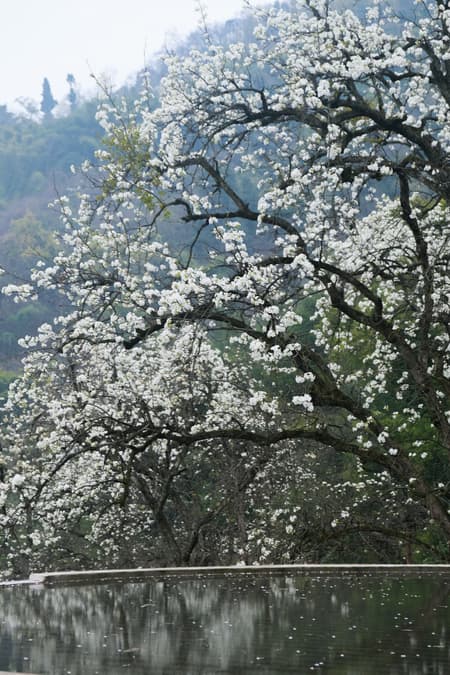
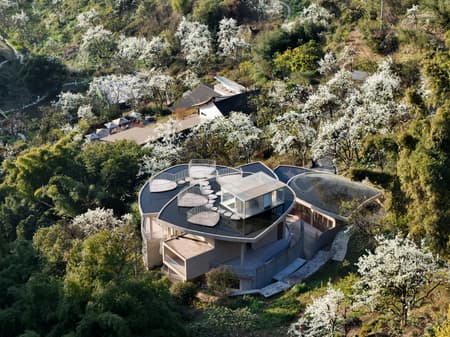
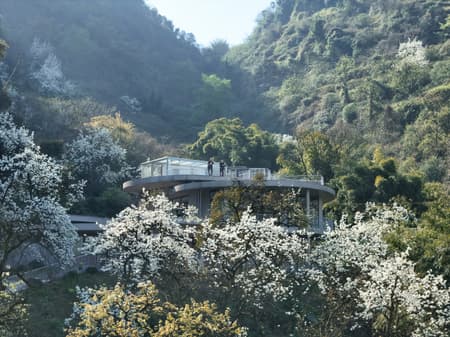
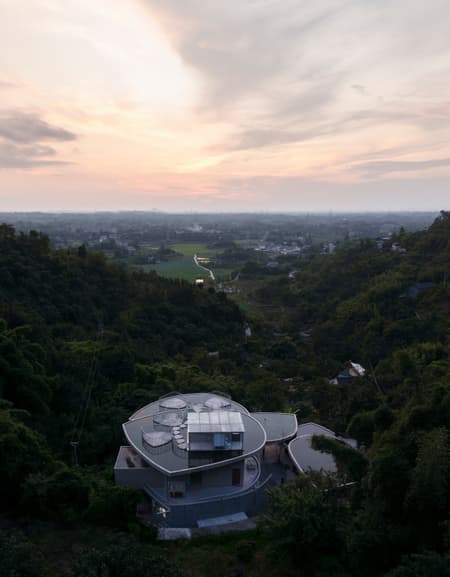
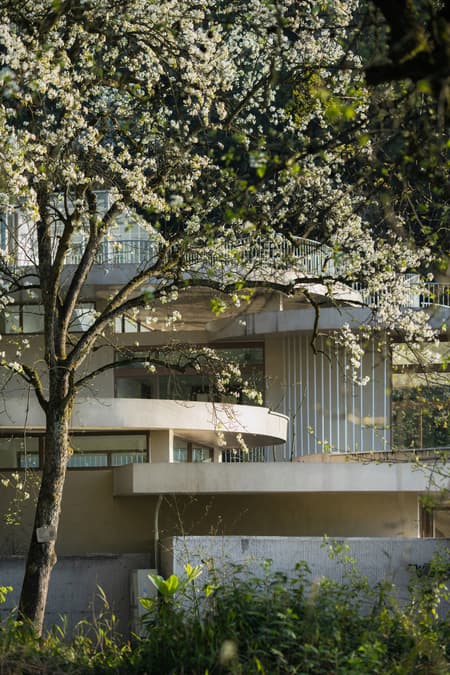
At the end of March, we stood on the hillside of Pear Blossom Village, watching the wind lift petals from hundreds of old pear trees into the air – like a snowstorm, refreshing and mesmerizing. We wanted Feixue Pavilion to be like those dancing petals: not heavy, not deliberate, but lightly suspended in the valley, like a single frozen moment of a petal in mid-fall.
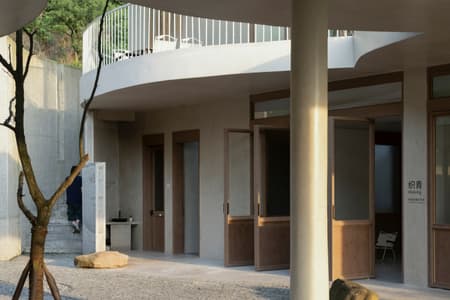
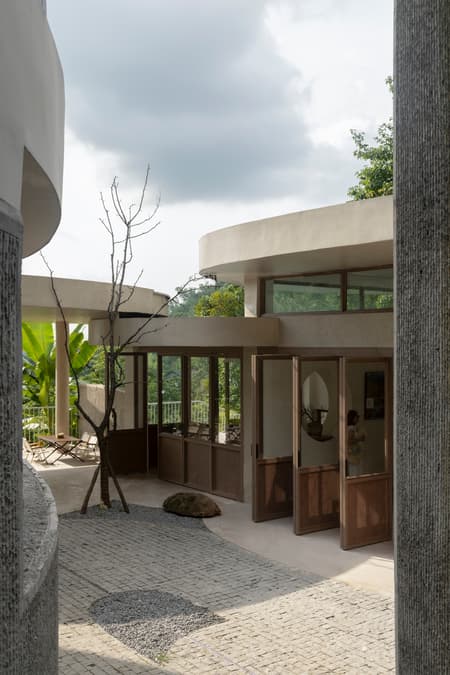
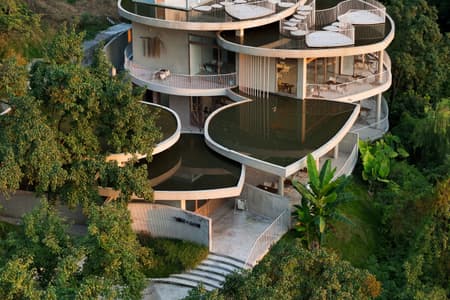
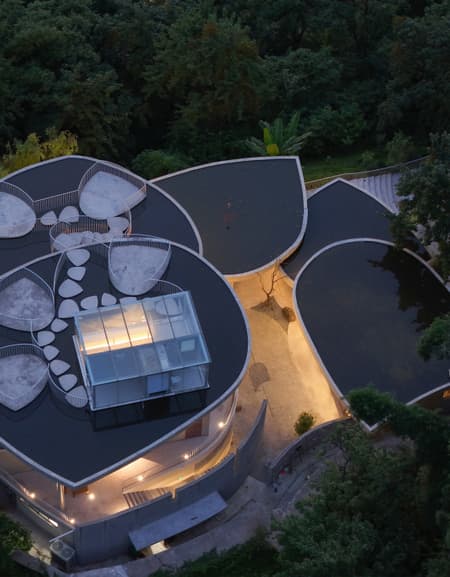
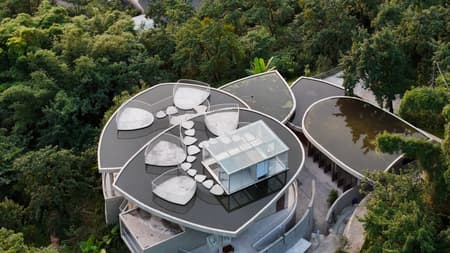
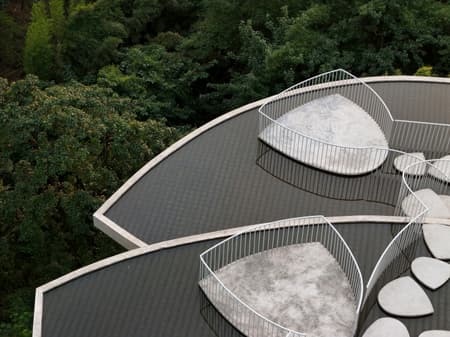
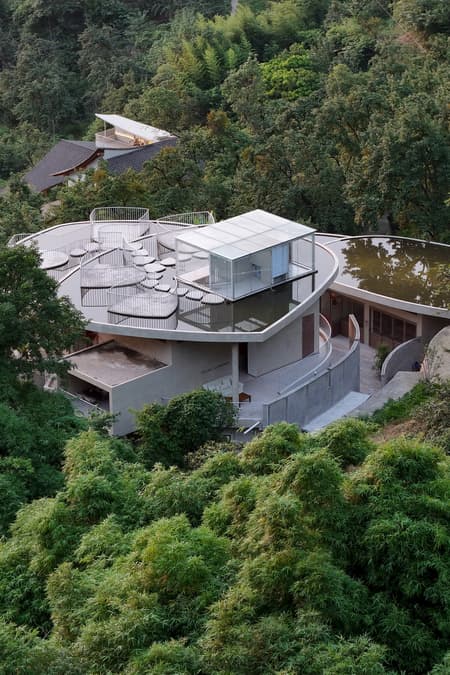
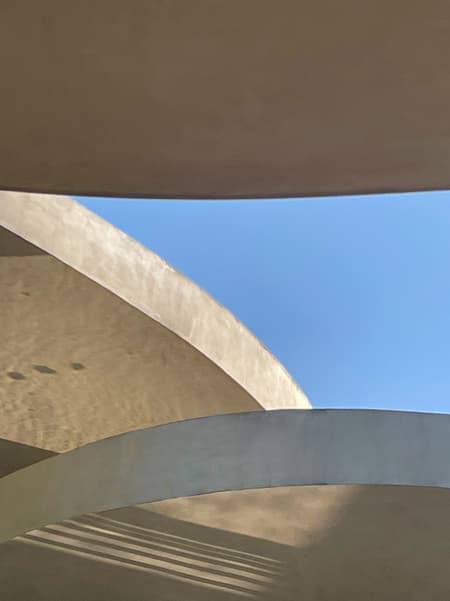
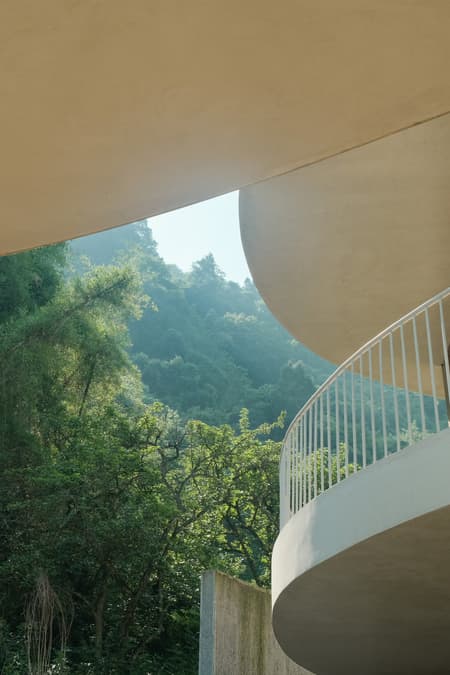
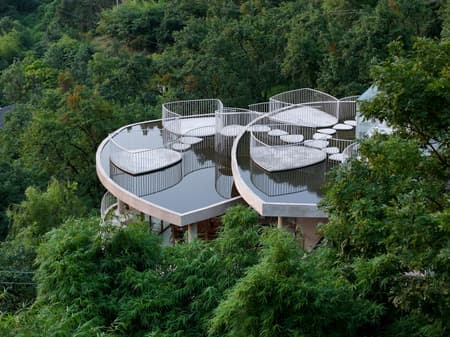
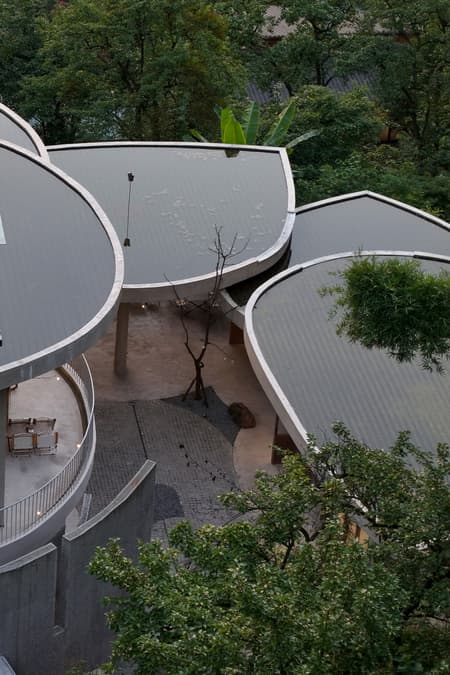
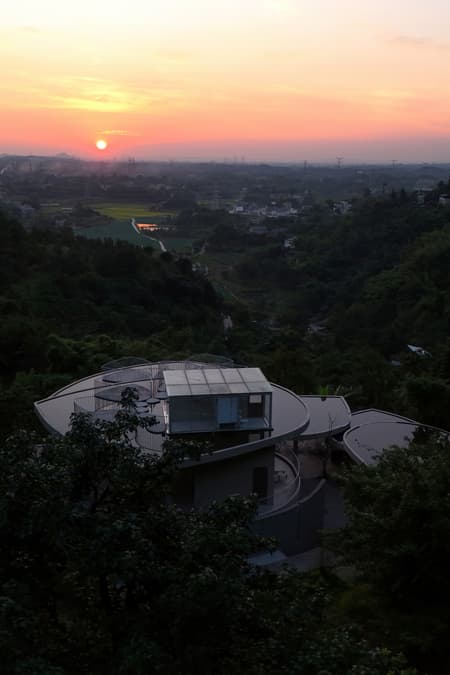
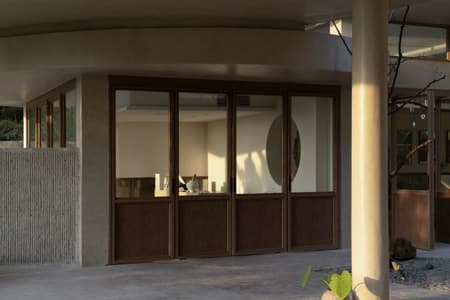
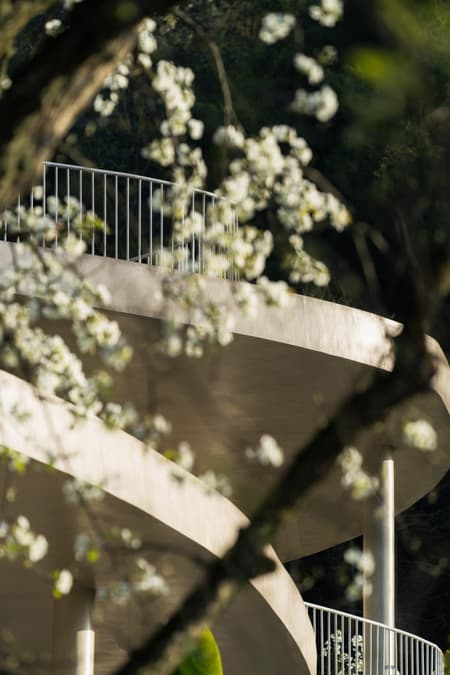
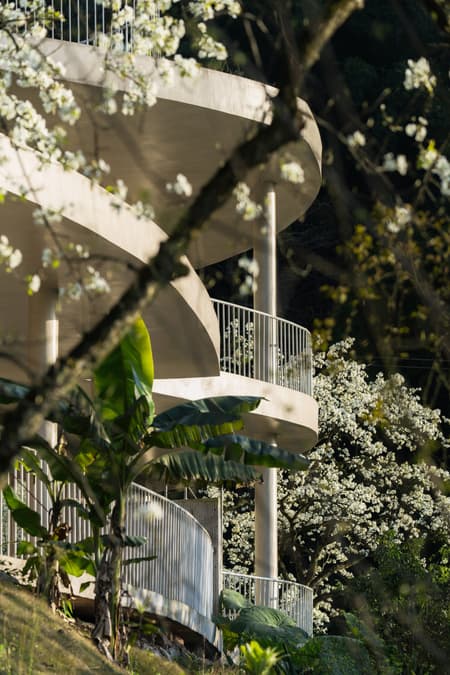
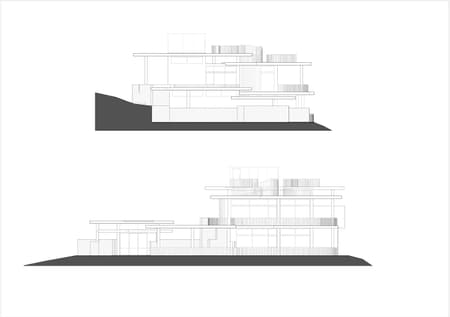
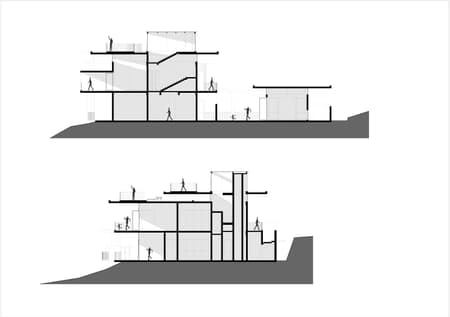
The core inspiration for the architecture is the five pear petals. Each petal is an independent concrete slab, layered together with staggered heights and cantilevers that leave gaps, dissolving the building’s mass. By day, natural light filters through the gaps; by night, artificial light spills out, outlining the silhouette of the petals.
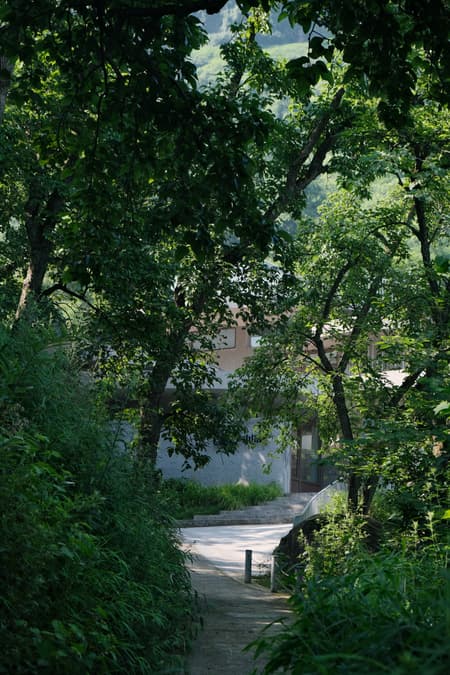
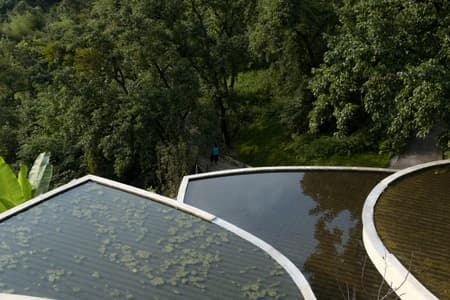
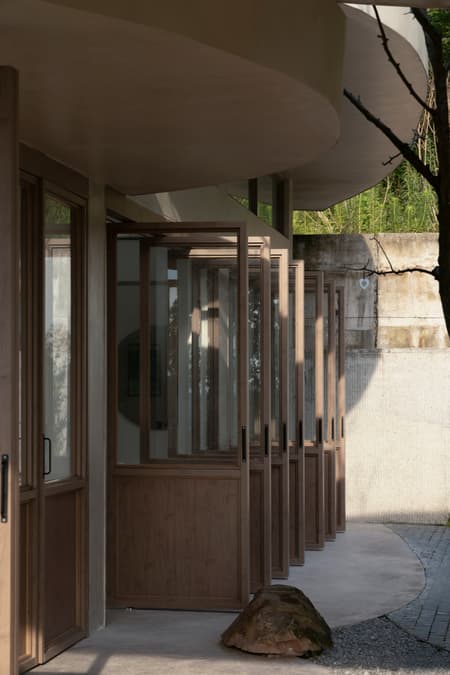
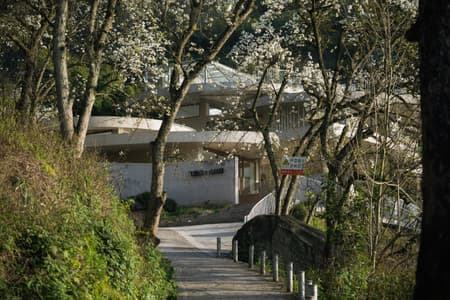
The original house was built into the mountain, so the rear of the new building fits naturally into the slope, surrounded by vegetation. The winding path up the mountain leads first to a large boulder, beside which stands an old pear tree – it was here long before the building. Only after passing the boulder and the tree do you reach the entrance. The old pear tree’s branches reach toward the sky, and its reflection falls precisely into the shallow pool on the roof.
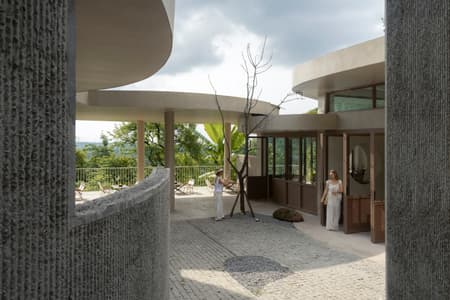
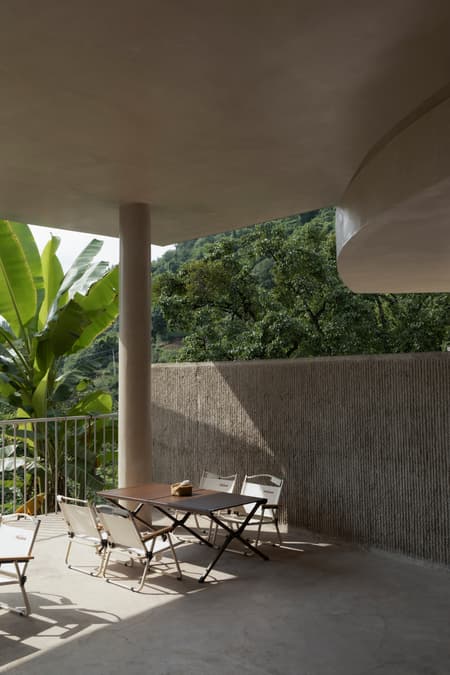
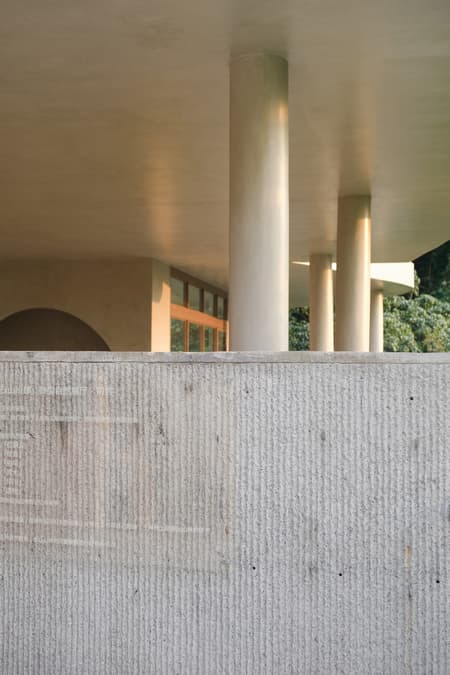
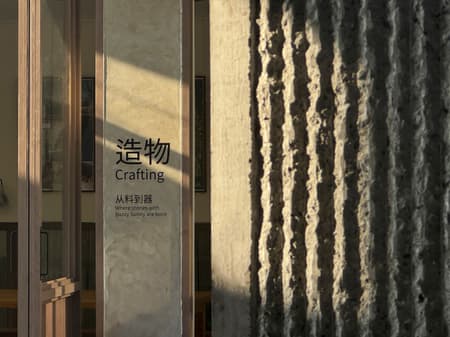
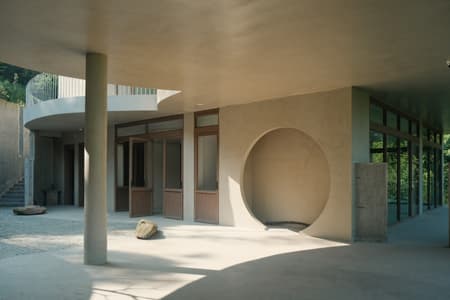
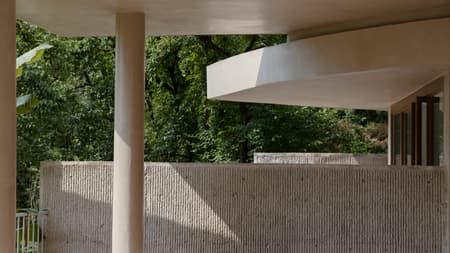
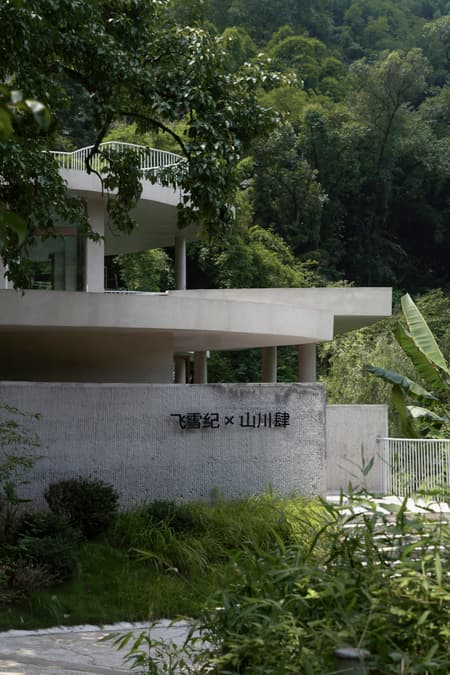
The construction combines industrial precision with handcrafted rawness. The courtyard walls were hand-chiseled after the concrete had set, creating a rough, craggy texture like weathered rock or pear bark. This tactile quality establishes a silent dialogue between the building and the mountain forest.
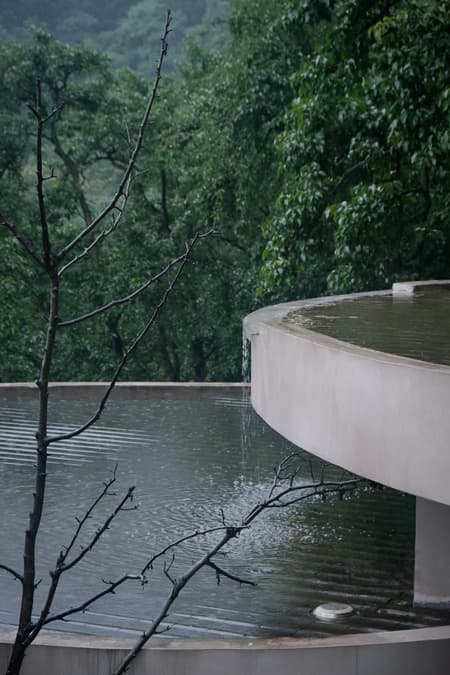
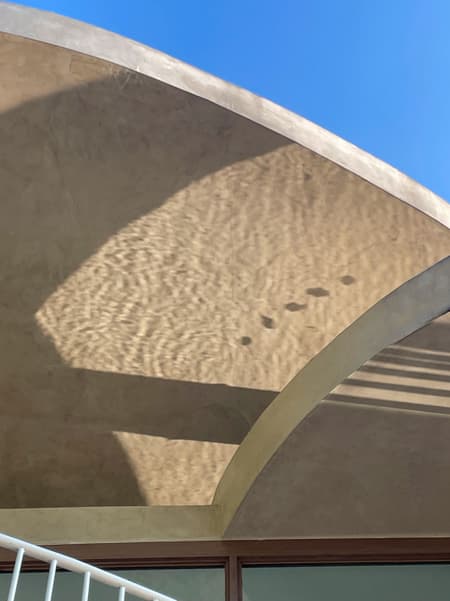
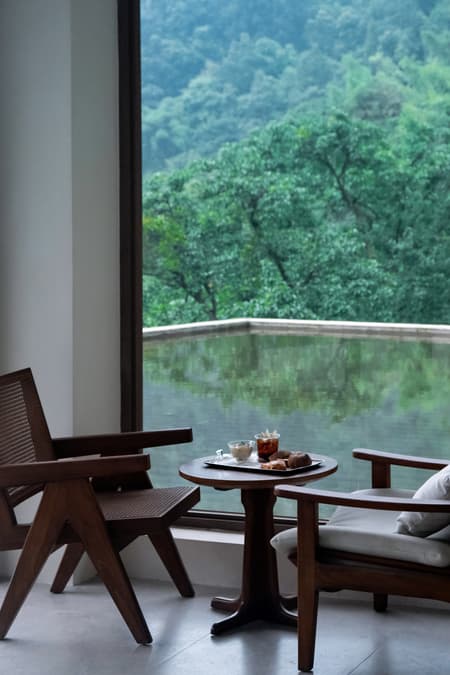
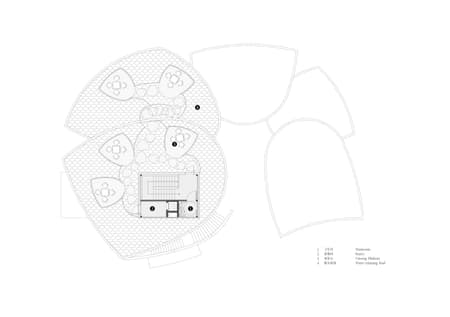
The roof draws from the common flat roofs with water storage found in local villages, while incorporating small green tiles from traditional sloping roofs. After waterproofing the concrete slab, we laid tiles flat as a base, then added a shallow layer of water. The water mirrors the whole valley – the crowns of the pear trees, the clouds, the passing birds – all captured in that thin sheet. With the mountain’s breath, ripples spread across the water, reflecting dancing light onto the second‑floor ceiling. Overflows are placed where the roof layers overlap; Luzhou is rainy, and during the wet season the roof forms small waterfalls that echo the mountain mist.
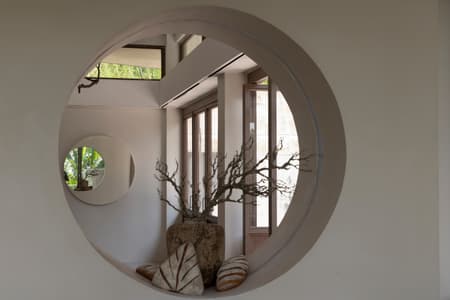
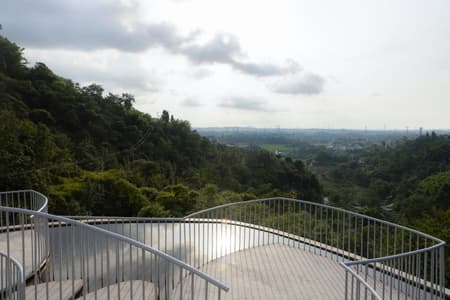
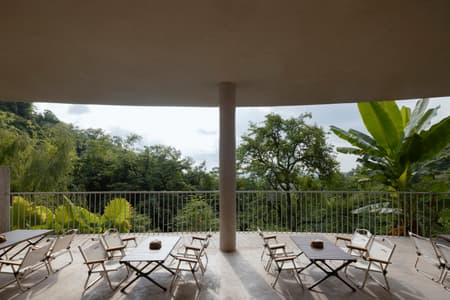
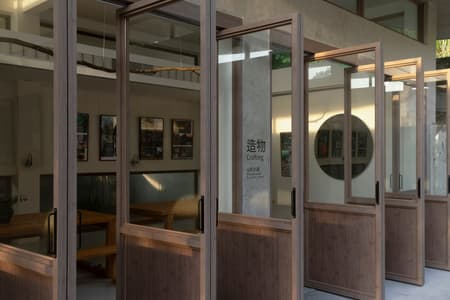
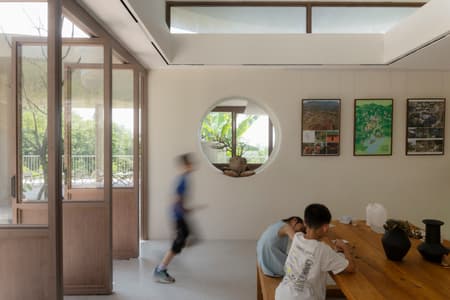
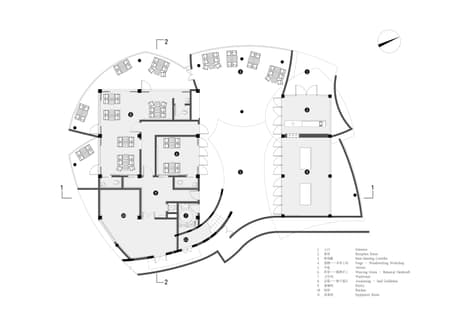
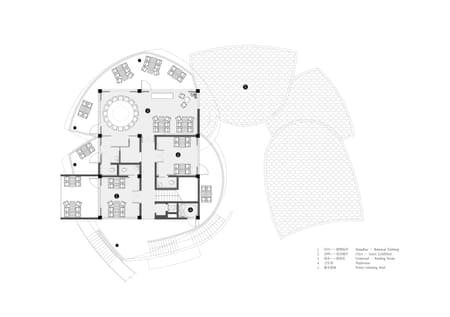
The five petals correspond to different functional zones. The first petal houses the ground floor reception hall, where a circular opening in the back wall allows the eye to connect with the craft activity hall in the second petal. The third petal is a semi open transitional space, like a pavilion in a classical garden – perfect for listening to wind and rain. The fourth and fifth petals contain the study and activity areas and the relaxation zones; the floor slabs are staggered to dissolve the two story volume. The five petals enclose an atrium open to the sky, where light filters through the gaps between the petals, painting soft shadows on the ground.
Feixue Pavilion is a miniature theater of nature. We have placed six themed spaces inside: “Awakening” – the suitcase of seeds; “Weaving Green” – the weaving workshop of leaf veins; “Chirr” – the concert hall of insects; “Grainread” – the library of wood grain; “StoneRise” – the camera of rubbings; “Forge” – the birthplace of woodenware. Children can read the wrinkles of tree bark with their fingertips, rub the memories of stones onto silk, write their own poems on leaves, and carve the shape of the mountain onto seed shells. We believe that true nature education is not about imparting knowledge, but letting the mountain wind turn the curious pages of a child’s heart.
Feixue Pavilion is also a new experiment in rural revitalization. Using nature education as a bond, it brings urban families back to the village, letting children grow up in the fields and villagers find new roles in the project. Since its opening, it has become a popular weekend destination for families from nearby cities, bringing a steady stream of visitors to Pear Blossom Village. This is not an isolated building, but a social experiment that co exists with the village and grows with the land. It is these everyday, fleeting moments that gradually give the architecture its fullness.
At dusk, the setting sun warms the concrete walls, and the wind passes through the gaps between the columns, making a soft sound – like the breath of the mountain forest. It stands like another tree, another stone, another flower in the valley, having walked out of the forest, out of the wind, out of the falling pear blossoms. We just happened to pass by and put up a frame for it…