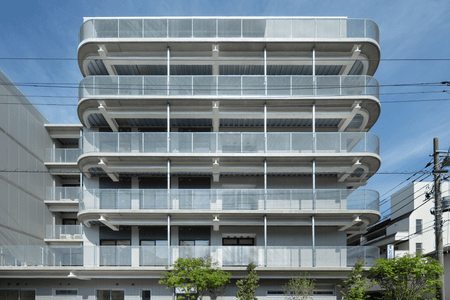
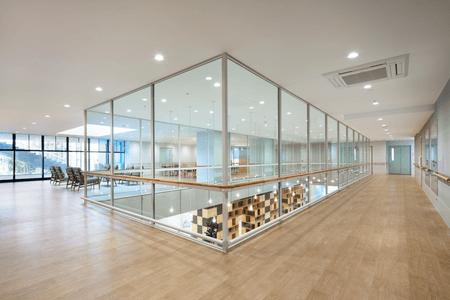
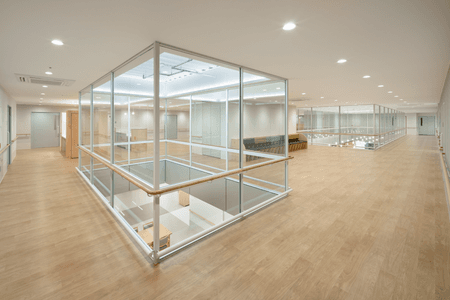
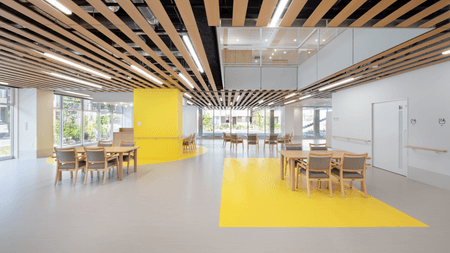
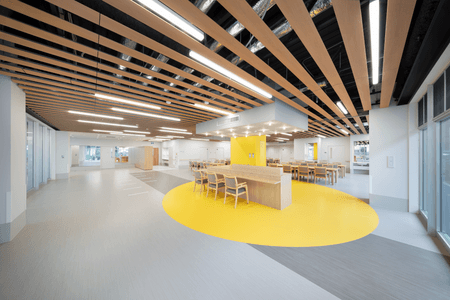
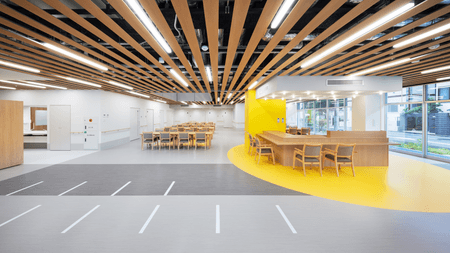
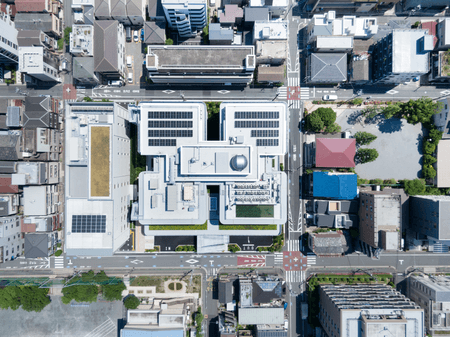
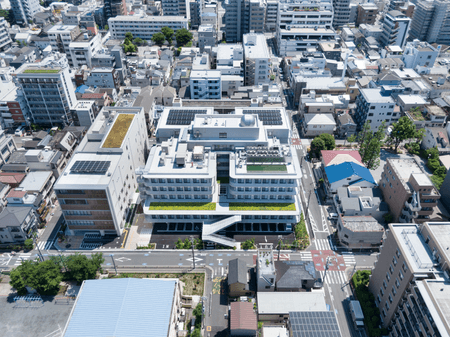
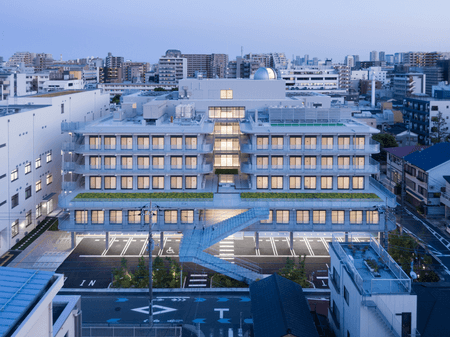
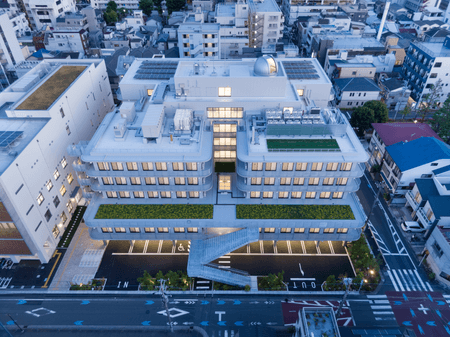
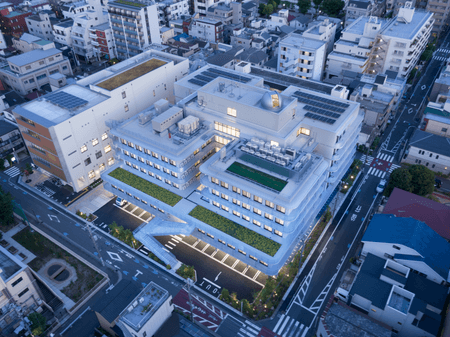
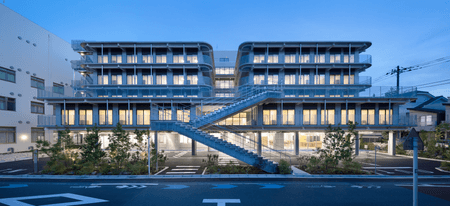
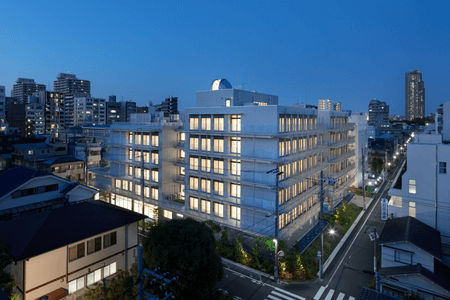
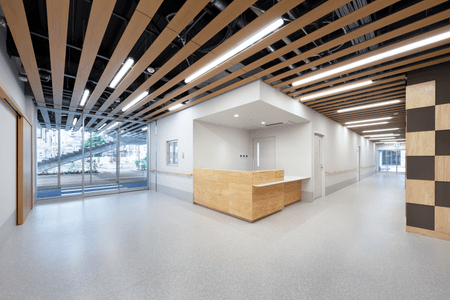
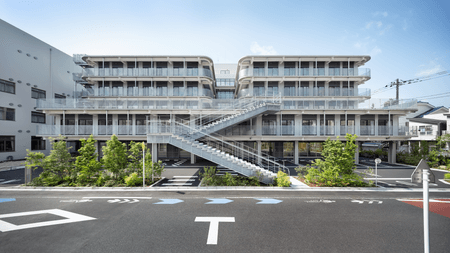
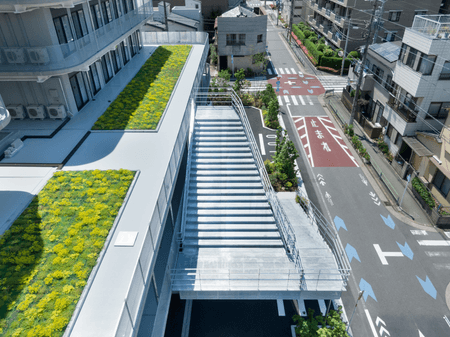
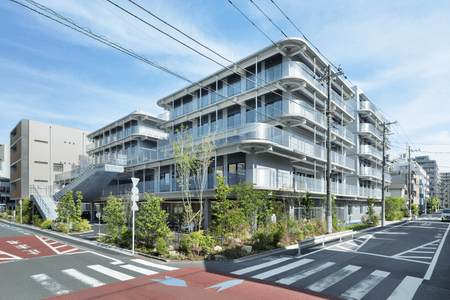
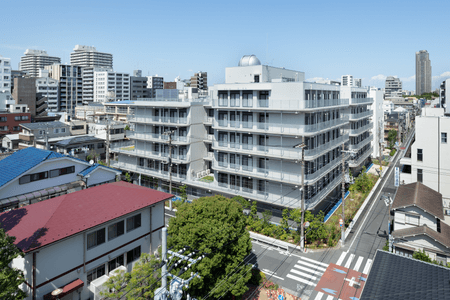
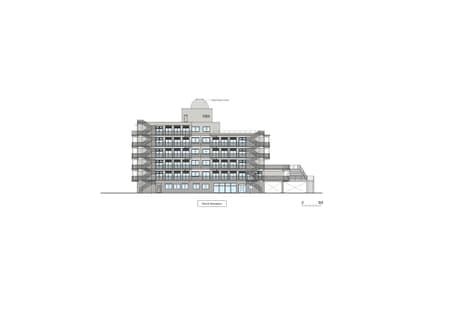
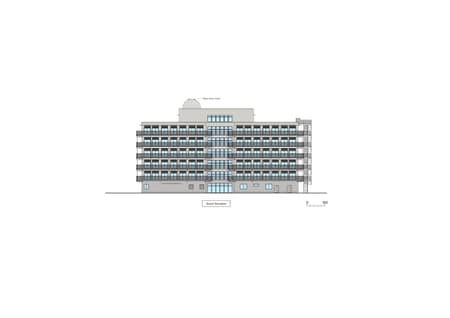
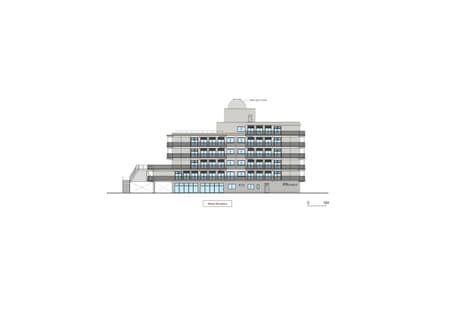
Located in Koto Ward, Tokyo, Asoka-en is the largest urban elderly care complex in the area, featuring a 216-bed special nursing home alongside short-stay services, day services, and a community exchange space. The facility is built on the former site of a beloved local children's welfare center, situated adjacent to a new children's plaza and directly across from an elementary school. Capitalizing on this context, the architecture was designed to be highly open and public, encouraging children and their parents to visit. This approach naturally fosters an environment where cross-generational interaction can flourish.
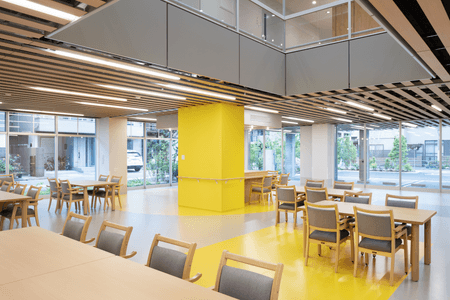
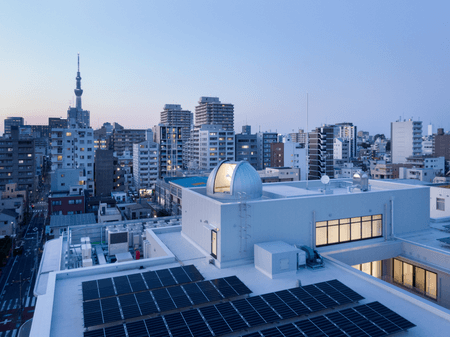
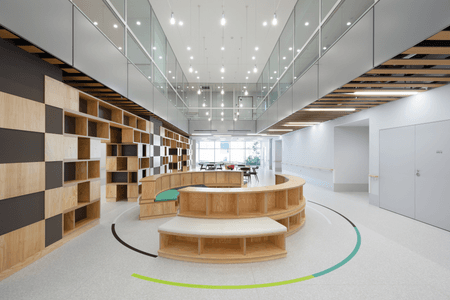
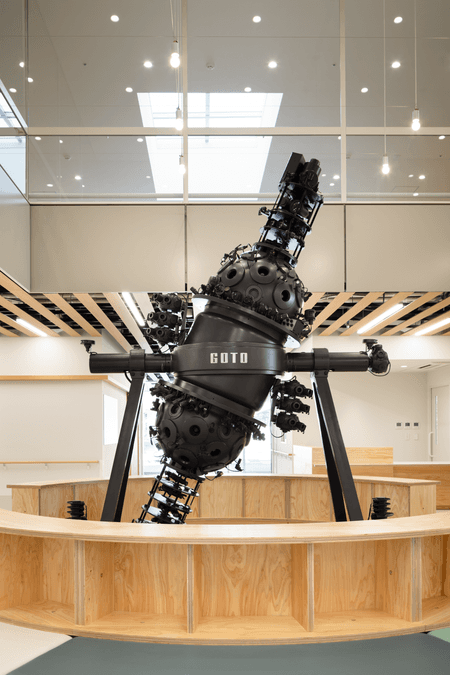
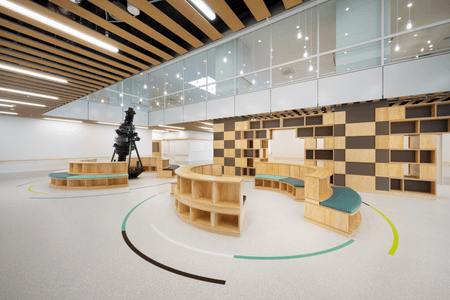
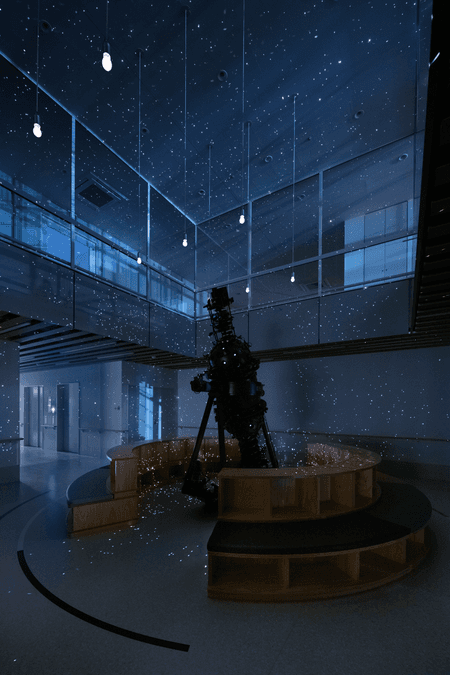
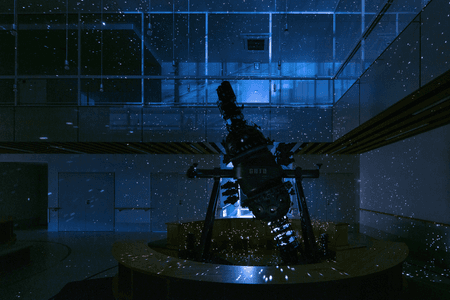
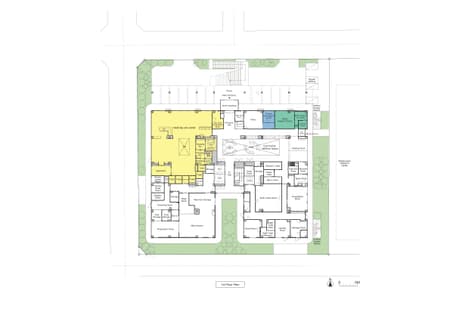
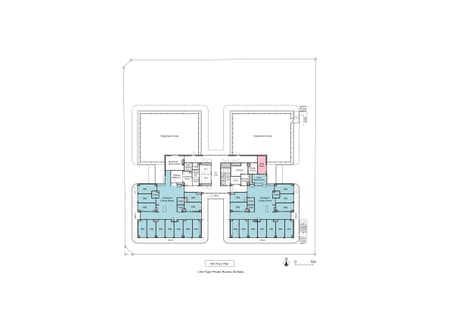
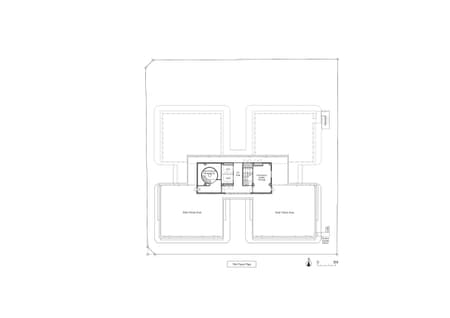
Honoring Local Memory The first-floor community space pays homage to the astronomical theme of the former children's center by featuring a striking lighting design inspired by stars and celestial bodies within a double-height atrium. Serving as a symbolic monument, an old planetarium machine previously used in the children's center is proudly displayed here. Because this space connects visually to the second-floor nursing area, the everyday presence of playing children naturally creates social intersections and shared glances with the elderly residents. Furthermore, a large astronomical telescope, also repurposed from the former facility, is installed in the rooftop observatory. The facility aims to host regular stargazing events for the local community, beautifully keeping the legacy of the children's center alive.
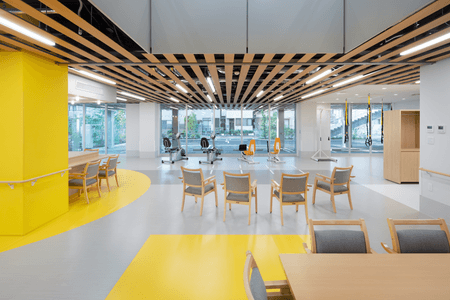
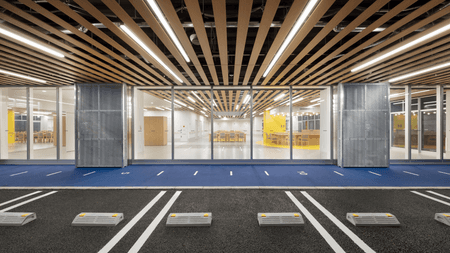
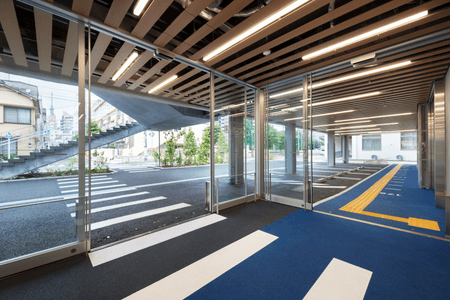
An Active Approach to Aging To redefine the image of senior care, the highly transparent, glass-walled day service area on the first floor is designed to resemble a modern sports gym. A blue, tartan-track-style walking course encircles the exterior, actively promoting health and daily exercise not only to the facility's users but also to the surrounding neighborhood.
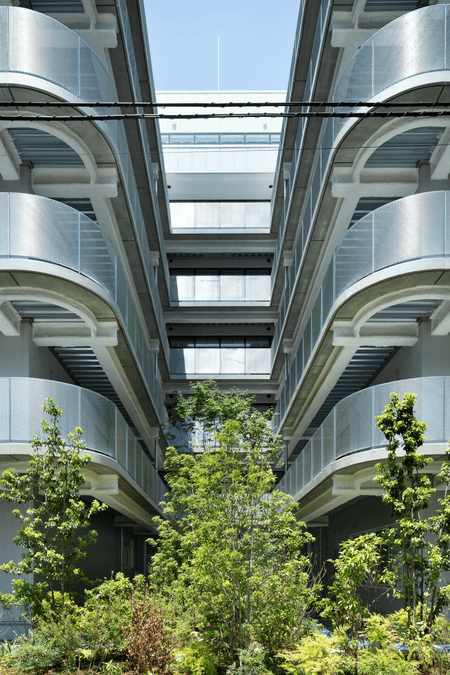
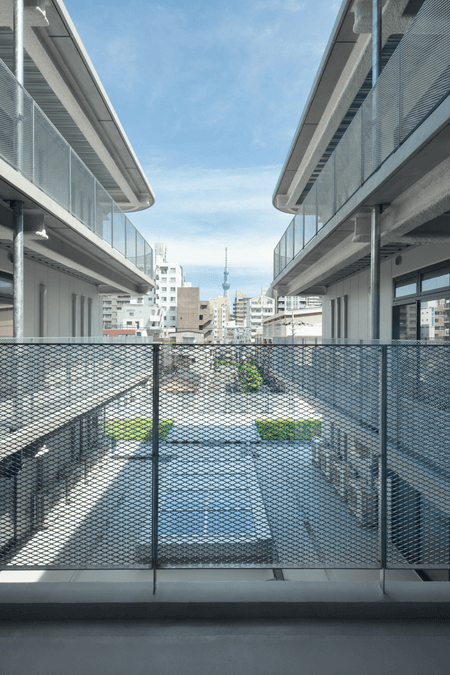
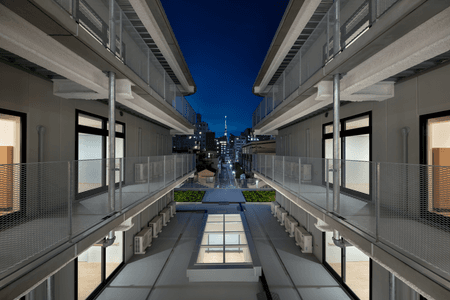
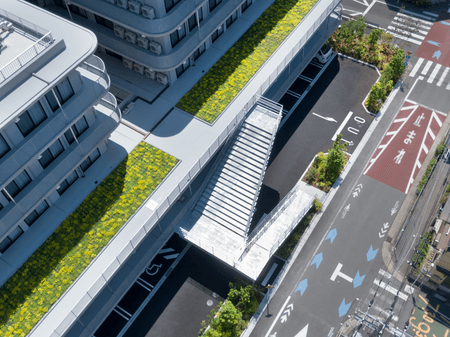
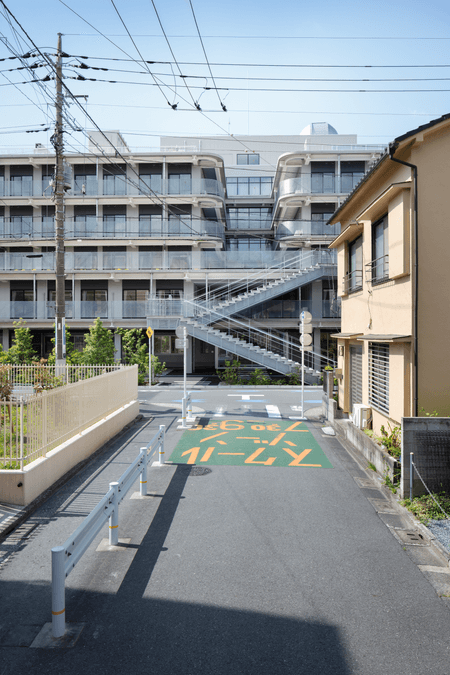
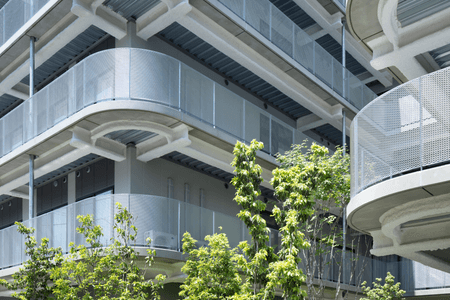
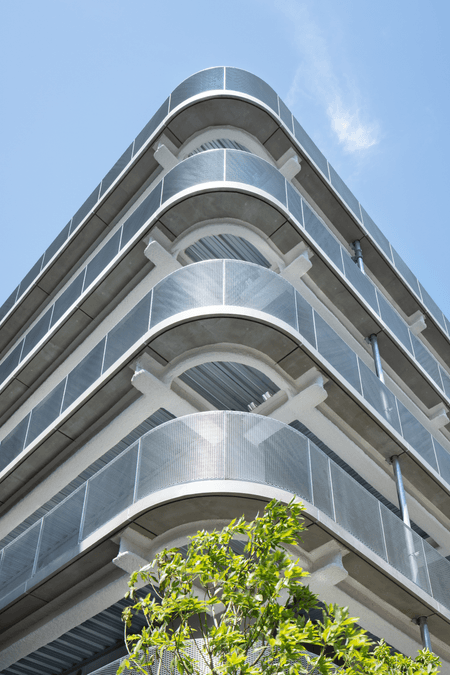
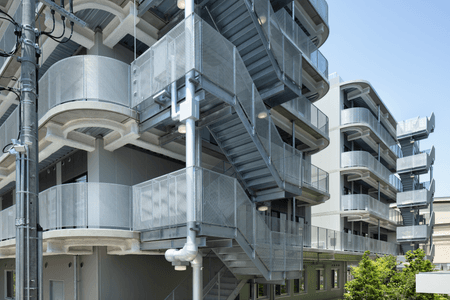
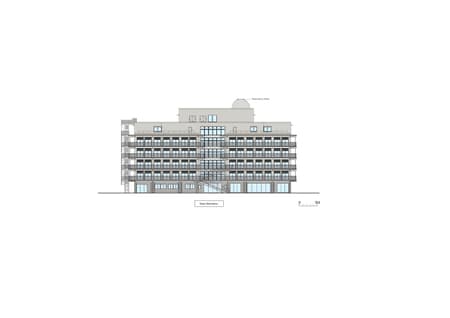
"Incomplete" Architecture The building's exterior deliberately embraces an "incomplete" aesthetic to inspire creativity. By utilizing galvanized expanded metal, exposed white gas pipes for handrails and drainage, and exposing the fireproofing on structural members, the raw design leaves visual "gaps." This allows each observer to use their imagination to complete the architecture in their own minds.
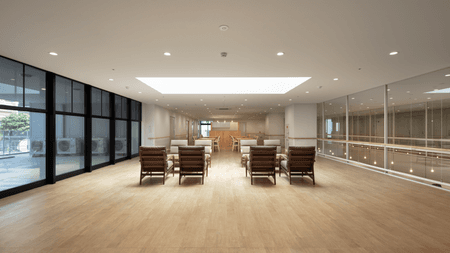
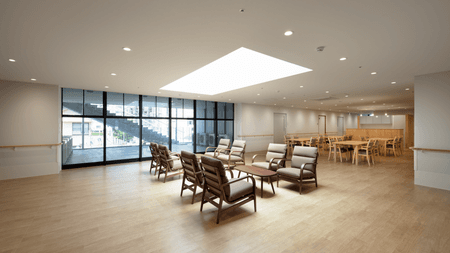
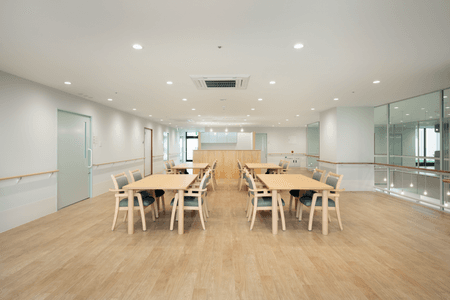
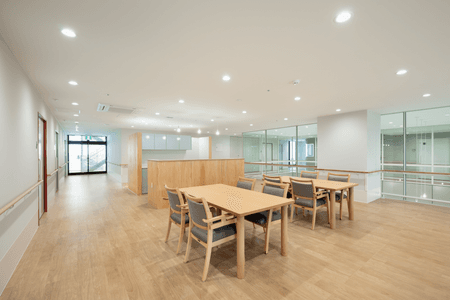
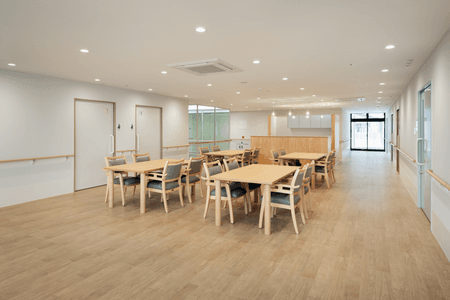
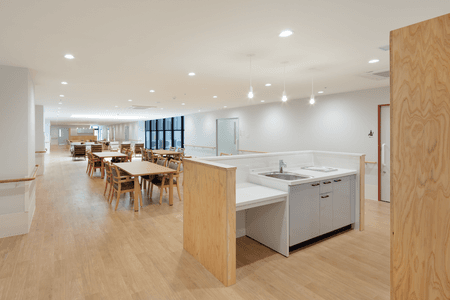
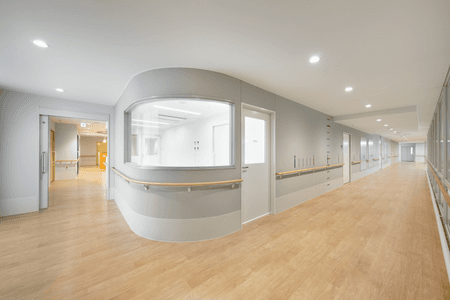
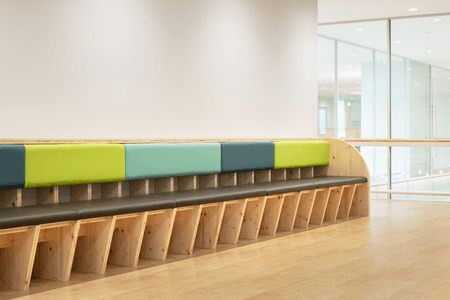
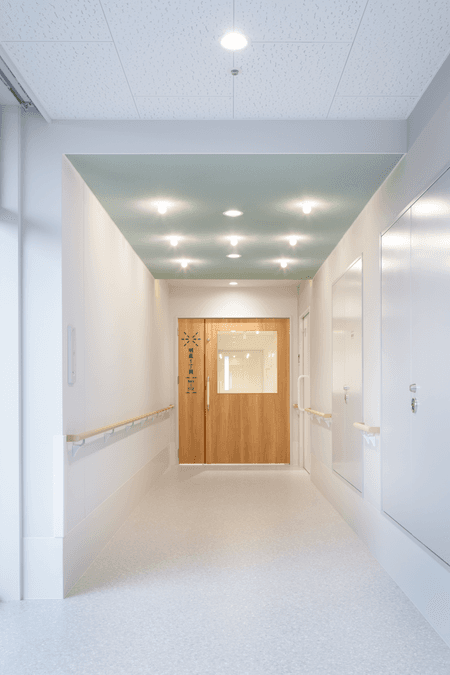
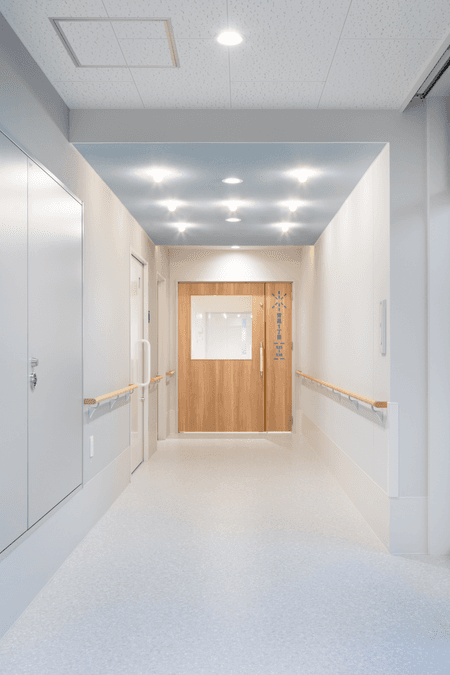
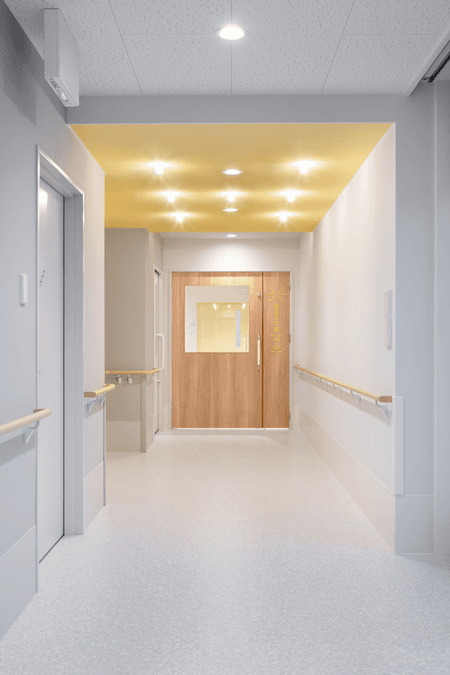
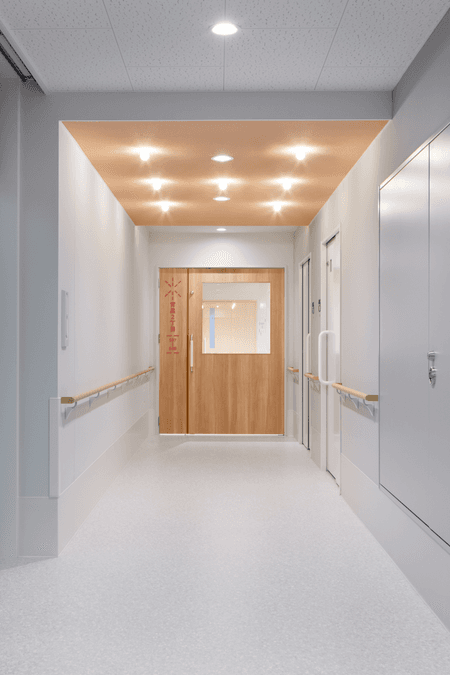
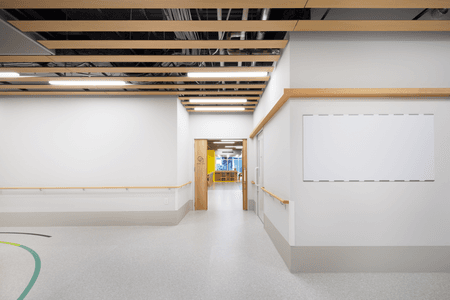
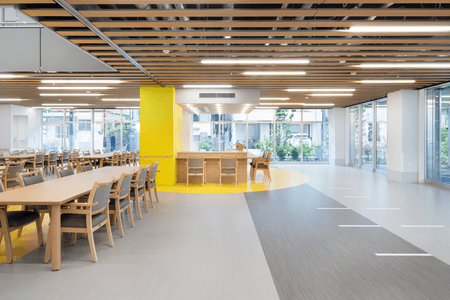
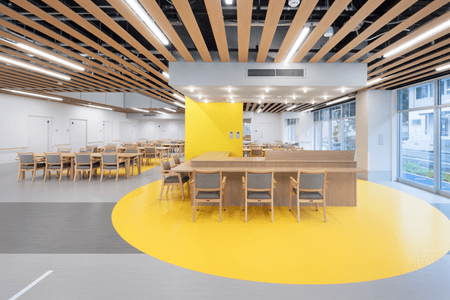
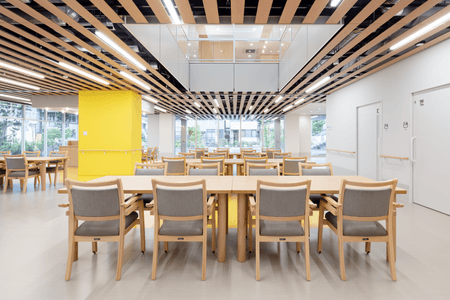
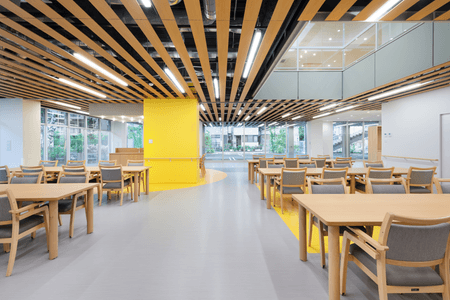
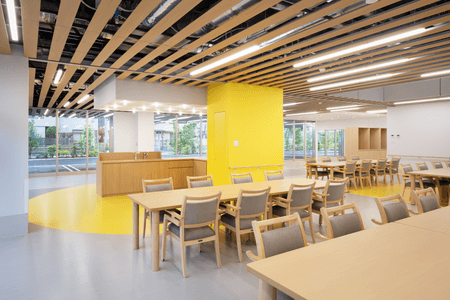
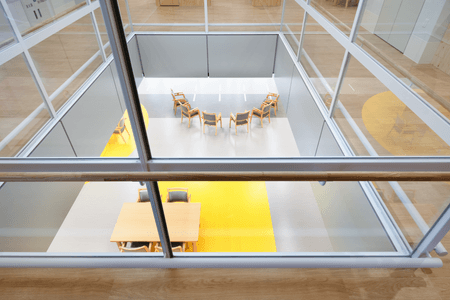
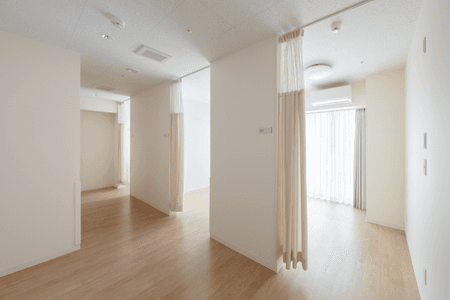
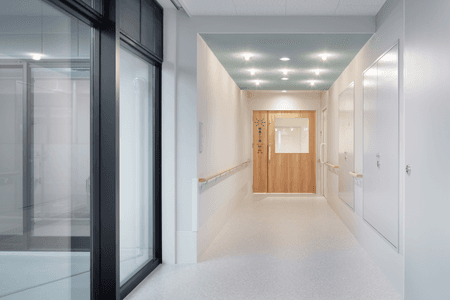
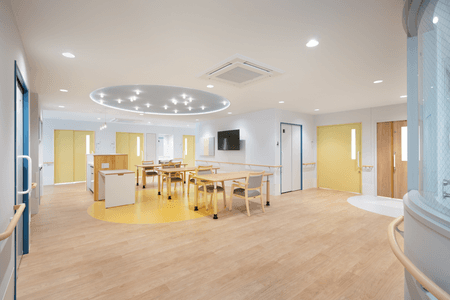
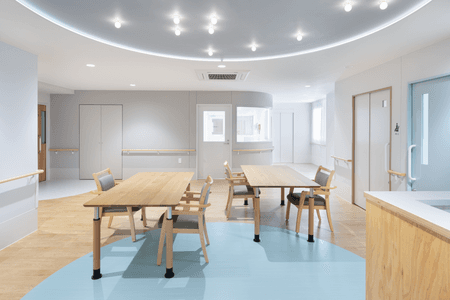
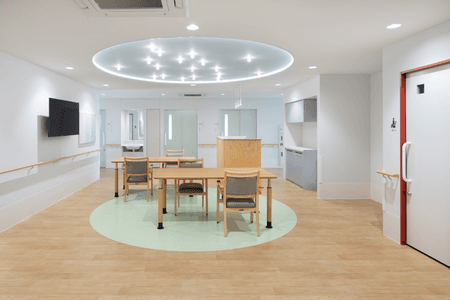
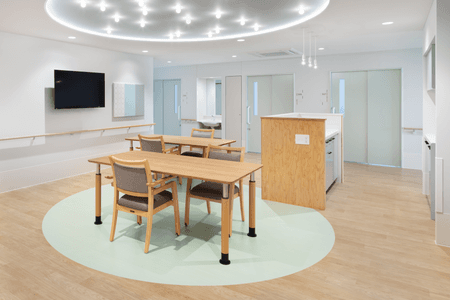
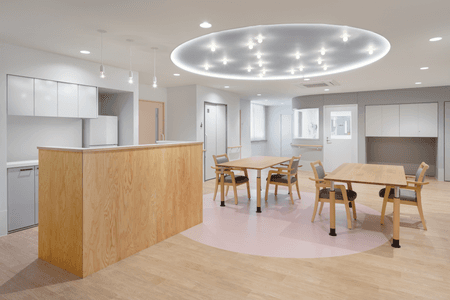
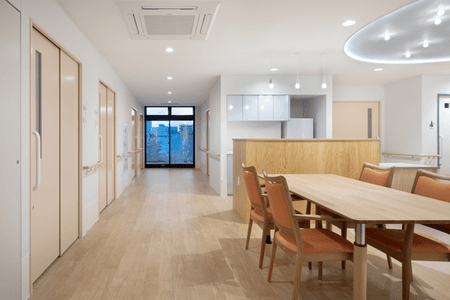
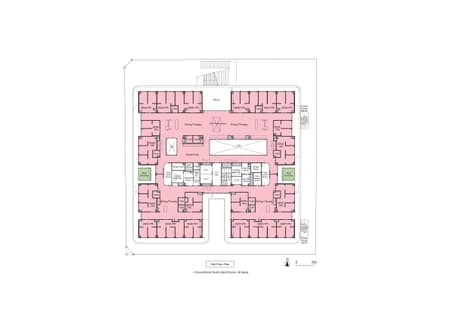
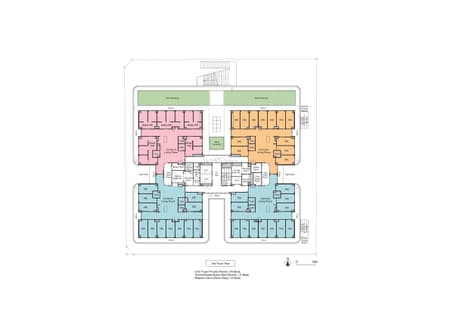
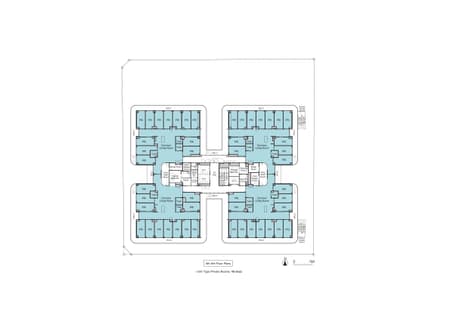
Colorful and Comfortable Living Spaces On the residential floors, four identical units are clustered around a central core. To prevent spatial disorientation and enhance wayfinding, each unit features a distinct key color, which also adds vibrancy to the daily living spaces. Intentional physical gaps between adjacent units allow abundant natural light and fresh air to penetrate the private rooms and shared living areas, ensuring a comfortable, breathable environment.