Spaziu Davia Franceschini An inhabited terrace facing the great Balagne landscape
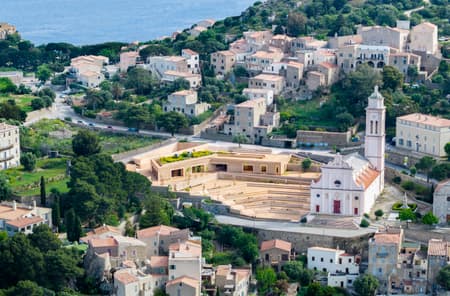
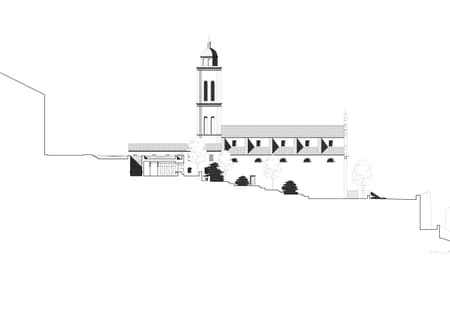
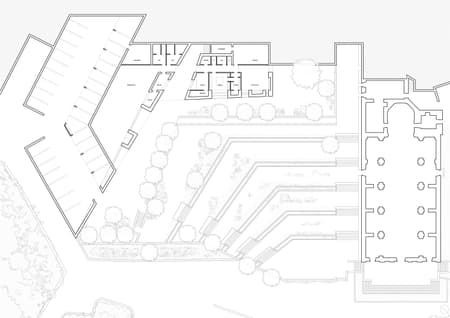
In Corbara, facing the Church of the Annunciation and the landscape of Balagne, the project chooses effacement rather than assertion. On this sensitive site, marked by the presence of the old village, the topography, and the symbolic force of the church, the aim was not to add an architectural object, but to extend the ground, reveal a slope, and create continuity.
The project was born from this intention: to make the building disappear into the landscape in order to reveal the place more fully.
The cultural facility is set within an already inhabited geography, made of narrow lanes, walls, thresholds, stairways, and agricultural terraces that have shaped the Balagne foothills. Once cultivated, these successive terraces made the steep slopes usable and formed a landscape built by human hands. Here, they are less a formal reference than a principle of implantation: to contain, support, accompany, and frame.
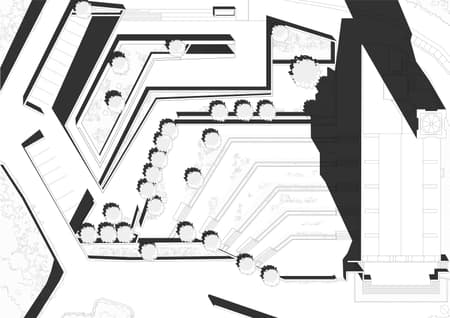
The building therefore develops as a reconstructed topography. A ground that folds, turns back on itself, and becomes architecture. Alternately retaining wall, enclosure, inhabited façade, and belvedere, it extends the lines of the village and deliberately blurs the boundary between building and landscape.
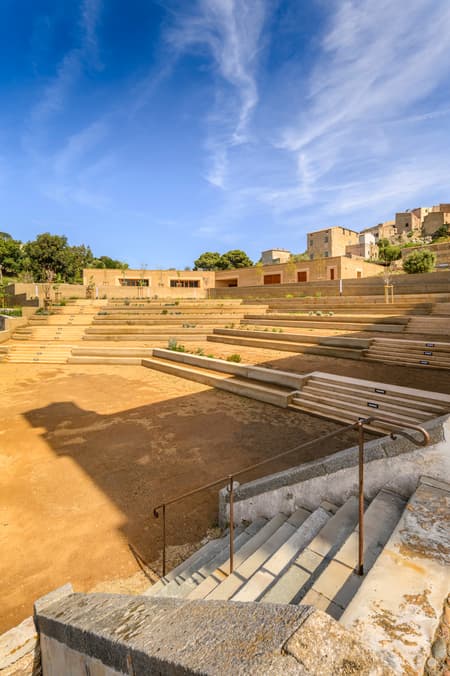
From the upper part of the site, the roof becomes a public square, a place from which to look out over the territory. The pathways extend the village walks, connecting the existing narrow lanes, the church forecourt, the landscaped terraces, and the open-air theatre. The project does not impose itself as an isolated destination; it becomes a passage, a new sequence within the village promenade.
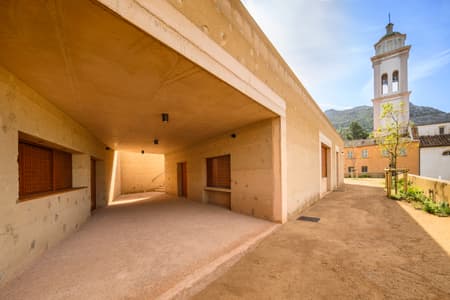
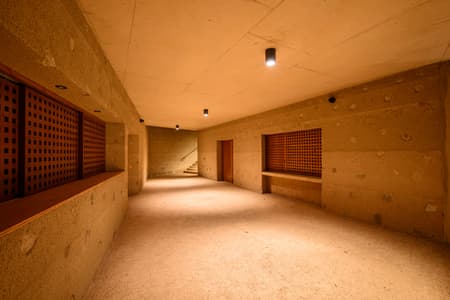
This logic of insertion also guides the interior organization. Despite the steeply sloping site, the building develops entirely on one level, around a welcoming passageway that crosses and structures it. This internal lane distributes the different parts of the programme and extends the village routes into the heart of the facility.
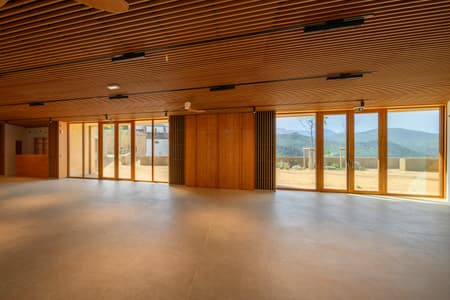
The main hall, widely open to the outside, is oriented towards the church and the landscape. Designed as a polyvalent space, it can host ceremonies, exhibitions, seminars, or village events. The service areas are arranged simply around this clear structure, allowing the building to adapt to different uses and seasons.
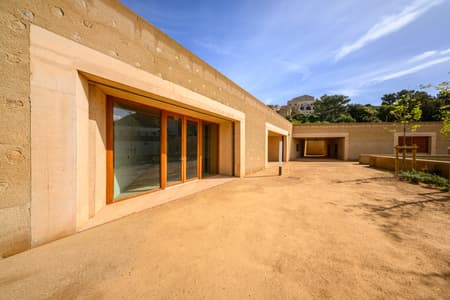
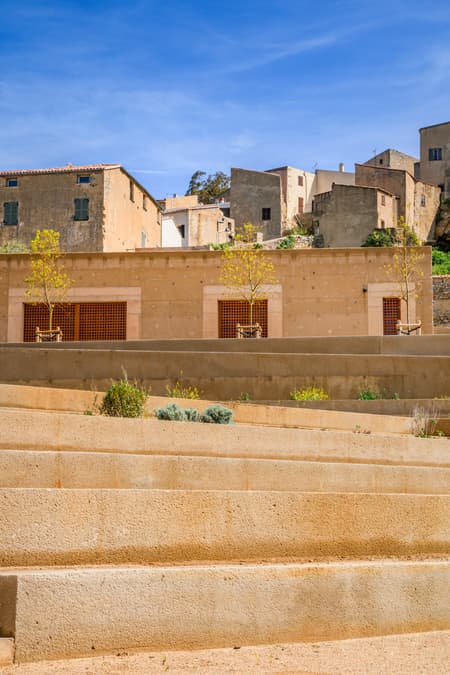
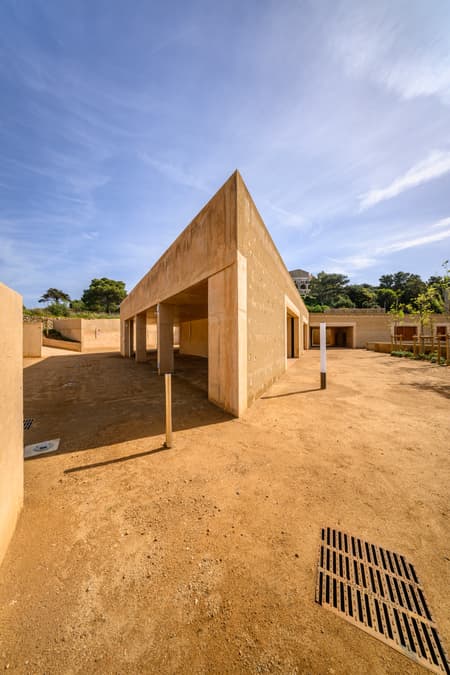
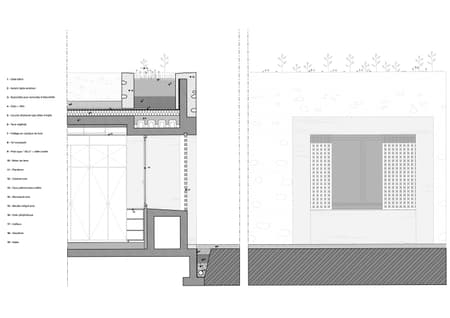
The architecture seeks a measured presence. Its massive, mineral materiality evokes the retaining walls, old houses, and agricultural structures of the territory. Made with site-cast concrete, the building extends the tones of the ground, the terraces, and the surrounding constructions. The façades are conceived as thick walls, anchored in the ground and pierced by large openings. The frames, thresholds, and lintels reinterpret the monolithic elements of the village houses through a contemporary and silent architectural language.
Inside and outside, the project composes a series of framed views towards the sky, the church, the village houses, the terraces, and the distant landscape. Light becomes a material of composition, revealing the thickness of the walls, the depth of the thresholds, and the continuity between public spaces, landscaped spaces, and inhabited spaces.
The cultural centre is conceived as both vernacular and contemporary architecture. Not an imitation of the past, but a reinterpretation of the deeper logics of the place: building with the slope, inhabiting the ground, preserving views, extending routes, and giving the village a new shared space.
A discreet and inhabited landscape-architecture, serving the site it reveals.
AFABRICA_CORBARA_00_COVER
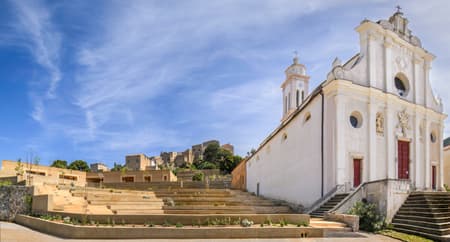
View of the open-air theatre from the church forecourt. The project is embedded in the slope through a succession of mineral terraces, extending the lines of the village and opening the site towards the landscape.
AFABRICA_CORBARA_01
Aerial view of Spaziu Davia Franceschini within its village and landscape context. The building disappears into the topography, facing the Church of the Annunciation and the great Balagne landscape.
AFABRICA_CORBARA_02
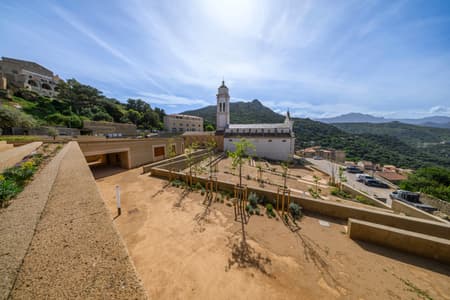
The open-air theatre and planted terraces recompose the ground of the site. The steps, walls, and pathways create continuity between the cultural facility, the church, and the village.
AFABRICA_CORBARA_03
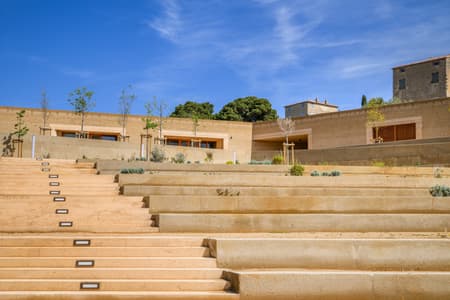
Mineral façade of the building seen from the terraces of the open-air theatre. The thick walls, pierced by deep openings, reinterpret the constructive logic of the village through a contemporary architectural language.
AFABRICA_CORBARA_04
View of the inner courtyard and the through-passage. The building unfolds as an inhabited topography, between retaining wall, façade, threshold, and public space.
AFABRICA_CORBARA_05
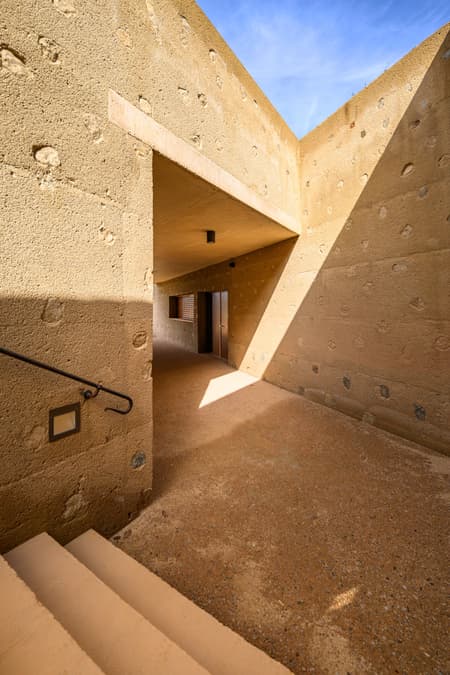
The covered passage extends the village pathways into the heart of the cultural facility. The massive materiality of the site-cast concrete accompanies the transition between public space, building, and landscape
AFABRICA_CORBARA_06
Corner view of the main volume. The architecture asserts a measured presence, anchored in the ground, where the built mass becomes enclosure, threshold, and belvedere.
AFABRICA_CORBARA_07
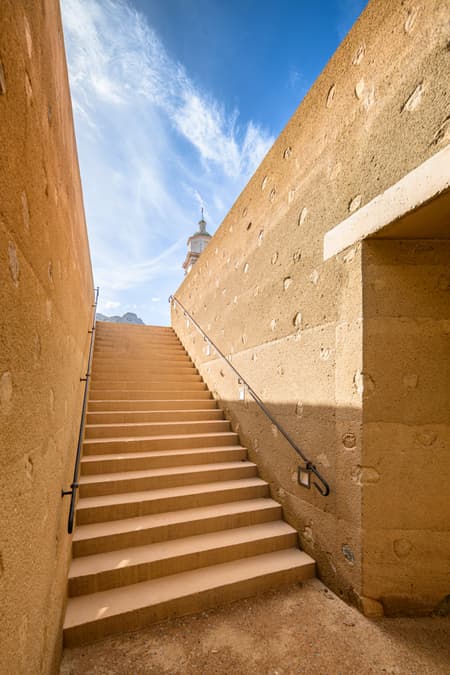
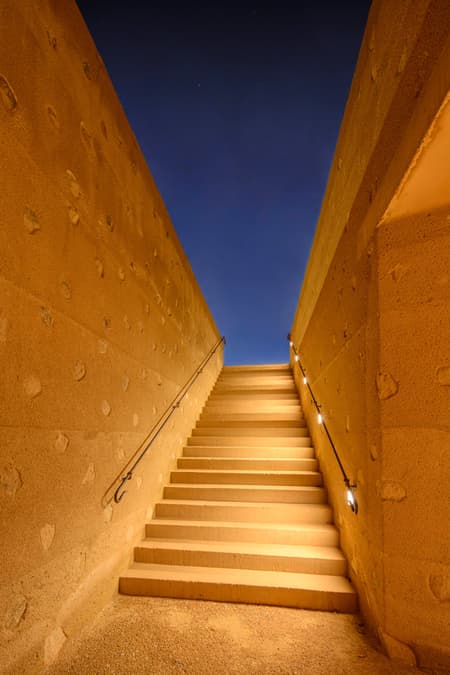
Stairway between two mineral walls, framing a view towards the sky and the church bell tower. The public routes are conceived as an extension of the village lanes and thresholds
AFABRICA_CORBARA_08
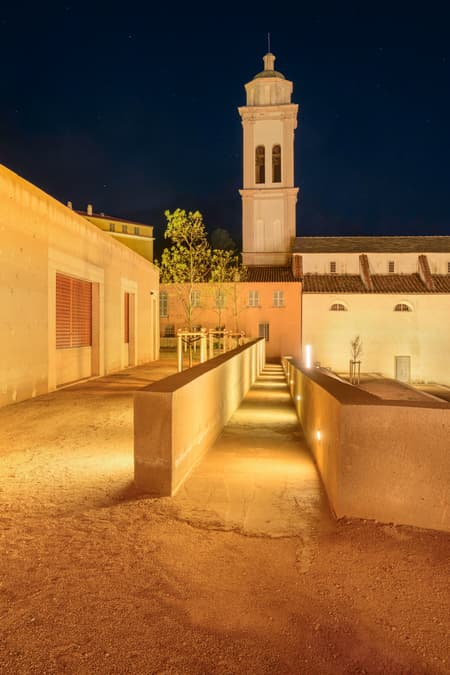
Night view of the pathway leading towards the church. The lighting emphasizes the continuity of the routes and reveals the inhabited dimension of this landscape-architecture.
AFABRICA_CORBARA_09
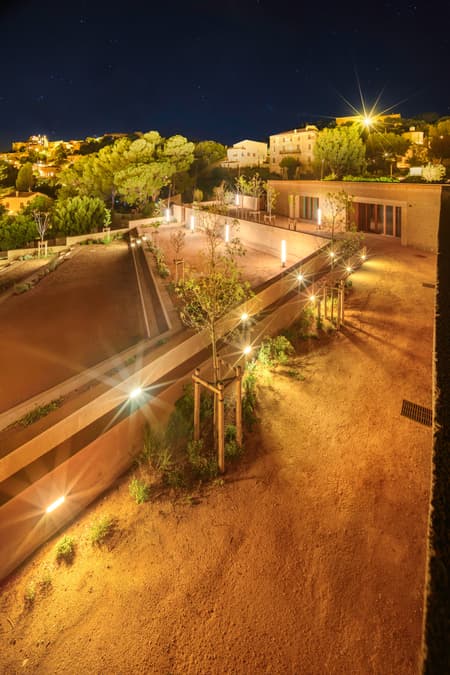
Night view from the upper terraces. The pathways, planting, and low walls compose a new public space open to the village and the landscape
AFABRICA_CORBARA_10
Panoramic view from the church forecourt. The open-air theatre is set in continuity with the monument and reshapes the slope as a succession of public terraces.
AFABRICA_CORBARA_11
Entrance sequence towards the building, between thick walls and grazing light. The site-cast concrete reveals the materiality of the ground and accompanies the passage towards the interior spaces.
AFABRICA_CORBARA_12
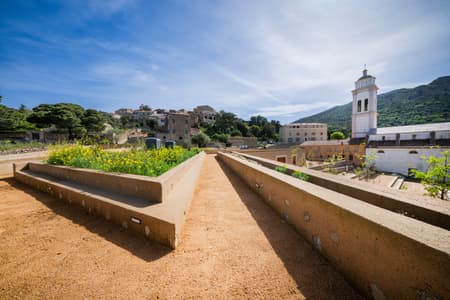
Upper pathway between planted roof, low walls, and view of the church. The roof becomes a walkable public space, extending the routes of the village
AFABRICA_CORBARA_13
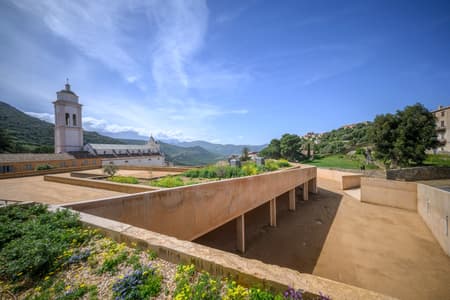
View from the upper terraces towards the church and the Balagne landscape. The project composes a succession of thresholds, gardens, and belvederes above the open-air theatre.
AFABRICA_CORBARA_14
Overall view from the upper part of the site. The building is embedded in the slope and extends the ground through a planted roof, between the church, the village, and the wider landscape.
AFABRICA_CORBARA_15
Multipurpose hall open to the landscape. The large glazed openings frame views towards the mountains, while the timber ceiling brings a warm presence to the interior space.
AFABRICA_CORBARA_16
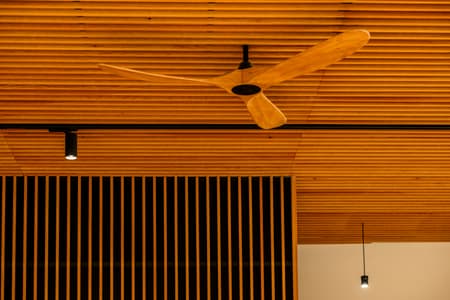
Detail of the timber ceiling and integrated technical elements. The regular rhythm of the slats accommodates the acoustics, lighting, and ventilation of the multipurpose hall.
AFABRICA_CORBARA_17
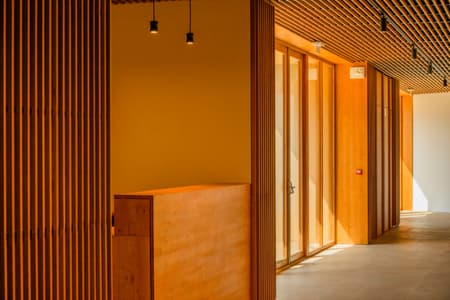
Interior view of the multipurpose hall and its timber-clad walls. The joinery, panels, and vertical slats create a unified, understated, and warm atmosphere
AFABRICA_CORBARA_18
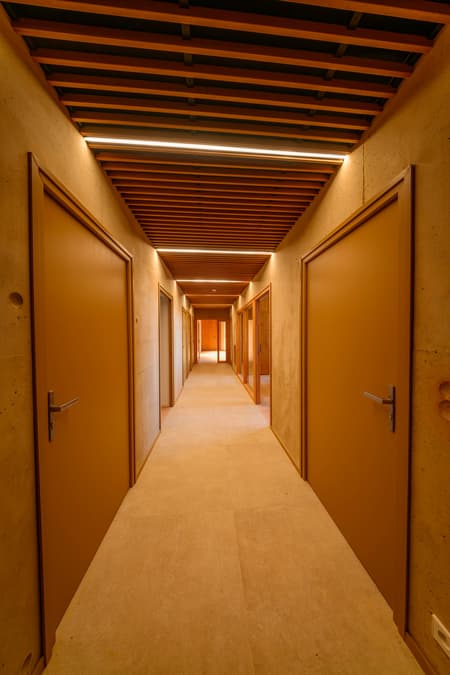
Interior distribution corridor. The central circulation extends the idea of an inhabited lane, structured by mineral walls, flush doors, and a linear timber ceiling.
AFABRICA_CORBARA_19
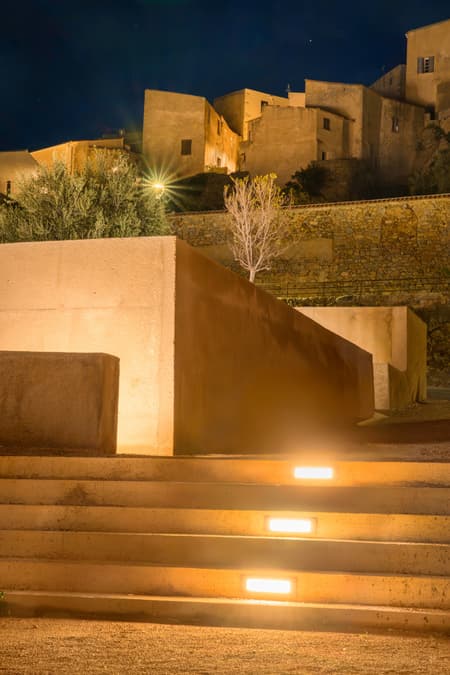
Night view of the pathways and retaining walls, with the old village in the background. The integrated lighting accompanies the routes and reveals the continuity between the architecture, the terraces, and the village fabric.
AFABRICA_CORBARA_20
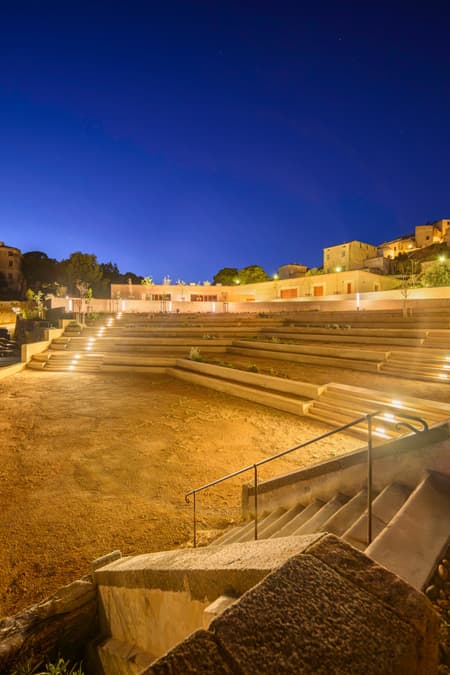
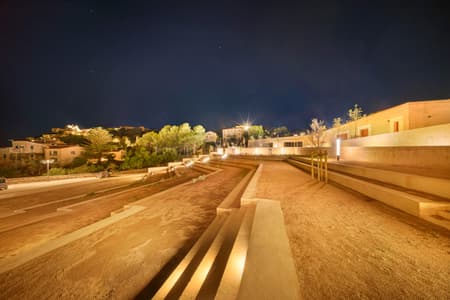
Night view of the open-air theatre from the church forecourt. The steps, stairways, and low walls are highlighted by discreet lighting, extending the use of the site after nightfall
AFABRICA_CORBARA_21
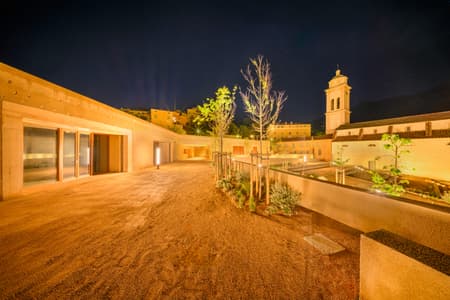
Night view of the upper terraces and landscaped forecourt. The building, the church, and the planting compose a new inhabited public space, between mineral architecture and light.
AFABRICA_CORBARA_22
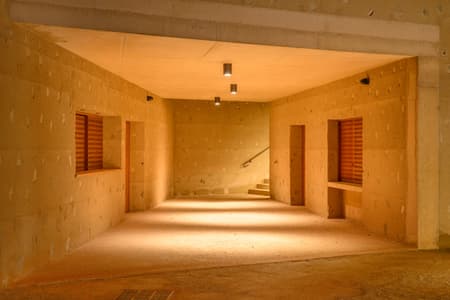
Covered passage beneath the building, lit at night. The site-cast concrete walls, timber screens, and deep openings give this crossing a presence that is both massive and domestic.
AFABRICA_CORBARA_23
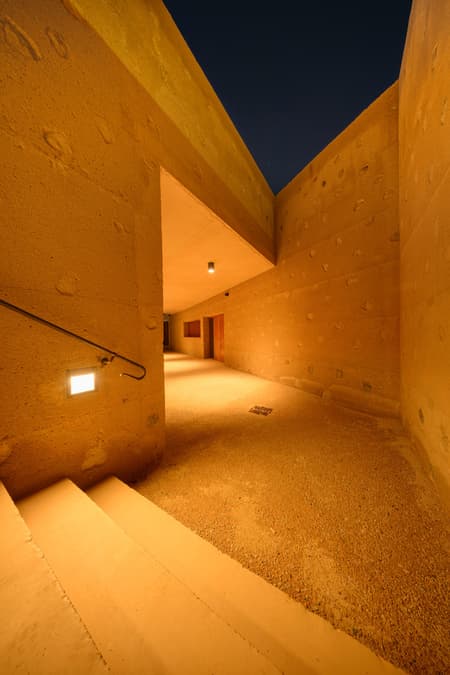
Night view of the covered passage and the building thresholds. The light reveals the thickness of the walls, the texture of the site-cast concrete, and the continuity of the public circulation routes
AFABRICA_CORBARA_24
Public stairway between two mineral walls, opening towards the night sky. The route connects the different levels of the site and extends the village lanes into the thickness of the project.
AFABRICA_CORBARA_25
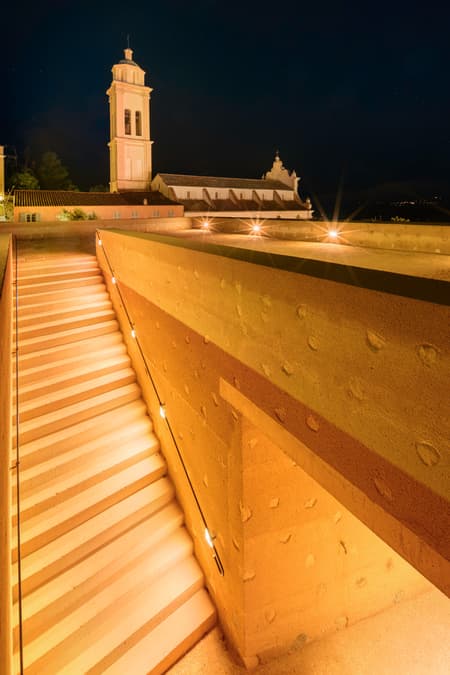
Night view of the stairway and belvedere wall facing the church. The integrated lighting accompanies the ascent and stages the relationship between the project, the monument, and the landscape.
AFABRICA_CORBARA_26
Night entrance sequence towards the covered passage. The thick walls, shadows, and warm light emphasize the topographical and inhabited dimension of the building.
AFABRICA_CORBARA_27
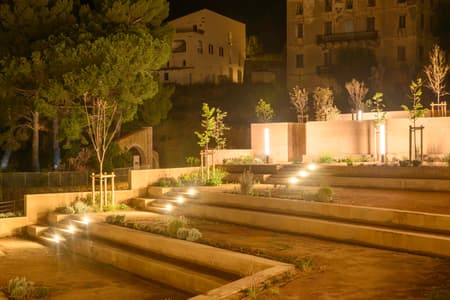
Night view of the steps and terraces of the open-air theatre. The lighting highlights the horizontal lines of the project and transforms the terraces into a shared public space.
AFABRICA_CORBARA_28
Night view of the planted terraces. The stairways, low walls, and planting reshape the slope into a succession of accessible, illuminated spaces open to the village.